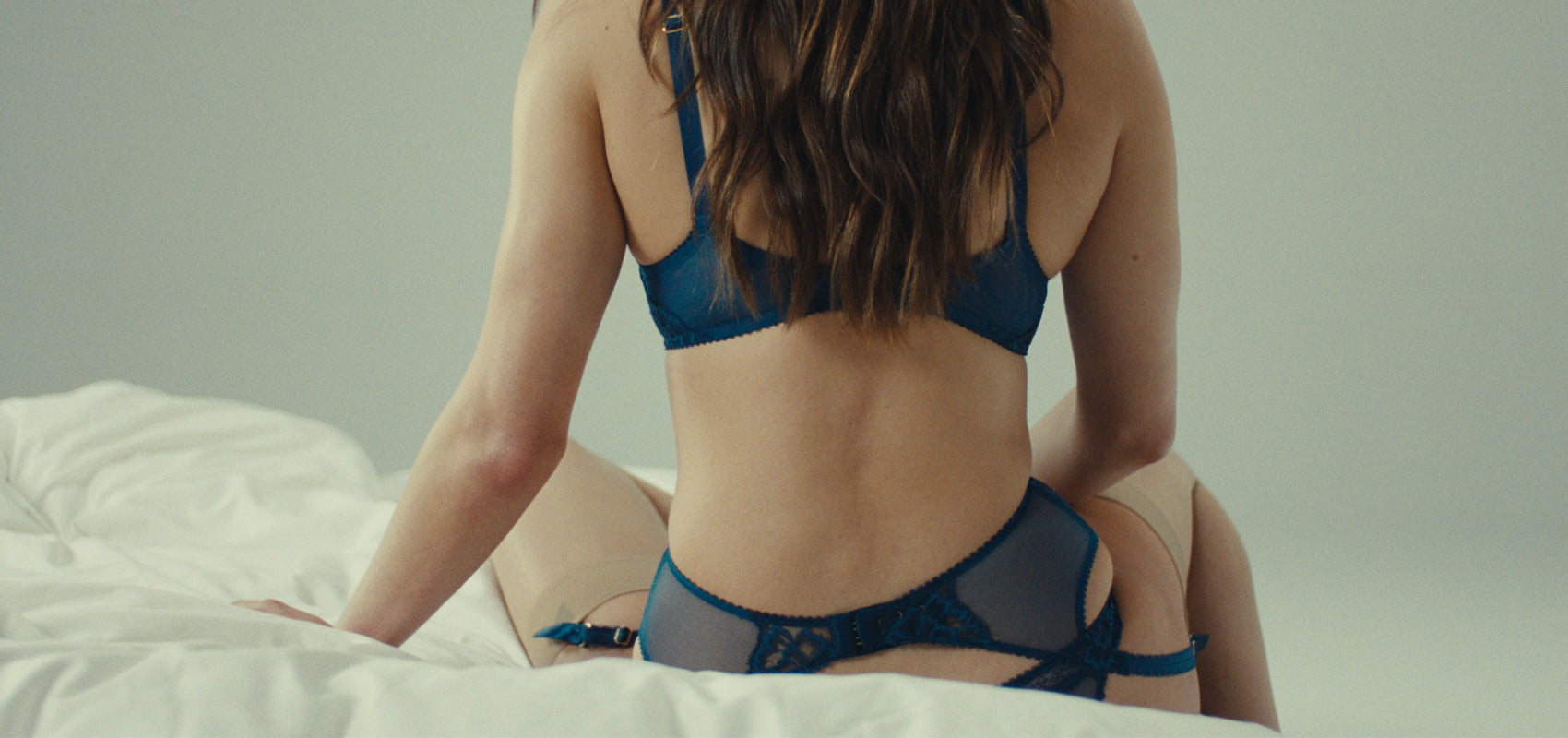
Lingerie 101: A Beginner's Guide to Styles, Fit, and Fabrics
Key Highlights
- Learn the basics of lingerie — from its history to the terminology that makes shopping easier.
- Explore the most common styles, including bras, panties, bodysuits, corsets, and hosiery, and when to reach for each.
- Understand what distinguishes lingerie brands and what makes a matching set worth the investment.
- Find out how different fabrics — lace, silk, satin, cotton — behave and when each one makes sense.
- Learn how to identify styles that flatter your body and provide the support you actually need.
- Get practical advice on washing, storing, and caring for delicate pieces so they last.
Introduction
Lingerie is one of those categories that can feel overwhelming before you know the vocabulary — and surprisingly enjoyable once you do. This guide covers everything a beginner needs: what the different styles are called and why they exist, how fabrics behave, how to find your size, and how to build a small collection that actually works for your life. The goal isn't to own more; it's to own the right things.
The Basics of Lingerie: What Every Beginner Should Know
Lingerie serves more than one purpose, and understanding that makes shopping for it much easier. Some pieces are purely functional — they disappear under clothing and keep you comfortable all day. Others are an active choice, something you reach for when you want to feel a certain way. Most wardrobes need both, and knowing the difference helps you figure out where to start.
What lingerie is actually for
At its most practical, lingerie provides support and structure under clothing. But it also has a longer history as an expressive garment — something chosen for texture, for mood, for the private pleasure of wearing something beautiful even when no one else sees it. Neither use is more legitimate than the other. The most useful lingerie wardrobe tends to have pieces that do both: comfortable enough to wear all day, considered enough that you actually want to.
If you're figuring out your own preferences, it helps to think in three categories: pieces that do a functional job (everyday bras and underwear), pieces that feel elevated but are still wearable daily (a well-made lace set, a silk cami), and pieces you choose specifically for how they make you feel (something more dramatic, worn less often). Most people need more of the first two categories than the third.
A brief history of lingerie
Lingerie as we recognize it today evolved gradually through the 19th and 20th centuries. In the late 1800s, corsets were standard — heavily structured garments that shaped the body into the silhouettes fashionable at the time. Designers like Lady Duff-Gordon began pushing for lighter, more body-conscious alternatives in the early 1900s, and the shift toward less restrictive undergarments accelerated during World War I as women took on physically demanding work roles.
The modern bra — in the sense of a garment specifically designed to support the bust — was patented in the early 20th century, and the following decades saw rapid evolution in design, materials, and fit. By mid-century, lingerie had moved from something purely functional to something with its own fashion identity. Today, the category spans everything from barely-there everyday basics to pieces designed to be styled as outerwear. For a full telling of how we got here, see our history of lingerie.
Terms worth knowing before you shop
A few words come up constantly in lingerie shopping. Knowing them in advance makes product descriptions much easier to navigate. For a more complete reference, see our lingerie glossary.
- Band size: The measurement around your ribcage, directly under your bust. This is the number in your bra size (e.g., the 32 in 32C).
- Cup size: The letter in your bra size, indicating the difference between your band measurement and your bust measurement.
- Balconette: A bra cut straight across the top of the cup, giving a rounded, lifted shape. Works well with square and wide necklines.
- Plunge: A bra with a deep V between the cups, designed for low-cut necklines.
- Seamless: Underwear or bras constructed without visible seams, to prevent lines under fitted clothing.
- Thong / G-string: Minimal-coverage underwear with little to no fabric at the back, worn to avoid visible panty lines.
- Full coverage: Bras or briefs that cover more of the bust or seat, typically offering more support.
- Adjustable straps: Straps with sliders that let you customize the fit — useful across a range of body proportions.
Popular Types of Lingerie
The lingerie category covers a wide range of garments. Here's a breakdown of the most common styles and what each one is designed to do.
Bras — from everyday to special occasion
Bras are the foundation of most lingerie wardrobes, and getting the right style for the occasion makes a real difference — both in how your clothes fit and how comfortable you feel through the day. For daily wear, most people reach for one of two styles: a smooth T-shirt bra (seamless, minimal texture, works under almost anything) or a soft-cup bralette (wire-free, more relaxed, good for lower-impact days and anyone who prefers a more comfortable alternative to underwire).
For specific outfits or occasions, other silhouettes become useful. A plunge bra works with deep V-necklines. A push-up adds lift and projection. A balconette creates a rounded, lifted shape that looks particularly good under square or scoop necklines — and because it works with so many tops, it tends to be a versatile addition to any collection.
A well-rounded starter selection might include one smooth everyday bra, one soft-cup option, and one or two styles suited to the necklines you wear most. From there, you can add based on what you actually reach for. For a complete breakdown of every bra style — T-shirt, demi, balconette, plunge, strapless, and beyond — see our Bra Guide. If you wear a D cup or above, our guide to the best bras for large breasts covers support features and fit in more detail.
Bralettes — wireless and wearable
The bralette deserves its own section. It's one of the fastest-growing categories in lingerie — not as a novelty, but as a genuine alternative to the underwired bra for everyday wear. Bralettes are wire-free, typically unpadded, and made in softer, more flexible fabrics: stretch lace, modal, mesh. They're comfortable in a way that a structured bra often isn't, and they've crossed sufficiently into fashion territory that they're regularly worn as outerwear — visible beneath a blazer, layered under a sheer top, or worn alone in warmer weather.
Triangle bralettes, longline bralettes, and lace bralettes each have a slightly different fit and aesthetic. For anyone who finds underwire uncomfortable or who is looking for something to wear at home or on lower-impact days, a bralette is one of the most useful additions to a lingerie wardrobe. See our full Bralette Guide for how to choose by bust size and style.
Panties — styles for every situation
Underwear varies more than most people realize, and the right cut for a given day depends on your outfit, your plans, and your preference. Bikinis and hipsters are the most common everyday choices — they offer a comfortable amount of coverage without being bulky. Boy shorts are another easy option, with a slightly longer leg and a sporty feel that works well under skirts and dresses.
For fitted clothing where visible lines are a concern, a thong or G-string eliminates the problem. For days when coverage and ease are the priority, a higher-cut brief delivers both. Most people eventually own a range of cuts rather than a single style — it's worth experimenting to see which silhouettes work best with your regular wardrobe.
Details like lace trim or a small embroidered edge can make even basic underwear feel considered without sacrificing comfort. For every cut explained in full — including thongs, G-strings, bikinis, boy shorts, high-waist, and seamless — see our Panties Guide.
Bodysuits, teddies, and one-piece designs
One-piece styles are worth knowing about because they cross the line between lingerie and outerwear more easily than most pieces. A bodysuit — a close-fitting garment that snaps at the crotch — functions as a top that stays tucked, making it genuinely useful for everyday dressing with jeans, trousers, or skirts. See our Bodysuit Guide for a full breakdown of everyday, lace, thong, and mesh styles.
A teddy is similar in shape but typically looser and made in softer, more fluid fabrics like satin or lace — more intimate than functional, but not exclusively so. A chemise is a short, loose garment worn close to the body — the most purely comfortable sleep piece in the category, and one that crosses readily into lounge and outerwear territory depending on how it's styled. Our Chemise & Slip Guide covers the full range, including how chemises differ from slips and how to wear both.
Corsets and bustiers
Corsets and bustiers are the most structurally complex pieces in the lingerie category — and increasingly, among the most visible. A corset uses boning and back lacing to actively shape the waist; a bustier is lighter in construction, shaping through seaming and underwire rather than compression. Both lift the bust and define the torso, and both have well-established lives as outerwear: worn over a shirt, tucked into tailored trousers, or as the foundation of a formal or bridal look.
The distinction between the two is worth understanding before you shop — fit, sizing, and what to expect from each are quite different. See our Corset & Bustier Guide for a full breakdown of styles, how to size a corset, and how to wear both.
Hosiery and legwear
Hosiery is one of the most technically specific and most rewarding categories in the lingerie wardrobe. The basics: stockings cover from foot to mid-thigh and require a garter belt or silicone grip to stay up; tights cover from waist to toe in a single piece; hold-ups are stockings with a built-in silicone band that stays up without a belt. Beyond that, the category includes thigh-highs, garter belts, fishnet tights, and sheer patterned styles — each with its own logic.
Denier — the weight of the fibers — determines how sheer or opaque a pair of tights or stockings is, and choosing the right denier for the occasion makes a real difference. Our Hosiery Guide covers every style, how to wear a garter belt with stockings, and a full denier reference.
Sleepwear and loungewear
The sleep and lounge category is often treated as an afterthought, but it's the category most people wear most often. Sleepwear ranges from a simple silk chemise to a matched pajama set to a robe worn over everything — and the right choice depends on how you sleep, what temperature you run, and what you want to feel like in the morning. At Journelle, sleepwear tends toward the same quality of fabric and construction as the rest of the collection: silk, modal, and fine lace rather than generic satin.
Lounge — the zone between sleepwear and outerwear — has expanded significantly as a category, driven in part by a shift in how people spend time at home and what they expect from that time. A silk kimono robe, a modal pajama set, or a lace-trimmed cami set occupies different territory from purely functional sleepwear. Our Sleep & Lounge Guide covers every style in detail.
What Distinguishes Lingerie Brands
Different brands have genuinely different points of view — in their fabrics, their construction, their silhouettes, and the kind of customer they're designing for. Learning what makes a brand distinctive helps you find the ones worth coming back to.
What to look for in a brand
A few things tend to separate well-made lingerie from generic options: lace that's soft rather than scratchy, seams that lie flat, cups that hold their shape after washing, and straps that sit where you put them. A brand with a consistent point of view — whether that's modern minimalism, romantic embellishment, or elevated basics — tends to produce pieces that work together rather than feeling like a random collection.
Signature details are also worth paying attention to. One brand might be known for a particular lace pattern; another for clean architectural lines; another for exceptional fit in extended sizes. If you find a brand whose proportions work for your body, that's worth noting — fit can vary significantly between labels even at the same stated size. For a guide to the best bra brands and what makes each one worth knowing, see our best bra brands page.
Lingerie sets and why they work
A matching set — a bra and underwear in the same fabric and color — has a simple logic to it: it's already coordinated, so you don't have to think about it. There's also something about putting on a complete set that feels more deliberate than two mismatched basics, even if no one else ever sees it.
Sets range from simple cotton pairs to elaborate lace constructions, and anywhere in between. They're a useful way to shop when you're building a wardrobe from scratch, since one decision covers two categories at once.
Lingerie Fabrics: What to Know
Fabric is where a lot of quality differences show up. The material affects how a piece feels against your skin, how it moves, how it breathes, how long it lasts, and how it looks. Here's an overview of the most common materials and what each one offers.
Lace, silk, satin, and cotton
Lace is one of the most recognized lingerie fabrics, and quality varies widely. Good lace is soft, has some stretch and recovery, and doesn't scratch or go stiff after washing. It's used as the primary fabric in some pieces and as an accent detail in others — a lace trim on cotton underwear, for example, or lace panels on a satin bra.
Silk is a natural fiber that's lightweight, temperature-regulating, and genuinely luxurious against the skin. It's also more delicate than synthetic alternatives and requires more careful washing. Silk lingerie — particularly chemises, slips, and robes — tends to be an investment piece that repays careful care many times over.
Satin is most often a weave of synthetic fibers (like polyester) rather than a fiber itself, though you'll also find silk satin. The characteristic smooth, slightly glossy finish drapes well and feels soft on the skin, making it a natural choice for robes, slips, and nightwear. It's less breathable than natural fibers but more affordable and easier to care for.
Cotton is the most practical everyday option: breathable, soft, easy to wash, and gentle on sensitive skin. It doesn't have the glamour of silk or lace, but it's what most people reach for most often. Mesh and sheer synthetic fabrics are also common, adding transparency and visual interest to modern designs.
Quick reference: what each fabric does well
- Cotton: Breathable, soft, low-maintenance — the reliable everyday choice.
- Silk: Lightweight, temperature-regulating, genuinely luxurious — worth the extra care.
- Satin: Smooth, drapey, and elegant — best in nightwear and occasion pieces.
- Lace: Decorative and romantic — quality varies significantly, so feel it before committing.
- Modal: Soft and silky-feeling, easy to care for — the most practical high-quality option for everyday and sleepwear.
- Mesh: Sheer and modern — adds visual interest and texture without weight.
Choosing Lingerie for Your Body
The right lingerie isn't about conforming to a particular silhouette — it's about finding pieces that fit well and provide the support you need. Fit is the single biggest factor in whether a piece feels good or doesn't, and it matters more than the style or the label.
Getting the fit right
A correctly fitting bra makes an immediate difference: clothes sit better, you're more comfortable, and nothing needs adjusting throughout the day. The most common issues are wearing the wrong band size (usually too large) or the wrong cup size (usually too small). If you've never been properly measured, it's worth doing — either in a specialty boutique or using a reliable online guide. Most people find they're wearing a different size than they assumed.
For a detailed walkthrough of bra fit — including how to measure yourself and what to look for in a properly fitting bra — see our beginner's guide to finding your perfect bra fit. For help understanding how different styles relate to different breast shapes, our post on finding the best silhouette for your breast shape is a good starting point.
For fuller busts, look for bras with wider bands, substantial underwire, and cups with enough depth to actually contain the breast rather than compressing it. Wide, cushioned straps also distribute weight more comfortably. Our guide to the best bras for large breasts covers the specific features to look for. For smaller busts, lightly padded styles, balconettes, and plunge cuts tend to work well — and wireless bras are worth considering as a comfortable everyday alternative to underwire.
Styles that work for different figures
A few general guidelines — though your own preference should always take precedence:
- Pear shape: A bra with some visual interest (lace, color, texture) draws attention upward, balanced by a simpler underwear style on the bottom.
- Apple shape: A chemise or babydoll that flows from just below the bust is flattering and comfortable. High-waisted briefs offer good coverage and a clean silhouette.
- Hourglass shape: Matching sets, bustiers, and bodysuits all work well — anything that defines the waist tends to be flattering.
Shopping for Lingerie Online
Buying lingerie without trying it on first requires a bit of preparation, but it's entirely manageable once you know your measurements and understand what to look for in product descriptions.
Getting your measurements right
You'll need two measurements for bras: your band (around your ribcage, directly under the bust) and your bust (around the fullest part of your chest). Most brands publish a size chart that converts these into their sizing — Journelle's fit guide is a useful starting point. Note that sizing isn't consistent across brands, so always check the specific chart for whatever you're buying.
For underwear, a simple hip measurement usually gets you to the right ballpark, but fit also depends on the cut — a cheeky style will cover less than a full brief at the same stated size. Reading the product description carefully helps here.
How to read product listings and reviews
Product descriptions tell you the fabric composition, whether the straps are adjustable, how much stretch the material has, and sometimes how the fit runs relative to standard sizing. Reviews are where you get the real-world version of that information: whether it runs small or large, how the fabric feels after washing, and how it fits across different body proportions. Customer photos, when available, are particularly useful for seeing how a piece looks on bodies similar to yours.
A few things worth checking before you buy:
- Fabric composition: The percentages tell you whether the material will stretch, breathe, and recover its shape.
- Sizing notes: Does the listing say it runs small, large, or true to size? Don't ignore this.
- Return policy: Given that fit varies, a flexible return policy makes online lingerie shopping significantly lower-risk.
Caring for Your Lingerie
Delicate fabrics and intricate construction require more careful cleaning than everyday clothing. A small amount of extra effort significantly extends the life of a well-made piece.
Washing
Hand-washing is the gentlest option for anything lace, silk, or wire-free. Use cool water and a mild detergent designed for delicates. For machine washing, always use a mesh laundry bag and the gentlest cycle available — this protects straps from tangling and lace from catching. Fasten any hooks before washing.
Never put lingerie in the dryer. Heat damages elastic, distorts molded cups, and degrades delicate fabrics quickly. Lay pieces flat to dry, or hang them, away from direct sunlight.
- Wash in cool water with a gentle detergent.
- Wash similar colors together.
- Use a mesh laundry bag for machine washing.
- Always air-dry — flat for bras, hung or laid flat for underwear and delicate pieces.
For more detail on caring for specific fabrics and styles, see our wear and care guide.
Storage
How you store bras matters more than most people realize. Folding one cup into the other — common but wrong — leaves pressure marks in molded foam and gradually changes the cup shape. Instead, lay bras flat in a drawer with cups facing up, lined up back to front. For everything else, fold gently and use drawer dividers to keep pieces from snagging on each other. Silk and satin items in particular benefit from being kept away from rough surfaces and hardware.
Sexy, Sensual, or Comfortable: Understanding the Differences
These three categories aren't mutually exclusive, but they're useful shorthand for thinking about what you're shopping for.
What each style involves
Sexy lingerie is designed to make a visual statement: cutouts, sheer panels, graphic lace, garter details, lace-up elements. The emphasis is on impact rather than sustained wear.
Sensual lingerie is more about how it feels than how it looks — luxurious fabrics that feel good against the skin, like silk, satin, or fine jersey. The designs tend to be quieter, but the experience of wearing them is the point.
Comfortable lingerie prioritizes practicality: soft materials, good support, ease of movement. This is what you reach for when you just want to get through the day without thinking about what you're wearing underneath.
In practice, many pieces combine elements of more than one category — a bra that's supportive and well-fitting but also has beautiful lace detailing, for example. The goal is a collection that covers all three moods rather than optimizing for just one.
Building a collection that works for you
Start with whatever you're actually missing. If your everyday bras are uncomfortable or wearing out, that's the priority. If your functional pieces are sorted, adding something more considered — a matching set, a silk chemise — is a natural next step. The most useful lingerie wardrobe isn't the largest one; it's the one where everything in it gets worn.
Current Lingerie Trends
A few directions are worth knowing about whether you're shopping to stay current or just want to understand what's available right now. For a longer look at what's happening in the category, see our post on lingerie trends for 2026.
Color and embellishment
Classic neutrals — black, white, ivory, nude — remain the backbone of most collections. What's shifted is the appetite for color and decoration alongside them: rich jewel tones, saturated reds, and warm earthy shades are showing up more prominently. Embellishment-wise, intricate embroidery, contrast piping, and three-dimensional lace details are all appearing in collections that previously focused on cleaner lines.
| Trend | What it looks like |
|---|---|
| Bold color | Jewel tones, saturated reds, and warm earthy shades alongside the standard neutral palette. |
| Intricate embellishment | Detailed embroidery, 3D floral elements, contrast trims — decoration used to make individual pieces stand out. |
| Outerwear crossover | Bodysuits, longline bralettes, and bustiers designed to be worn visibly as part of an outfit rather than hidden under clothing. For how to do this well, see our guide to wearing lingerie like a French woman. |
Sustainability
More brands are incorporating organic cotton, recycled synthetics, and responsible manufacturing practices into their collections, and the quality has improved enough that choosing a more sustainable option no longer means compromising on the finish. The more durable framing is simply this: a well-made piece that holds up through two years of regular washing is more sustainable than a cheap one you replace twice in a year. Construction quality and fabric content are more reliable guides than marketing language alone.
Tips for Gifting Lingerie
Lingerie can be a thoughtful gift — for a wedding, an anniversary, or simply because you know someone well enough to shop for them. It can also go wrong if you get the size or the style wrong. A few things that help:
Size and style
If you can quietly check the tags on pieces the person already owns, that gives you their current size and the brands they wear — useful because sizing varies between labels. Beyond size, think about their actual style: do they gravitate toward simple and functional, or do they tend toward more ornate pieces? A gift that reflects their taste rather than yours is more likely to be worn.
If you're uncertain about sizing, styles with more flexibility are a safer bet:
- Robes, chemises, and babydolls are typically more generous in fit than bras or fitted underwear.
- Pieces with adjustable ties or straps accommodate a wider range of proportions.
- A gift card to their preferred brand is always a genuinely useful option if you're unsure.
Presentation
Packaging matters more than people expect. A well-chosen piece in a nice box with tissue paper reads as a real gift rather than an afterthought. A short handwritten note — particularly for a milestone occasion like a wedding or anniversary — makes it personal in a way that no amount of beautiful wrapping can substitute for.
Explore Our Lingerie Guides
This article covers the essentials. If you want to go deeper on any specific category, each of the guides below covers its subject in full — styles, fit, how to choose, and how to wear.
- The Bra Guide — Every bra style explained: T-shirt, demi, balconette, plunge, strapless, longline, sports, and more.
- The Bralette Guide — Wireless bras explained: how to choose by style and bust size, and how to wear them as outerwear.
- The Panties Guide — Every underwear cut explained, from thongs and G-strings to high-waist briefs and seamless styles.
- The Bodysuit Guide — How bodysuits work, every style covered, and how to wear them from desk to evening.
- The Chemise & Slip Guide — What each is, how they differ, which fabrics to look for, and how to wear them as outerwear.
- The Sleep & Lounge Guide — Sleepwear and lounge styles in full: chemises, pajama sets, robes, and how to build a wardrobe worth coming home to.
- The Corset & Bustier Guide — Every style covered — overbust, underbust, fashion corset, bustier — plus how to size, fit, and wear them as lingerie and outerwear.
- The Hosiery Guide — Stockings, thigh-highs, hold-ups, tights, and garter belts — every legwear style explained, with a full denier reference and how to wear a garter belt with stockings.
- Best Bra Brands — A guide to the brands we carry and what makes each one worth knowing.
- Best Bras for Large Breasts — Support features, fit guidance, and the styles that work best for D cup and above.
- Comfortable Wireless Bras — The best wire-free options for everyday comfort without sacrificing support.
Conclusion
Building a lingerie wardrobe doesn't require buying a lot at once — it requires buying the right things for where you actually are. Start with fit: a bra that works correctly makes everything else easier. Add fabrics you enjoy wearing. Choose styles that fit your real life rather than an idealized version of it. Once the basics are covered, you can explore further — more elevated fabrics, bolder colors, statement pieces — from a foundation that actually functions. If you want help narrowing down where to start, a fit consultation can make the process faster and considerably less guesswork-heavy.
Frequently Asked Questions
How do I figure out what lingerie styles suit my body?
Start with fit rather than style — a well-fitting piece in a simple style will always look and feel better than something elaborate that doesn't fit correctly. Once you have your size, experiment with different silhouettes. Balconette bras tend to work well for a wide range of bust sizes; high-waisted briefs create a clean line regardless of body shape; seamless styles solve most visible-line problems. Try a few things and pay attention to what you keep reaching for.
What fabric is best for everyday wear?
Cotton is the most practical choice for everyday underwear — it's breathable, soft, easy to wash, and gentle on sensitive skin. For bras, a smooth microfiber or modal blend often works better day-to-day than lace, since it lies flat under clothing. Save silk and satin for pieces you're choosing specifically for how they feel rather than how they function under clothes.
How do I keep my lingerie looking new?
The biggest factors are water temperature (cool or cold), wash method (hand-wash when possible, mesh bag if machine-washing), and drying (always air-dry, never the dryer). Fastening bra hooks before washing prevents them from catching on other fabrics. Storing bras cups-up rather than folding the cups together prevents the shape from being distorted over time. Doing these things consistently adds significant life to well-made pieces.