
The Corset & Bustier Guide
Reviewed by Natalie, Senior Fitter at Journelle. Corset and bustier fittings are the longest we do — the fit precision needed for these pieces is closer to tailoring than to bra fitting, and that's what this guide walks through.
Corsets and bustiers are two of the most structurally distinct pieces in the lingerie category — and two of the most misunderstood. They share a silhouette logic: both shape and define the torso, both lift the bust, and both have a long history as garments that move fluidly between intimate and outerwear contexts. But they're built differently, fit differently, and suit different moments. This guide covers every style, how to get the fit right, and how to wear them — from bridal to evening to the kind of considered everyday dressing that treats structure as part of the look.
What Is a Corset?
A corset is a structured, boned garment designed to cinch and shape the waist, typically worn around the torso. The defining feature is boning — a series of rigid or semi-rigid stays, historically made from whalebone or steel, now made from spiral steel, flat steel, or plastic — that run vertically through the garment and hold its shape against the body. Most traditional corsets also lace at the back, allowing the fit to be adjusted tightly or loosely depending on how much compression is desired.
The corset has an unusually long history in fashion — see our piece on the history of lingerie for how it evolved from the heavily structured undergarment of the Victorian era to the complex, multivalent garment it is today. The modern corset exists on a spectrum: at one end, fashion corsets made primarily for aesthetic effect with minimal shaping; at the other, true waist-training corsets with heavy boning and significant compression. Most of what Journelle carries sits in the middle — structured enough to shape and support, designed to be beautiful and wearable rather than purely functional.
Shop Corsets & Bustiers
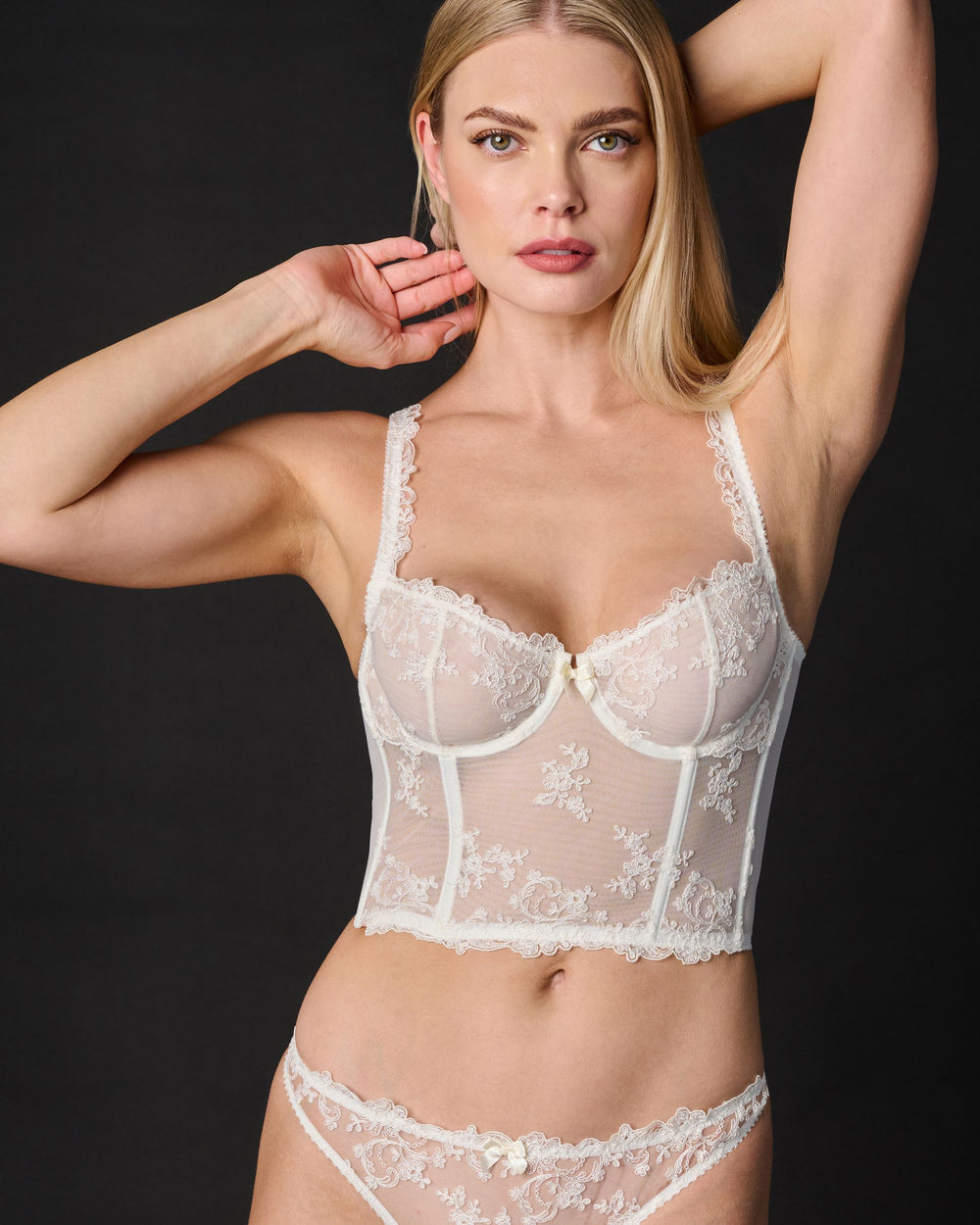
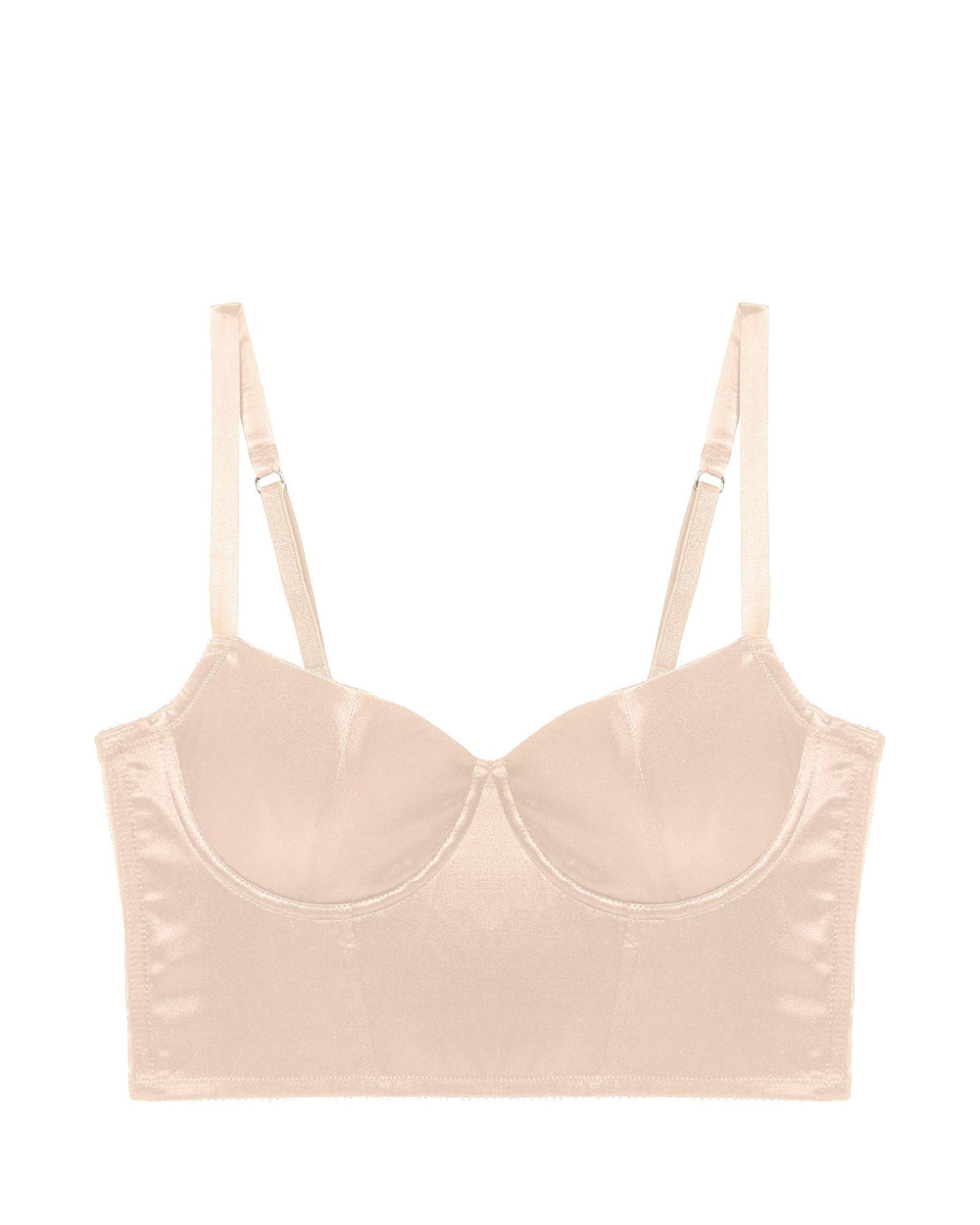
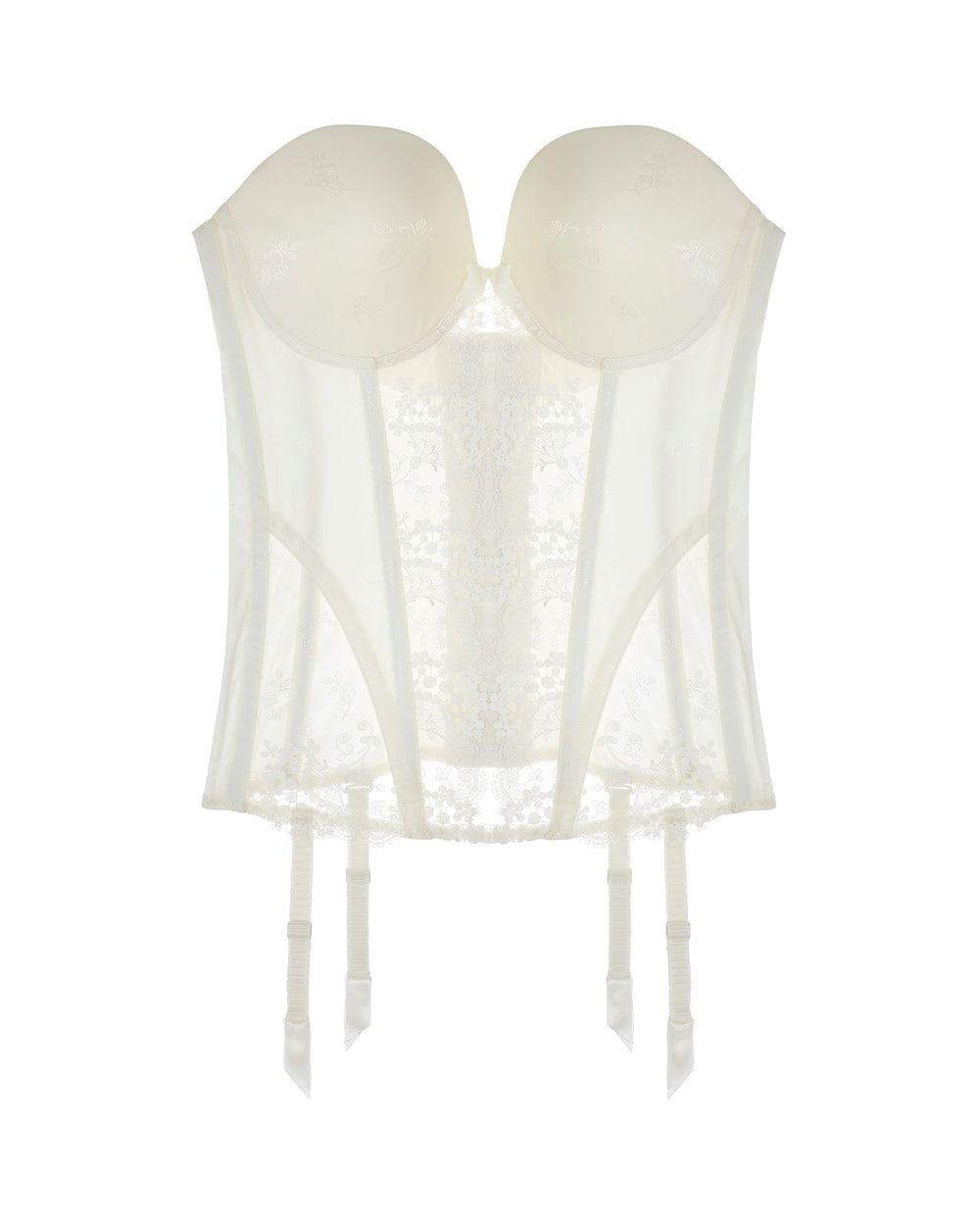
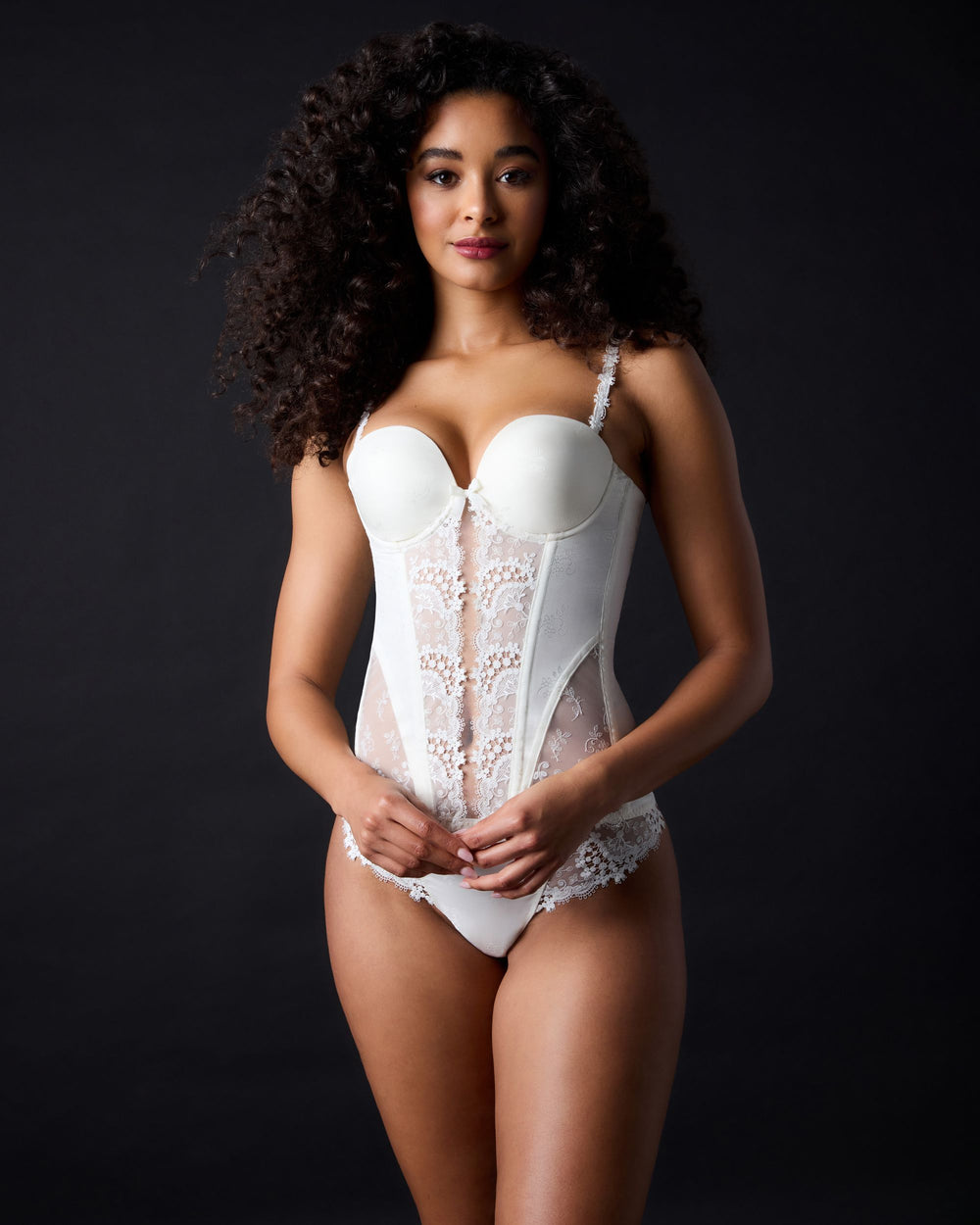
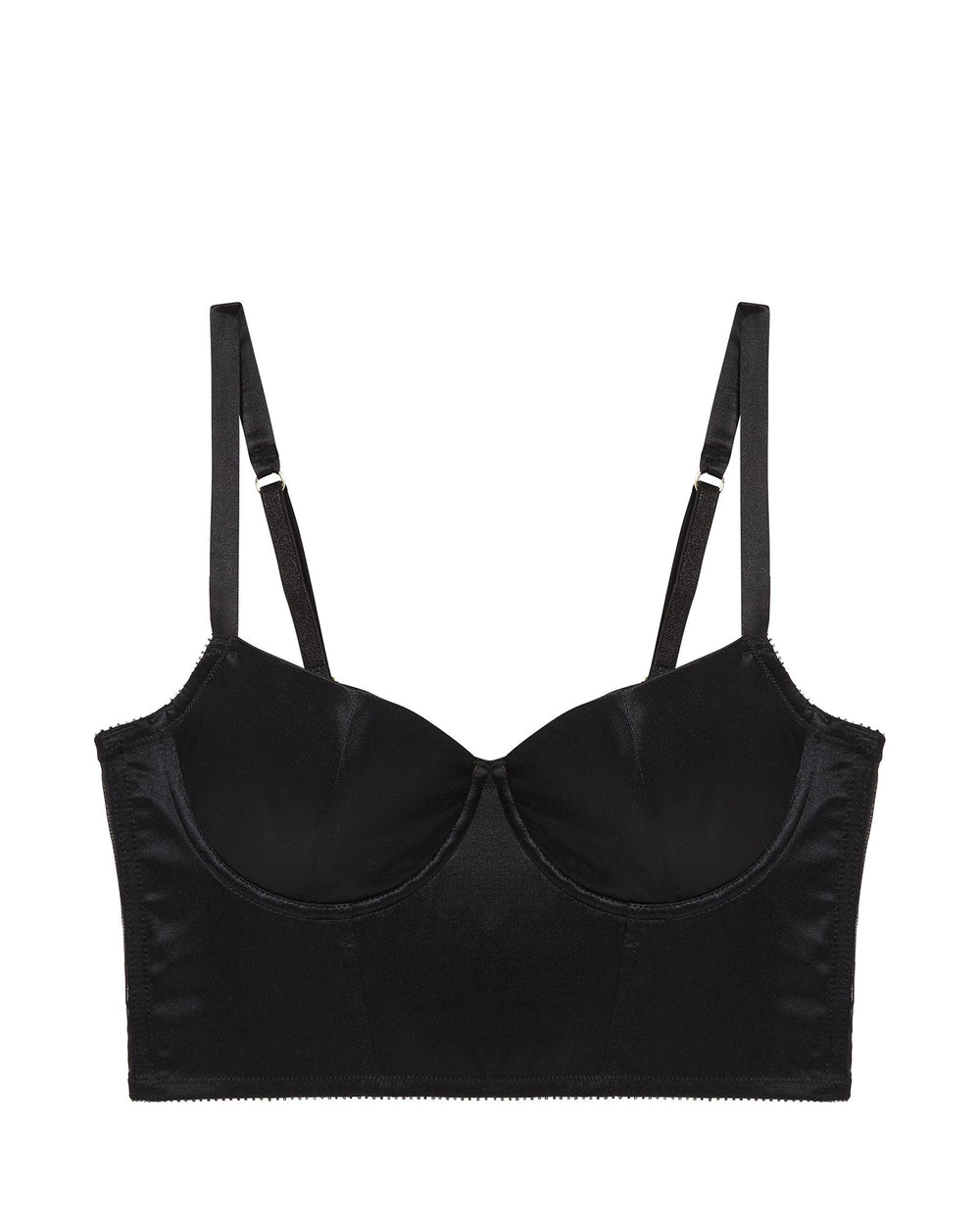
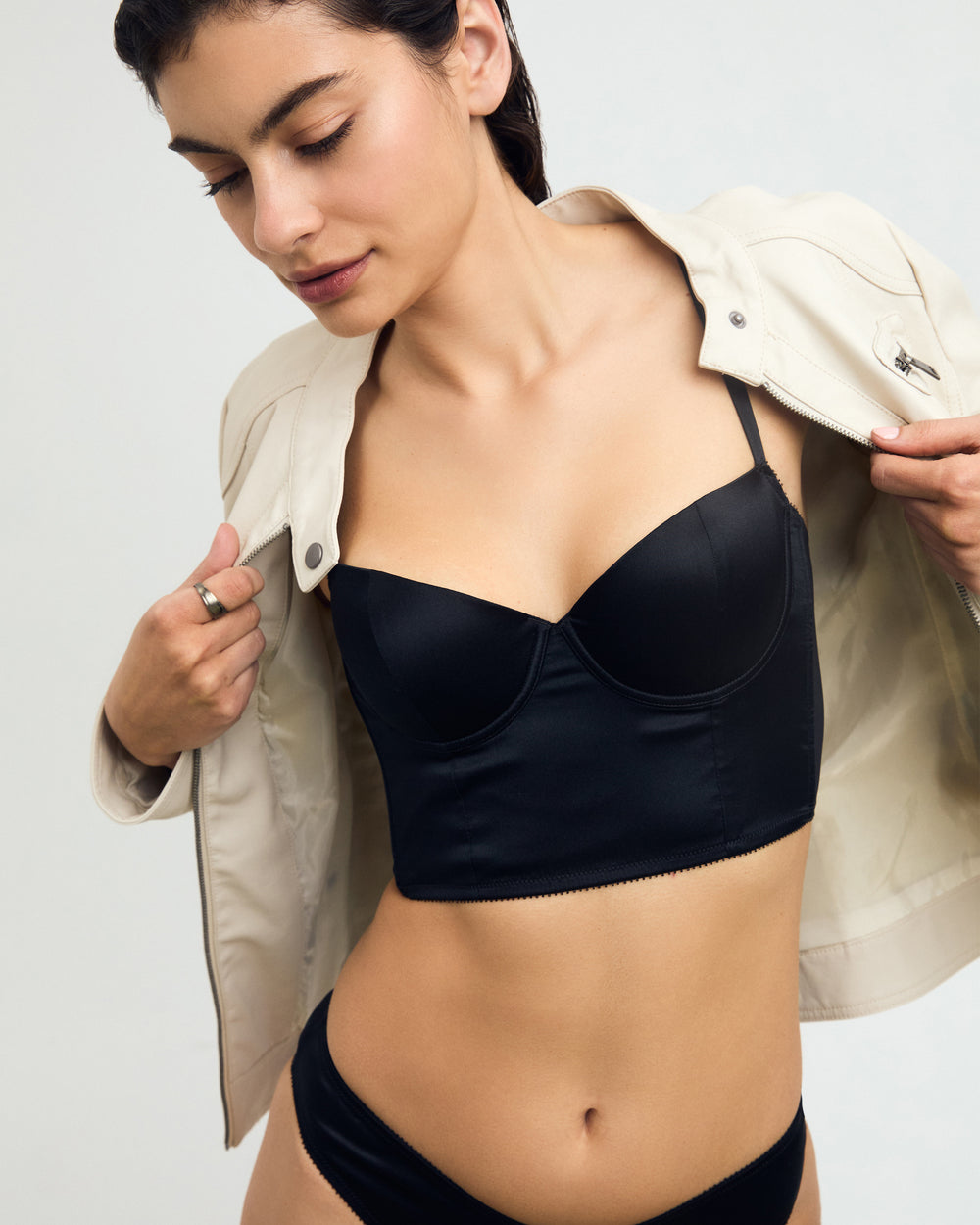
What Is a Bustier?
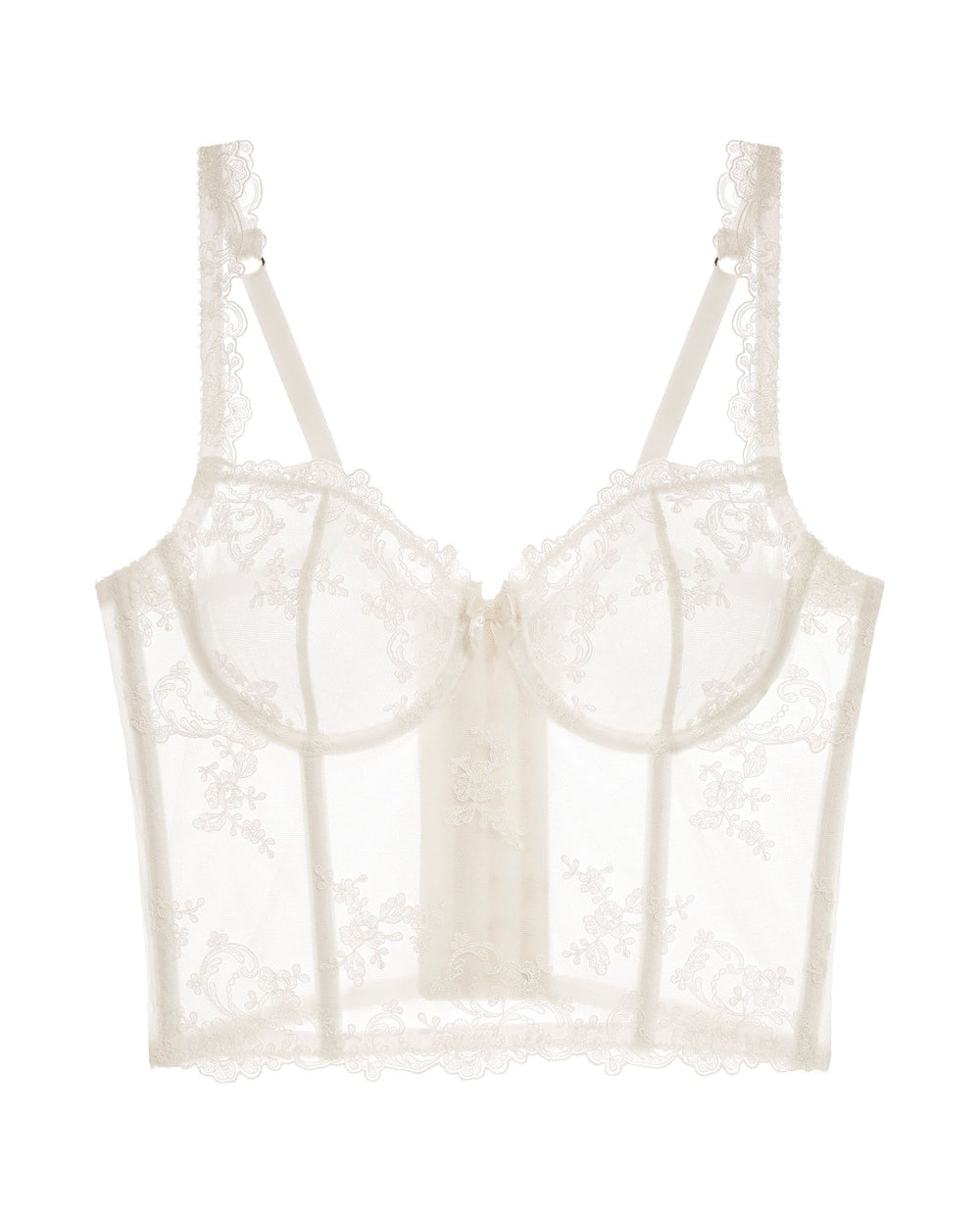
A bustier is a close-fitting garment that covers the torso from bust to waist or hip, typically strapless or with very thin straps. It's structured — usually with boning, underwire, or both — but lighter in construction than a true corset. Where a corset shapes primarily through compression and lacing, a bustier shapes through seaming and light boning that holds the garment against the body without requiring any cinching or tightening.
The bustier sits at a natural crossroads between lingerie and outerwear. It can be worn as intimate apparel — as a top layer in a lingerie set, paired with matching briefs or a garter belt — or taken out of a purely intimate context altogether: worn with a tailored trouser as a top, under a blazer for evening, or tucked into a full skirt for an occasion look. This versatility is what makes it one of the most interesting pieces in the category to invest in.
Shop Bustiers
Corset vs. Bustier: What's the Difference?
Both garments shape the torso and lift the bust. The distinction is in construction and degree of structure.
A corset is the more architecturally complex garment: multiple bones running from top to bottom, a back lacing system for tightening, and a construction designed to actively compress the waist. Getting into a corset is a process. The result is more dramatic shaping — a more defined waist, a more structured silhouette — and a garment that requires more care in both fitting and wearing.
A bustier is the more wearable, versatile option. It uses some boning and typically underwire, but the structure is lighter and the fit is fixed rather than adjustable. You put it on like any other garment. The shaping effect is real but more subtle, and the garment is considerably easier to live in for extended periods.
| Corset | Bustier | |
|---|---|---|
| Structure | Heavy boning, back lacing, significant compression | Light to moderate boning, fixed closure, moderate shaping |
| Fit adjustment | Adjustable via lacing — can be tightened or loosened | Fixed — sized like any other garment |
| Shaping effect | Significant waist reduction possible | Smoothing and defining, not compressing |
| Ease of wear | Requires assistance to lace; less comfortable for long wear | Easy on/off; comfortable for full-day or evening wear |
| Outerwear potential | Strong — particularly in fashion corset styles | Very strong — designed to cross between lingerie and outerwear |
Types of Corsets
Overbust Corset
An overbust corset extends from the bust to the hip, covering and supporting the bust as well as shaping the waist. It functions as both a bra and a waist-shaping garment in one piece, and at the luxury end of the market, overbust corsets are often made with enough underwire and cup structure to provide real lift and support. Overbust corsets are the most dramatic version of the style — they cover more of the body and make a stronger visual statement. They're the natural choice for occasion wear and for anyone who wants the corset to be the primary garment rather than a layer beneath something else.
Underbust Corset
An underbust corset starts just beneath the bust and covers the waist and upper hip. Because it doesn't cover the bust, it's worn with a bra or bralette — which gives considerably more flexibility in how it can be styled. An underbust corset can go over a fitted T-shirt, under a blazer, or over a silk blouse. It's the more versatile and arguably more wearable of the two silhouettes, and it's the style most likely to cross into everyday fashion territory rather than staying in purely occasion or intimate contexts.
Waist Cincher
A waist cincher is a shorter, less heavily boned version of the underbust corset — typically covering just the natural waist rather than extending to the hip. It's designed primarily for smoothing and defining the waist beneath clothing rather than for dramatic shaping or visible wear. Waist cinchers are often made from elasticated fabrics with some boning rather than the traditional full-boning construction of a true corset, making them more comfortable for extended wear under clothing.
Fashion Corset
A fashion corset is designed with aesthetics as the primary consideration. It typically has lighter boning, a more comfortable construction, and details — embroidery, lace, ribbon, hardware — that make it a statement piece rather than a functional shaping garment. Fashion corsets are what most people mean when they talk about corsets as outerwear: worn over a shirt, as a top in their own right, or as the focal point of an evening look. The shaping they provide is incidental; the visual effect is the point.
Types of Bustiers
Strapless Bustier
The strapless bustier is the most classic version of the style — no straps, a straight or sweetheart neckline, and a silhouette that extends from the bust to the waist or hip. A well-constructed strapless bustier stays in place through the combination of underwire, boning, and a firm grip elastic or silicone strip along the top edge. It's the natural pairing for occasion dressing: beneath a full skirt for a formal look, tucked into a wide-leg trouser, or worn as the top half of a bridal or evening ensemble.
Longline Bustier
A longline bustier extends below the natural waist — sometimes to the hip, sometimes further. It has a more torso-elongating effect than a standard bustier and works particularly well with high-waisted skirts and trousers. Longline bustiers are often used as the foundation of an occasion or bridal look because they provide both shaping at the waist and a clean, smooth base for a full skirt or structured outer garment.
Lace Bustier
A lace bustier is built around a lace exterior — either all-over lace or a combination of structured panels and lace overlay. This is the most decorative version of the style and the one most firmly associated with intimate wear, though the best lace bustiers are beautifully finished enough to be worn as outerwear under a blazer or cardigan. The key quality indicator in a lace bustier is the relationship between the lace overlay and the underlying structure: the two should work together, with the lace following the body's contours rather than sitting away from it.
Bra-Top Bustier
A bra-top bustier integrates a bra-style cup into the bustier construction, typically with straps and a more traditional bra fit through the bust. This style is the most functional of the bustier types — it works as both a bra and a shaping top — and it's the most comfortable for extended wear. Bra-top bustiers are a strong choice for anyone who wants the aesthetic of a bustier but needs real bust support throughout an event.
How to Wear a Corset or Bustier as Outerwear
The corset-as-outerwear moment has been building in fashion for decades and shows no signs of abating. The logic is straightforward: a beautifully made structured garment deserves to be seen. The styling approaches have become more codified over time, which makes it easier to navigate.
Over a Shirt or Blouse
Wearing a corset or bustier over a shirt is one of the most effective ways to ground the piece in everyday dressing. A white button-front shirt with a fashion corset on top — laced or buckled, in leather or satin — is a complete look that reads as considered rather than costume. A silk blouse beneath a lace bustier introduces a more romantic register. The key is that the shirt provides a layer of normalcy that makes the structured piece feel integrated into an outfit rather than performed.
With Tailored Trousers
A bustier tucked into high-waisted tailored trousers is a classic evening look that has earned its place through consistent execution. The structural quality of both pieces reinforces each other. A satin or lace bustier with a wide-leg trouser and heeled mule is as close to a guaranteed evening look as the category offers.
Under a Blazer
A corset or bustier beneath an open blazer is the easiest way to introduce structure into a business or smart-casual context. The blazer provides coverage and normalizes the piece; the corset or bustier provides the interest. This combination works particularly well with an underbust corset, which shows just the waist-defining structure beneath the lapels while the bra or blouse underneath is visible at the top.
With a Full Skirt
The historic pairing that still works: a structured bodice with a full or voluminous skirt creates a proportion contrast that is both flattering and visually dramatic. This is the natural territory of bridal and formal occasion dressing, and it's also an effective approach for more creative evening looks — a stiff tulle skirt, a bias-cut satin skirt, or a floor-length silk slip worn beneath a corseted top.
For more on wearing structured lingerie pieces as outerwear, see our post on wearing lingerie like a French woman.
Choosing by Occasion
Bridal
Corsets and bustiers are among the most popular bridal undergarments because they solve the specific structural problem of a strapless or structured wedding dress: they provide bust support without visible straps, shape the torso smoothly, and are designed to be worn for an extended period. For bridal use, look for a longline style — it extends the shaping effect below the natural waist and provides a cleaner line under a full skirt. A custom or bespoke corset can be a worthwhile investment for a wedding gown with a structured bodice; a well-made off-the-rack bustier typically suffices for most dress styles. For bridal lingerie inspiration, see our post on 2024 bridal trends.
Evening & Occasion
For evening wear, the bustier is often the more practical choice: it's easier to get into, holds its shape reliably, and can be worn for a full evening without discomfort. A satin or lace bustier paired with a full-length skirt or wide-leg trouser is a strong formal look. For more dramatic occasions or for anyone who wants a maximalist effect, an overbust corset — laced, structured, potentially with embellishment — makes a stronger statement.
Date Night & Intimate Wear
In an intimate context, the aesthetic qualities of the garment become the primary consideration: the way lace catches light, the drama of lacing at the back, the deliberate choice of something made to be beautiful rather than just functional. A lace bustier or an embellished corset worn with matching briefs or a garter belt is a complete lingerie look that requires nothing more than itself.
Everyday & Fashion Wear
A fashion corset or underbust corset worn as a top is entirely workable for everyday dressing with the right approach. The most wearable versions are those with lighter boning, comfortable closures (hooks rather than tight lacing), and fabrics — denim, leather, sturdy cotton — that read as fashion rather than lingerie. Over a T-shirt, under a blazer, or with a pair of jeans: the corset has established itself as a genuine wardrobe category rather than a novelty.
Fit & Sizing
Fit is more critical for corsets and bustiers than for almost any other lingerie category. A poorly fitting corset is uncomfortable and potentially damaging; a well-fitting one should feel supportive rather than restrictive. The key measurements and fit considerations are different from standard bra or underwear sizing.
Measuring for a Corset
For a traditional corset, you need three measurements: your natural waist (the narrowest point of your torso), your underbust (directly under the bust), and your upper hip (about 7–9 inches below your natural waist). A corset should be sized to your natural waist measurement, with most traditional corsets designed to be worn at or slightly tighter than your natural waist. Size by the stated waist measurement of the garment, not by your dress size — these are different systems.
Measuring for a Bustier
Bustiers are typically sized more like conventional garments — by dress size or a combination of band size and dress size. An underbust measurement (for where the bustier sits) and a bust measurement are the most useful numbers. Because bustiers have underwire cups in most styles, cup fit matters: the cups should fully contain the bust without spillage or gapping, just as with any underwired bra.
How a Corset Should Feel
A correctly fitting corset should feel firm and supportive — like a strong hug — but not painful. You should be able to breathe normally (the abdomen compresses slightly; the lungs should not). Lacing should be centered, with even gap on both sides. If the boning is poking, the corset is too short for your torso. If the garment is bowing out at the top or bottom, it's too small in those areas. For first-time corset wearers, it's worth seasoning the corset — wearing it for short periods while loosely laced and gradually tightening over several sessions — to allow the materials to conform to your body.
Closure Types
Corsets close primarily via back lacing, often with a busk (a rigid center-front closure with loops and pins) at the front that allows you to get in and out without undoing the lacing entirely. Bustiers typically close with hook-and-eye columns at the back or side, functioning more like an underwired strapless bra. Boning configuration matters: spiral steel boning allows the garment to flex with the body and is more comfortable for extended wear; flat steel boning provides more rigidity and is better for waist training or very structured looks.
Care Guide
Corsets and bustiers are among the most complex garments to care for in the lingerie category. The boning, underwire, and structured fabrics require specific handling.
- Never machine wash a boned corset. The boning will warp, the fabric will distort, and hook closures will damage other items. Spot clean with a damp cloth and mild detergent where needed.
- Bustiers with metal underwire should be hand washed or machine washed in a mesh lingerie bag on the most delicate cycle available, in cool water. Lay flat to dry — hanging will distort the cups.
- Lace-covered styles require extra care at the lace — gentle washing by hand with a product formulated for delicates, and air drying flat.
- Storage: Store corsets and bustiers flat or carefully folded, not hung — the weight of the boning can distort the garment if hung for extended periods. Keep away from rough surfaces that can snag lace or delicate fabric.
- After wearing: Allow a corset to air out before storing. Perspiration is the primary enemy of corset longevity; a cloth lining worn against the skin (some corsets have this built in) significantly extends the life of the outer fabric.
Frequently Asked Questions
What is the difference between a corset and a bustier?
A corset is a heavily boned, adjustable garment with back lacing that actively compresses the waist. A bustier is a lighter, fixed-fit garment that shapes and smooths the torso without significant compression. Corsets require more effort to put on and fit; bustiers work more like a conventional garment. Both lift the bust and define the waist, but through different structural means and to different degrees.
Can a corset be worn as a top?
Yes — this is one of the most established approaches to corset styling in contemporary fashion. Fashion corsets and underbust corsets both work as outerwear when styled with the right pieces. Over a shirt, tucked into trousers, under a blazer, or with a full skirt: the corset-as-top has become a genuine wardrobe category, particularly in fashion corset styles with lighter construction and decorative details.
How do I know what size corset to buy?
Size a corset by your natural waist measurement — the narrowest point of your torso — not by your dress size. Corsets are typically sold in waist sizes (22", 24", 26", etc.) that refer to the waist measurement of the garment. A standard fashion corset is usually worn at or close to your actual natural waist; a waist training corset is worn smaller. Always check the specific brand's sizing guidance, as construction varies significantly.
Can you wear a bustier as a bra?
Yes, if the bustier has underwire cups and adequate support — and many are constructed with exactly this in mind. A bra-top bustier functions as both a bra and a shaping torso garment simultaneously. For wearing under clothing as a bra alternative, look for a bustier with properly fitted underwire cups and an underbust band that sits firmly. A strapless bustier functions identically to a strapless bra when worn under clothing.
Is a corset comfortable to wear?
A correctly fitted corset worn at an appropriate tightness is comfortable — firm and supportive rather than painful. Discomfort usually comes from incorrect sizing, boning that doesn't suit the body's proportions, or lacing too tightly. For first-time wearers, starting with a fashion corset (lighter boning, less compression) and wearing it for shorter periods while you adjust is the right approach. A well-made corset worn correctly should feel like strong, purposeful structure rather than restriction.
What do you wear under a corset?
For a traditional corset, a thin layer against the skin — a chemise, a cotton camisole, or a corset liner — protects the garment from perspiration and makes it significantly more comfortable to wear. Many corsets have an integrated lining for this purpose. For an underbust corset worn as outerwear, whatever you wear on top (shirt, blouse) typically handles the layering. A strapless bustier worn as a top is generally worn directly against the skin with underwear beneath.
How do I put on a corset by myself?
If the corset has a front busk closure, open the busk, loosen the back lacing significantly, wrap the corset around your body, and fasten the busk from bottom to top. Then reach behind and gradually tighten the lacing from the top and bottom toward the middle, working in stages rather than pulling everything tight at once. It takes practice. If the corset has no front closure, it needs to go on over the head or be loosened enough to step into, which requires the lacing to be very loose. Having a second person to help with lacing makes the process considerably easier, particularly for tightly laced styles.
Shop Corsets & Bustiers at Journelle
Whether you're looking for a beautifully constructed bustier for an occasion, a fashion corset to wear as outerwear, or a structured piece for intimate wear, the options at Journelle are chosen for quality of construction and lasting design rather than trend.
Browse the full corsets & bustiers collection to find yours.
Explore More Lingerie
Fine lingerie styles curated by Journelle