
The Panties Guide: Every Cut Explained
Reviewed by Natalie, Senior Fitter at Journelle. Panty fit gets less attention than bra fit, but our return data tells us it's where most clients are quietly wearing the wrong thing for their body.
Underwear is the most personal part of a wardrobe and the most frequently replaced — yet most people wear the same one or two cuts on rotation without ever really exploring what else is available. The difference between a well-chosen pair and a poorly-chosen one shows up immediately: in how your clothes fit, how comfortable you are through the day, and whether you are constantly adjusting or completely at ease. This guide covers every major cut of women's underwear sold at Journelle, what each one is designed to do, and how to choose the right style for any outfit or occasion.
G-Strings
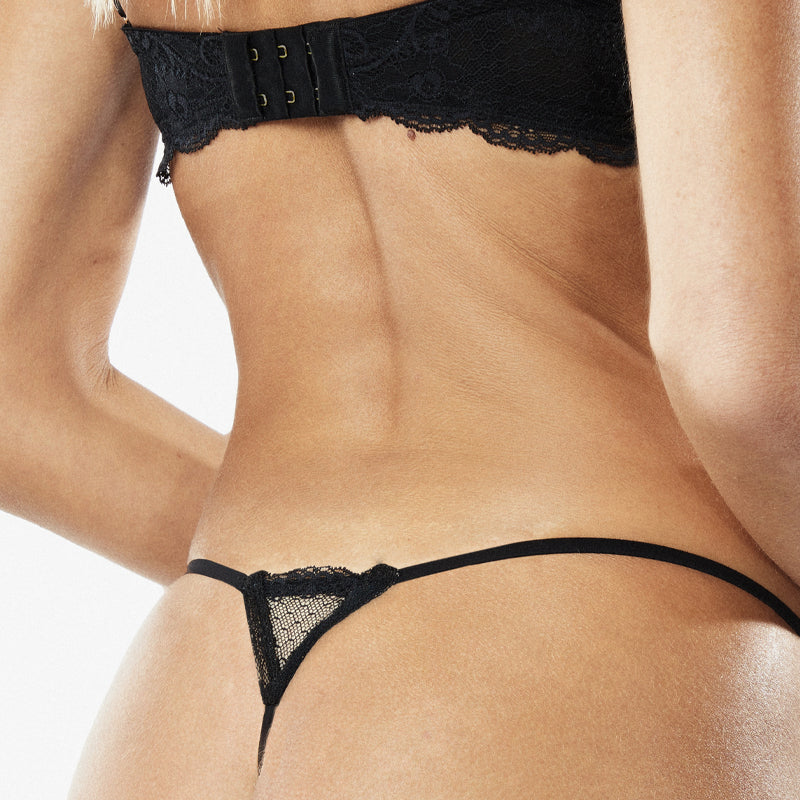
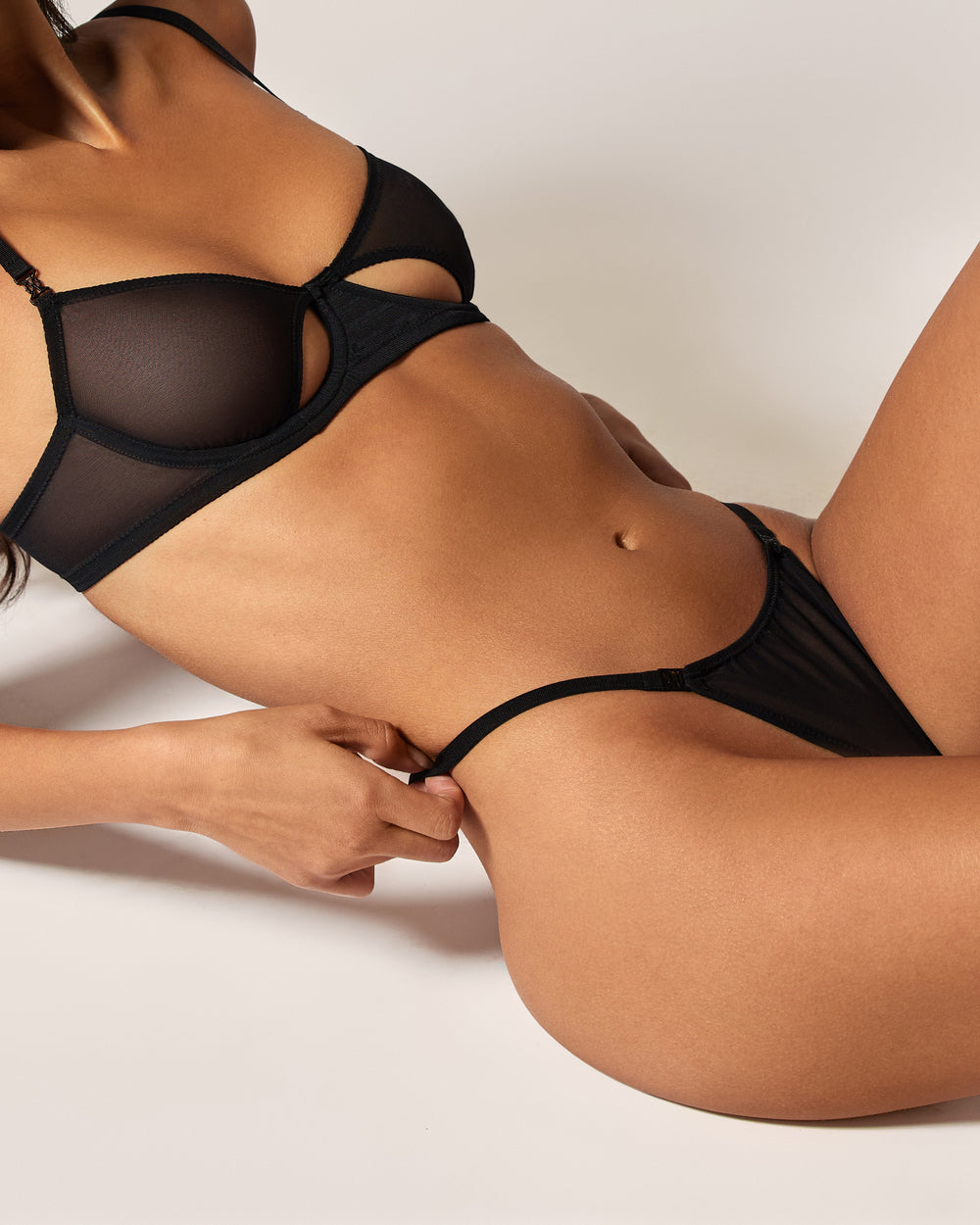
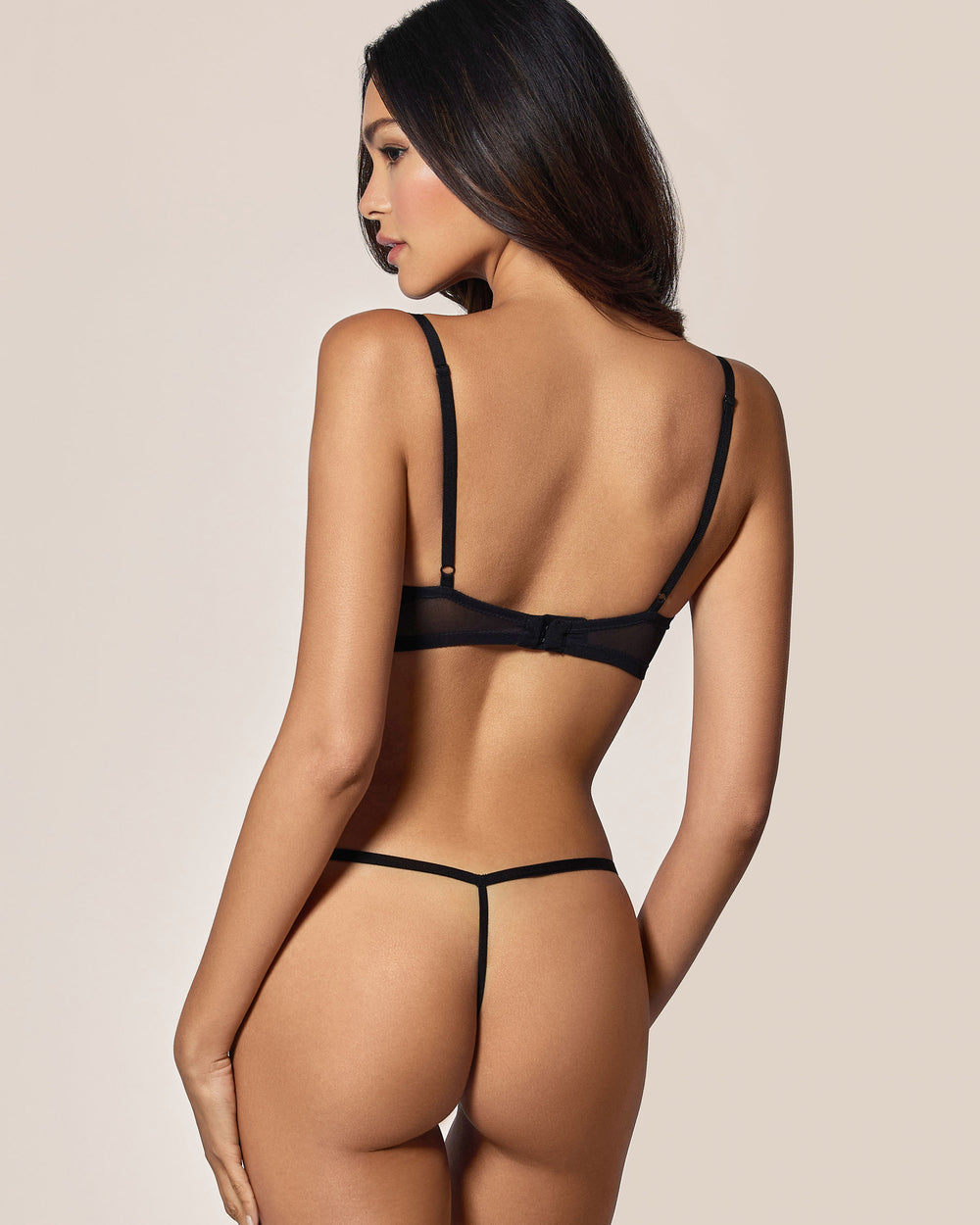
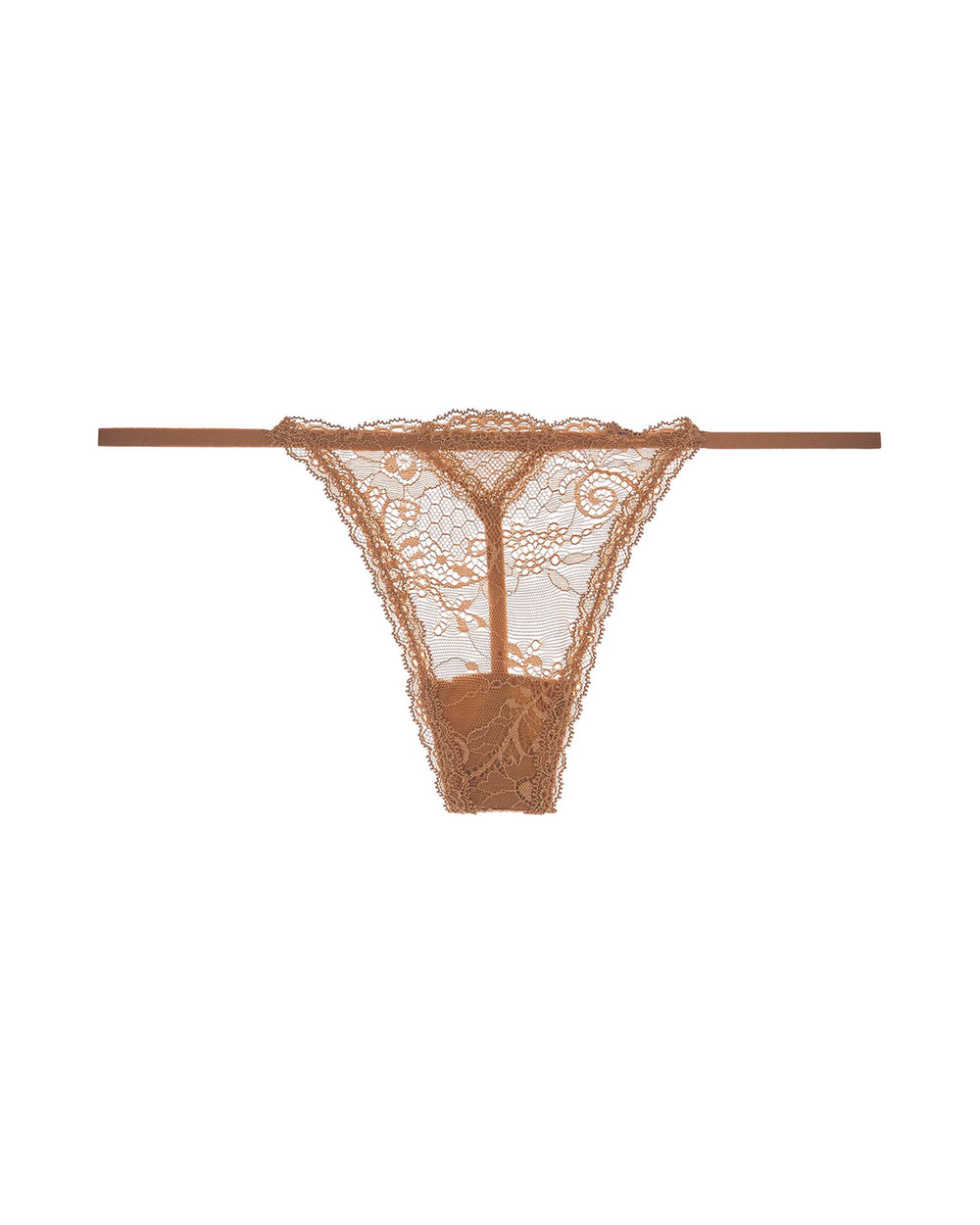
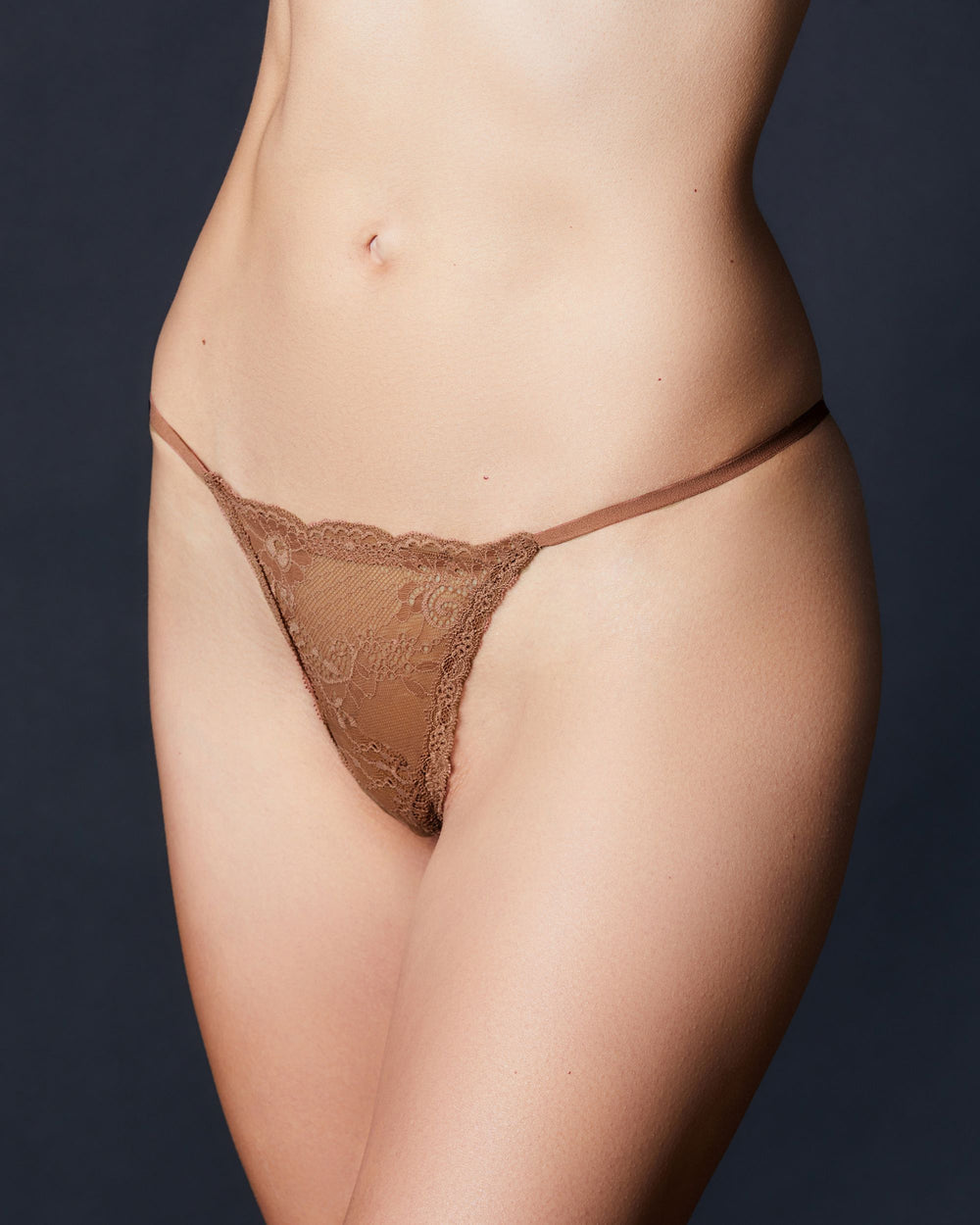
A G-string is the most minimal cut of underwear available. It consists of a narrow front panel connected to a thin string at the back — typically a single cord or very narrow band — with almost no fabric coverage at the rear. The name refers to the string-like back construction that distinguishes it from a thong.
G-String vs. Thong: What's the Difference
G-strings and thongs are often used interchangeably, but there is a meaningful difference in construction. A G-string has the narrowest possible back — usually a single thin string. A thong has a slightly wider strip of fabric at the back, typically a T-shaped piece that sits between the cheeks with a narrow band connecting to the waistband. Both eliminate visible panty lines, but the G-string is more minimal; the thong tends to feel slightly more secure and substantial.
For a detailed comparison of these styles and how they differ from other cuts, see our blog post: G-Strings 101: What They Are and How They Differ From Thongs and Other Styles.
When to Wear a G-String
G-strings are the most effective solution for eliminating visible panty lines under very fitted or lightweight clothing — bodycon dresses, silk trousers, leggings, or anything where any fabric at the back would show through. They are also useful under swimwear and for occasions when even a thong feels like too much. For women who find them comfortable, G-strings can also work as everyday underwear, though they require a properly fitted waistband that sits correctly without shifting.
Shop G-strings at Journelle.
Fitter's note: G-strings are for eliminating VPL under sheath dresses and nothing else. Don't buy them for everyday — the construction isn't built for all-day wear and you'll notice it by hour four.
Shop G-Strings
Thongs
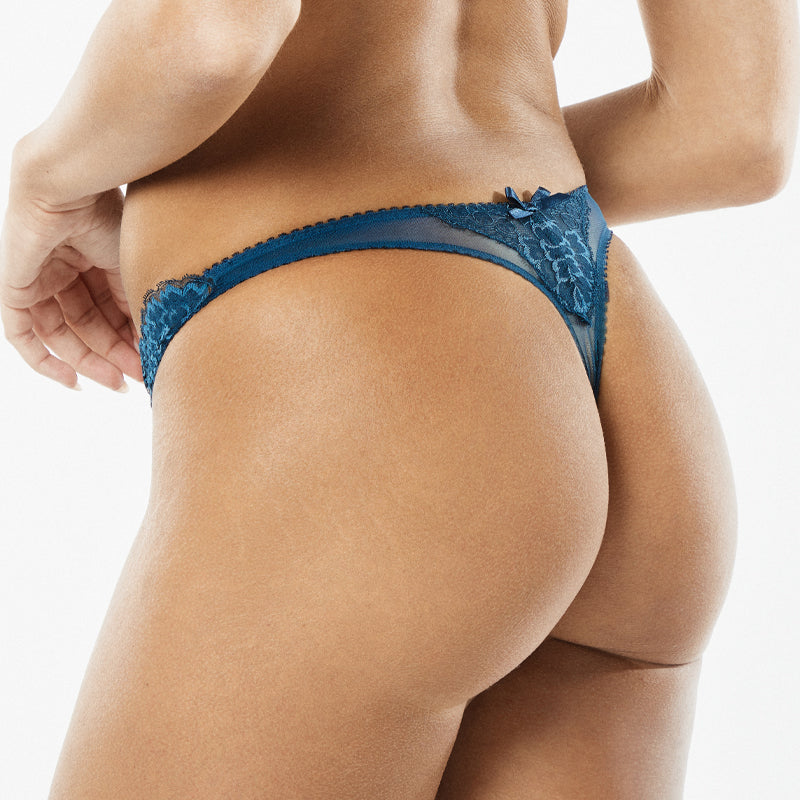
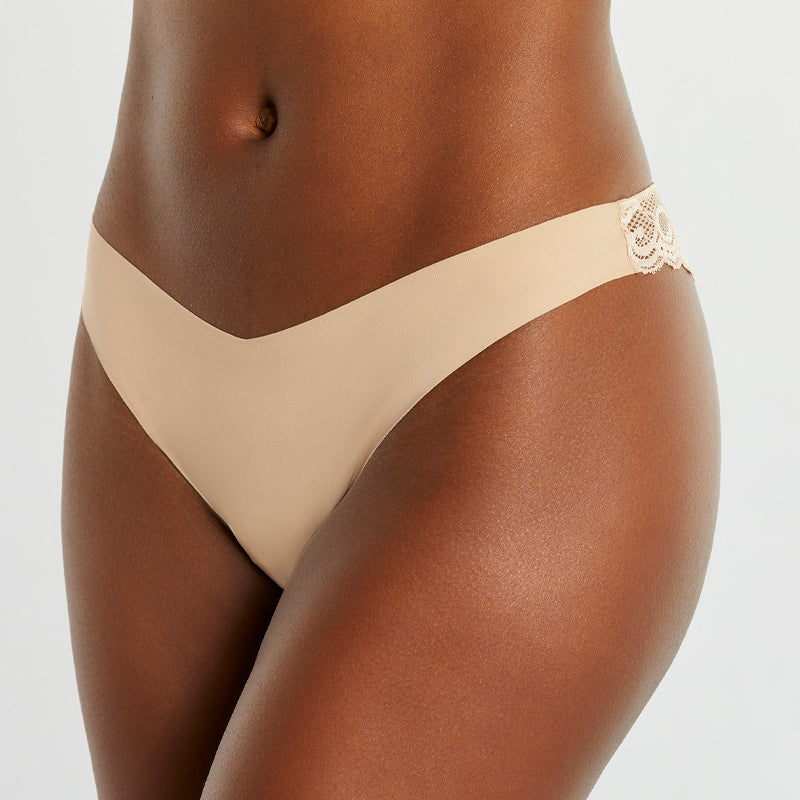
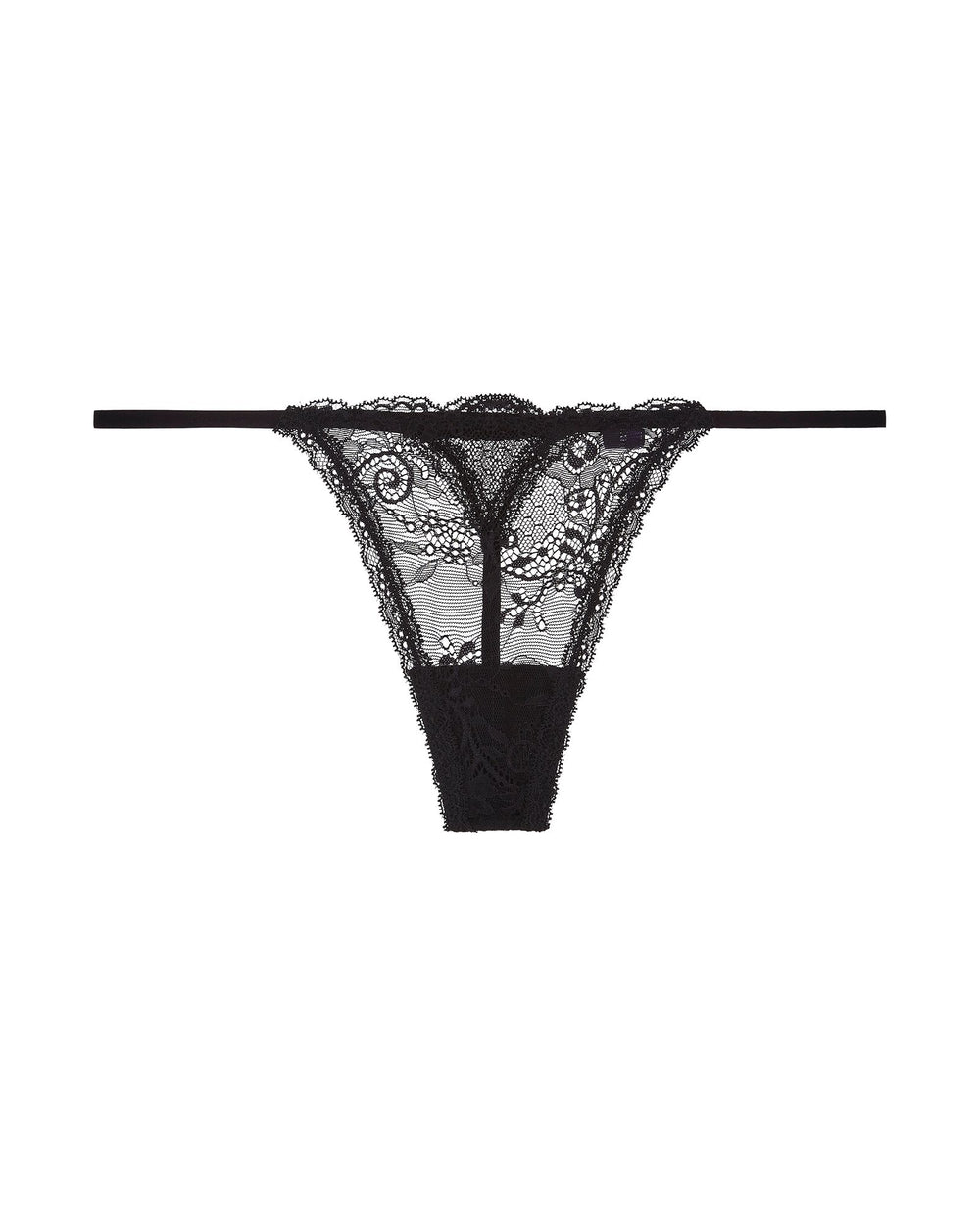
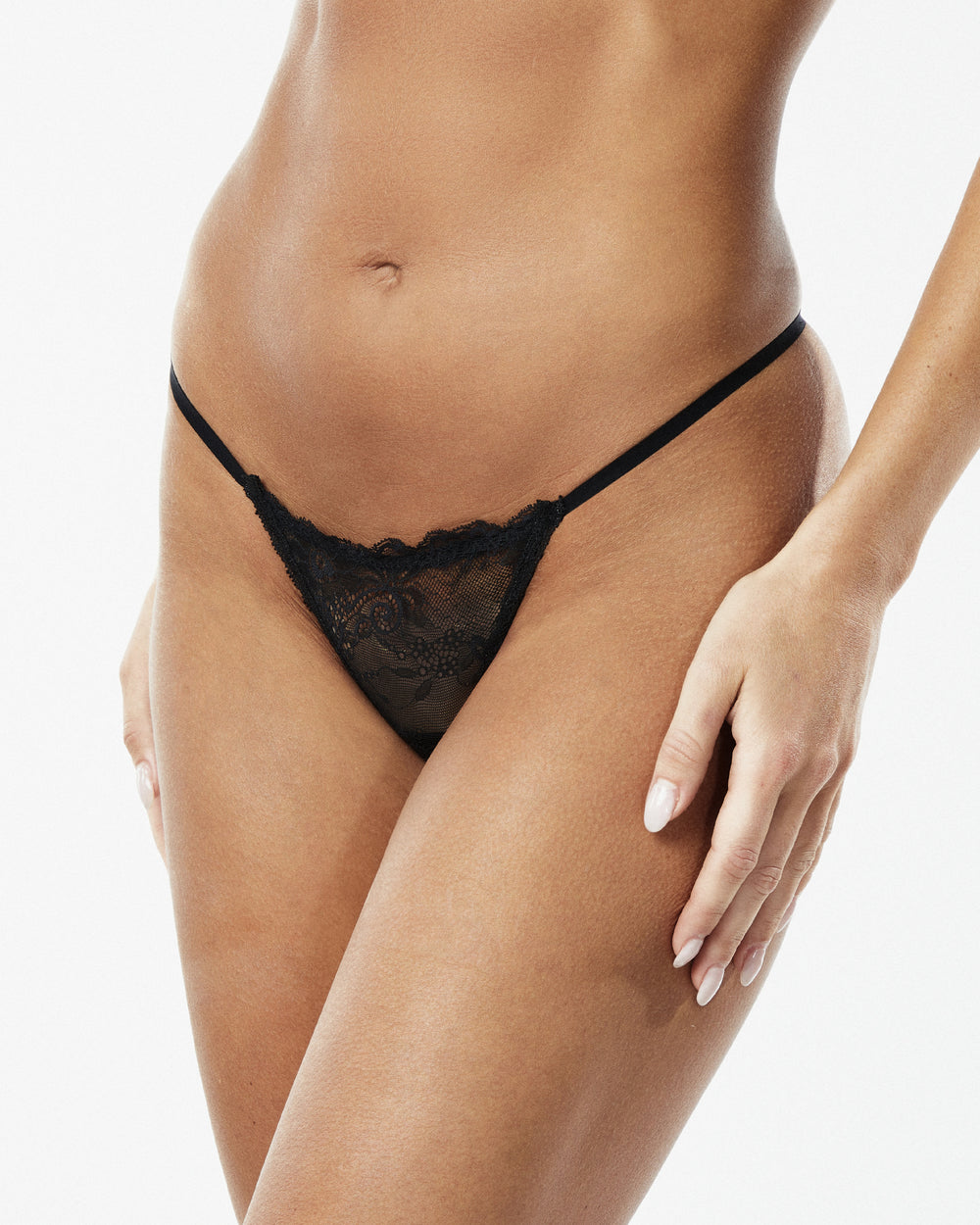
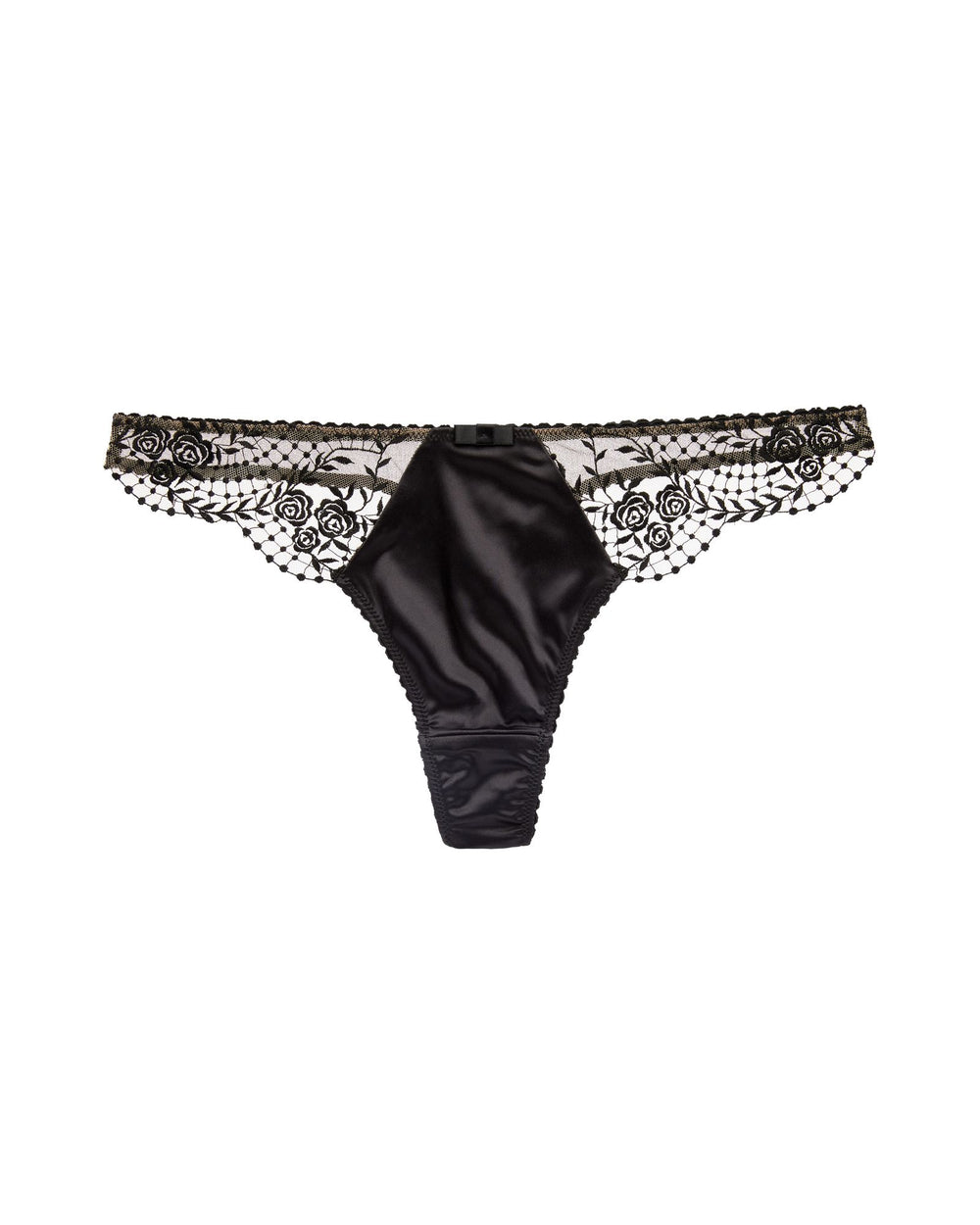
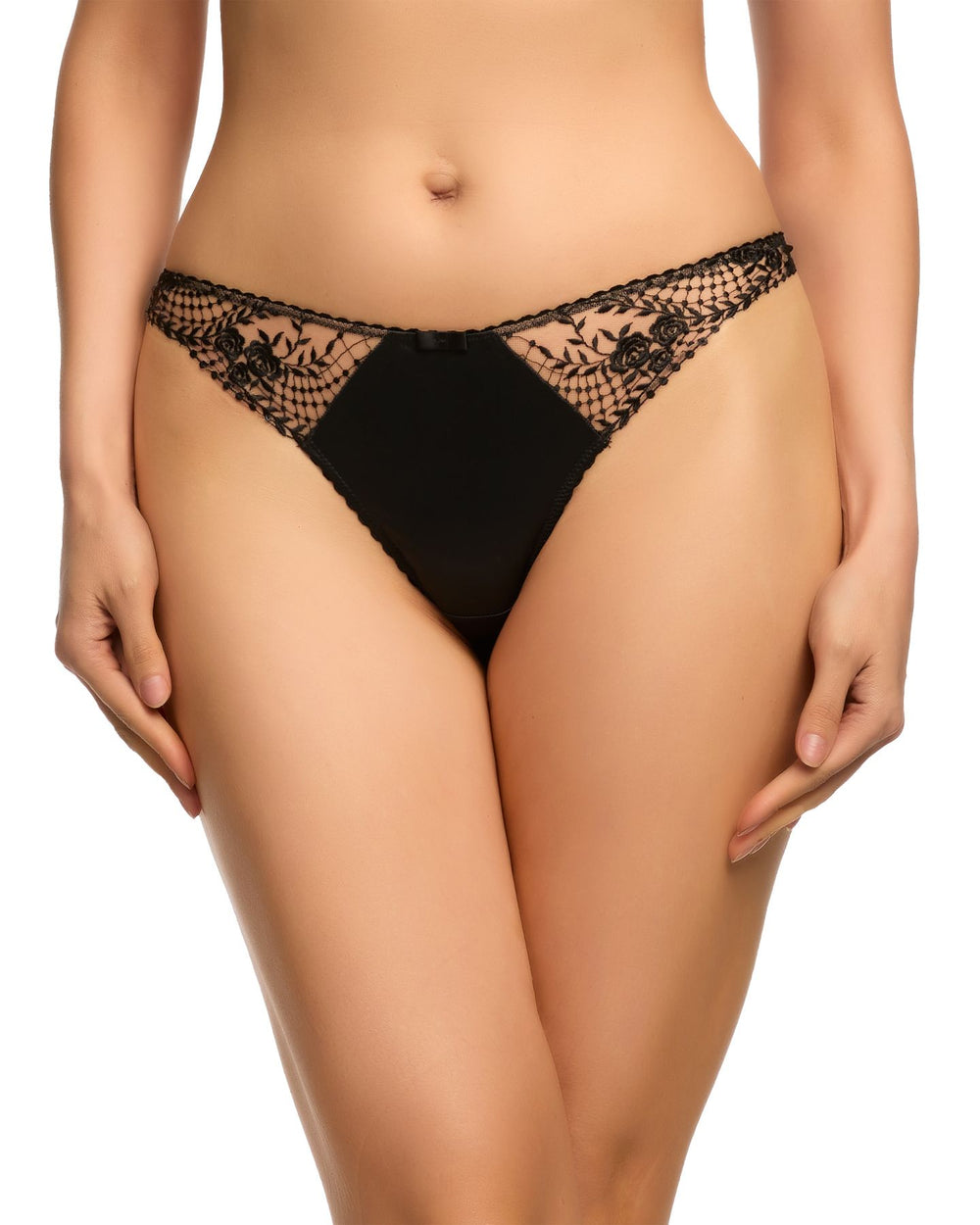
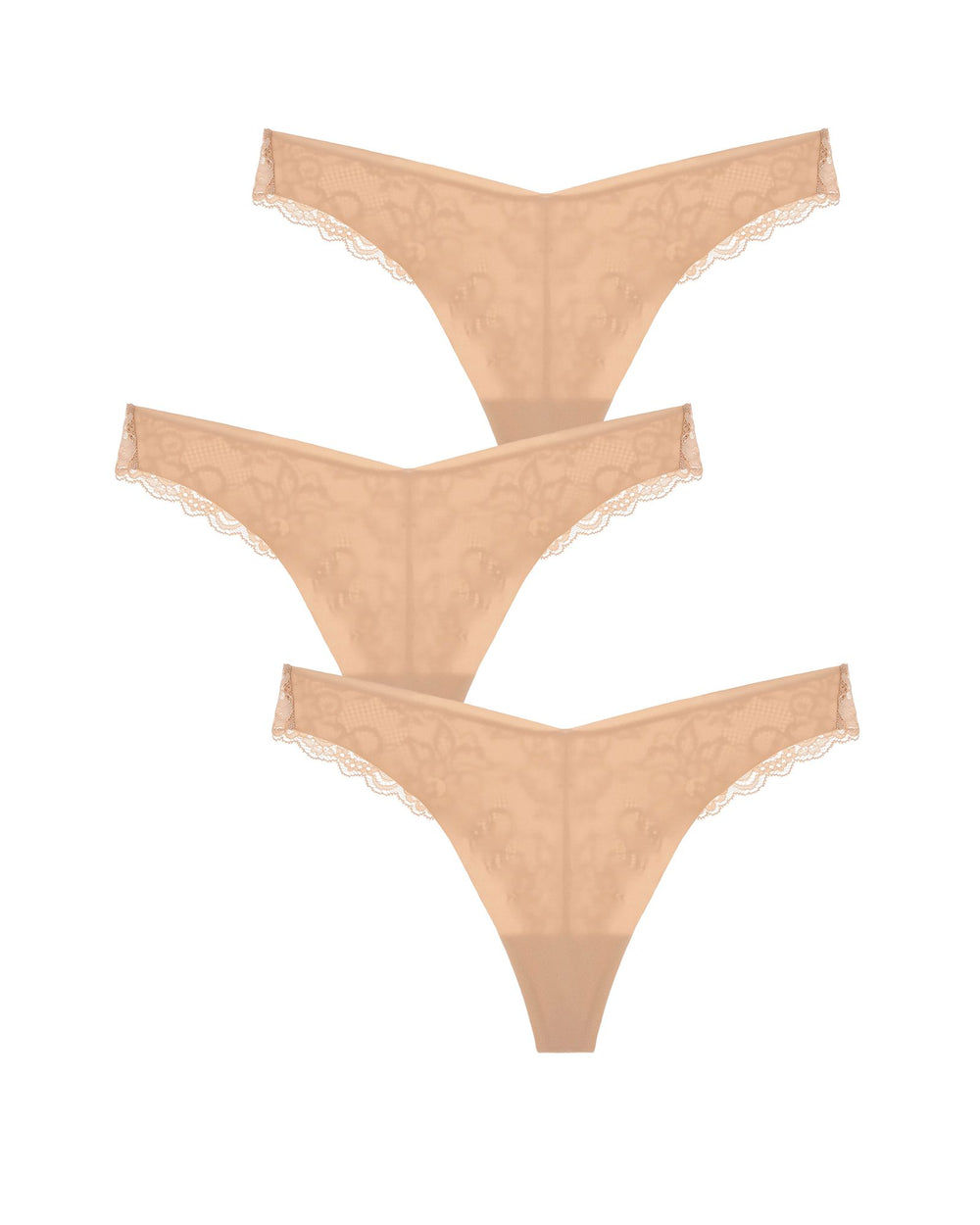
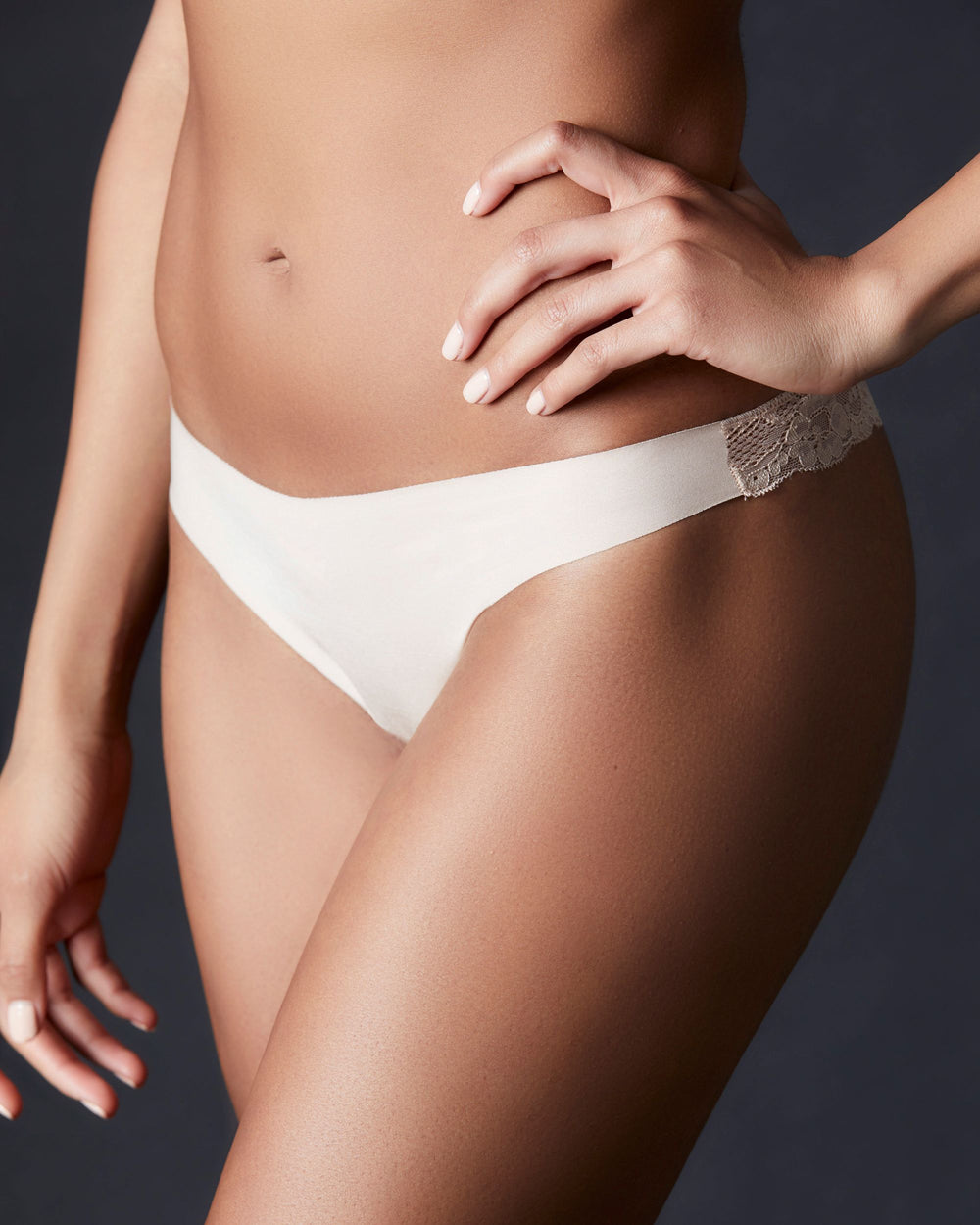
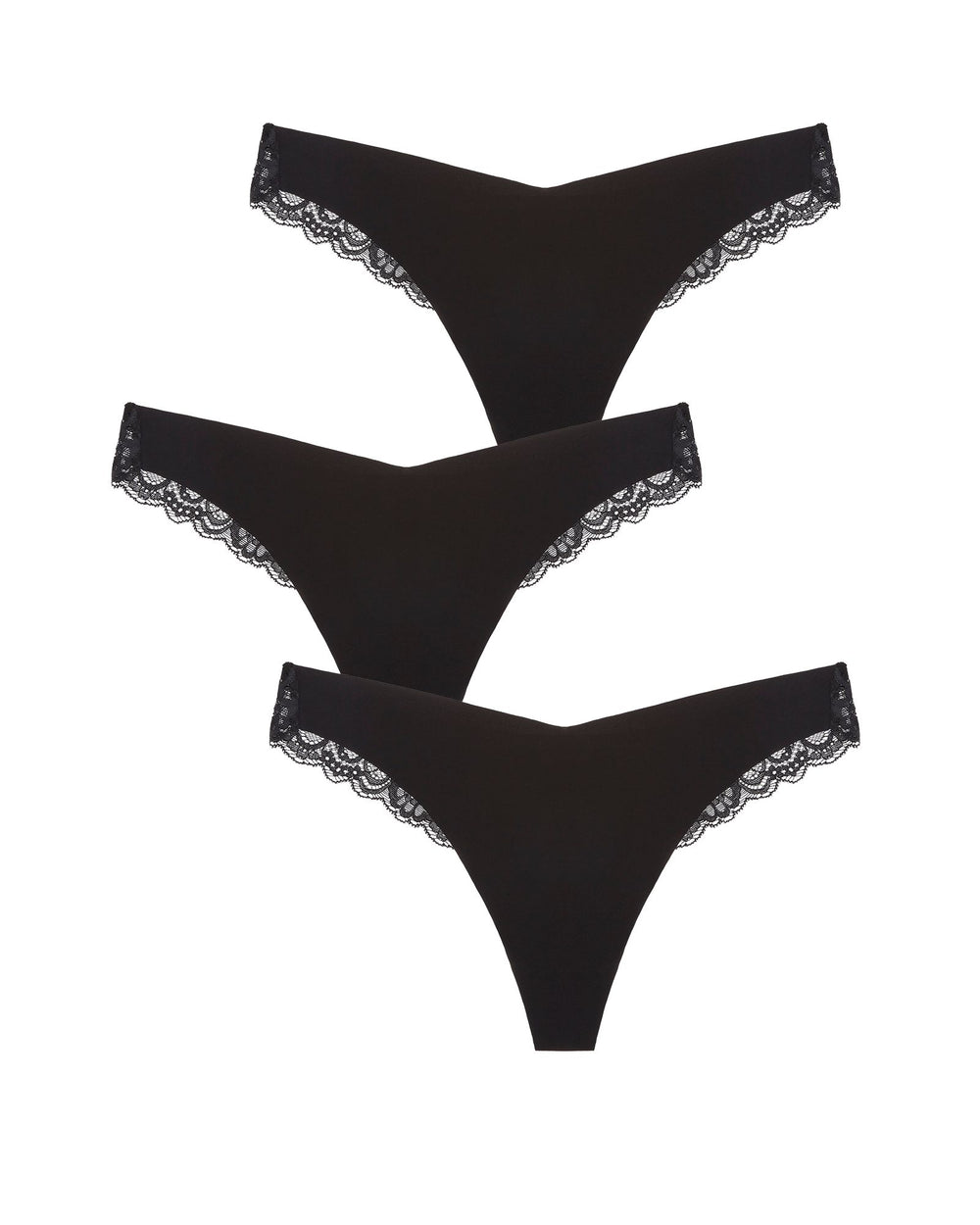
A thong has a narrow strip of fabric at the back — wider than a G-string string but still minimal enough to sit between the cheeks and eliminate visible panty lines. The front typically offers more coverage than a G-string, and the waistband tends to sit more securely through the day. For most women, a thong is the more practical everyday option of the two minimal-coverage styles.
Why Thongs Are a Wardrobe Staple
The thong has become one of the most widely worn underwear styles precisely because it solves a specific and common problem: visible panty lines under fitted clothing. Under a pencil skirt, slim trousers, or a bodycon dress, a thong is nearly always the cleanest option. Well-made thongs in quality fabrics are also more comfortable than their minimal construction might suggest — the key is a waistband that sits correctly at the hip without digging, and a back strip that lies flat rather than twisting or shifting.
Lace vs. Seamless Thongs
Lace thongs prioritize aesthetics — they are the style you choose when what you are wearing underneath matters to you as much as what is visible on the outside. Seamless thongs prioritize invisibility — smooth, flat construction that disappears under the thinnest fabrics. Most women find it useful to own both: a selection of seamless styles for everyday dressed wear and a few lace or embellished pairs for when the underwear itself is part of the experience.
Browse Journelle's full selection of thongs, and explore our blog post on 7 thong styles worth adding to your collection.
Fitter's note: Rise matters more than cut. A low-rise thong on a long torso rides into uncomfortable territory; a mid-rise solves it. If you've "hated thongs since forever", it's almost always a rise issue, not a thong issue.
Shop Thongs
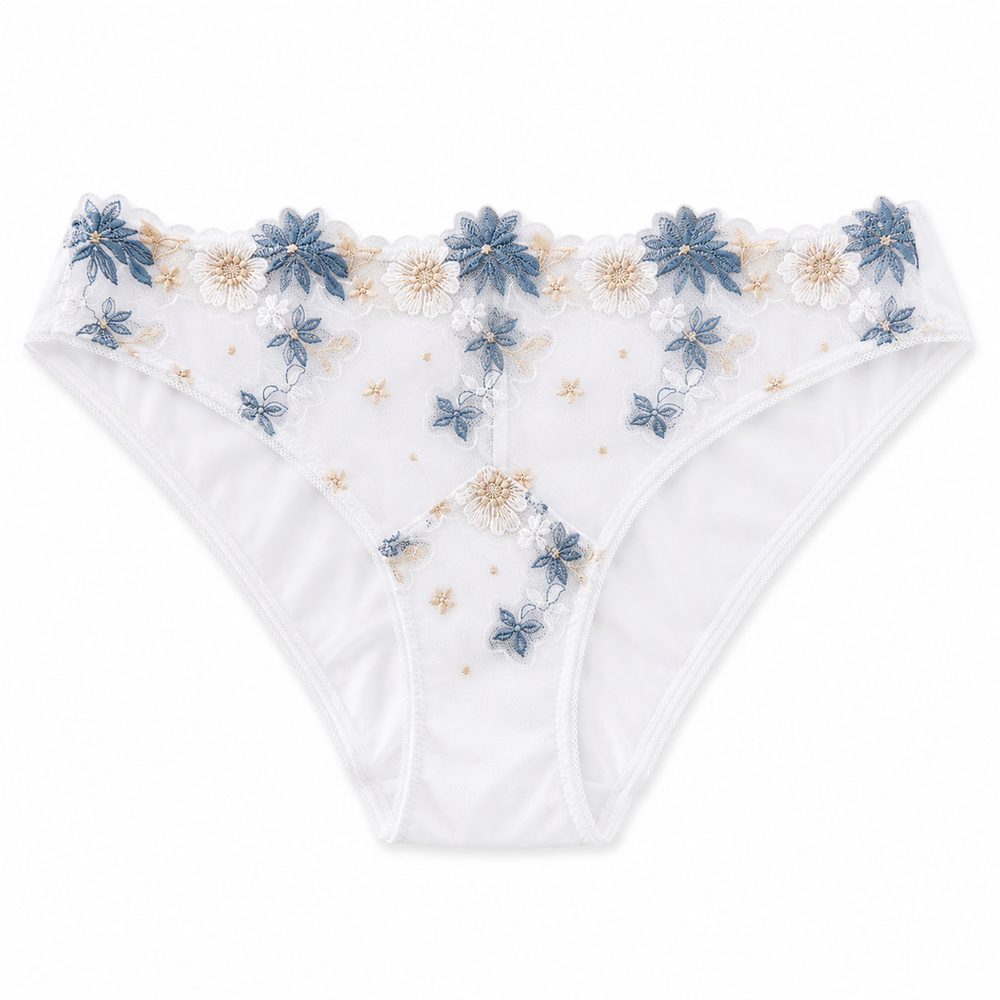
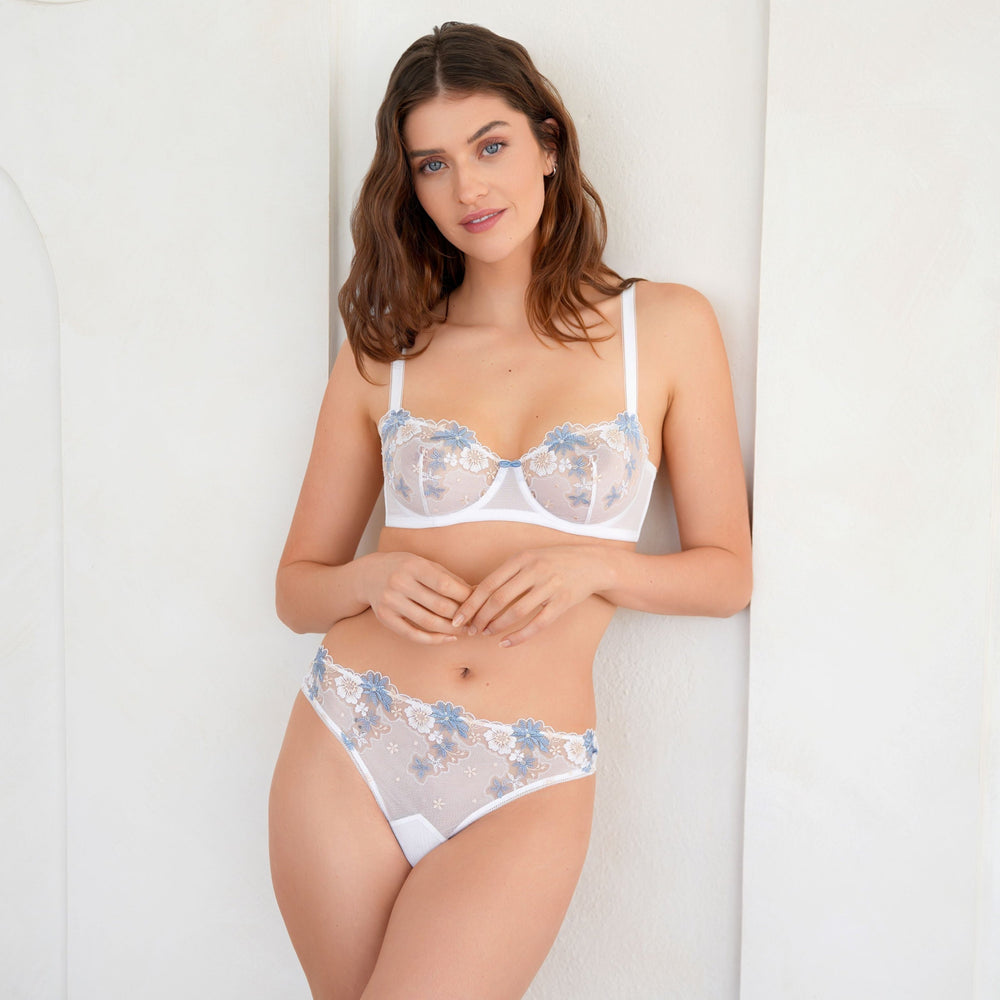
Bikini Panties
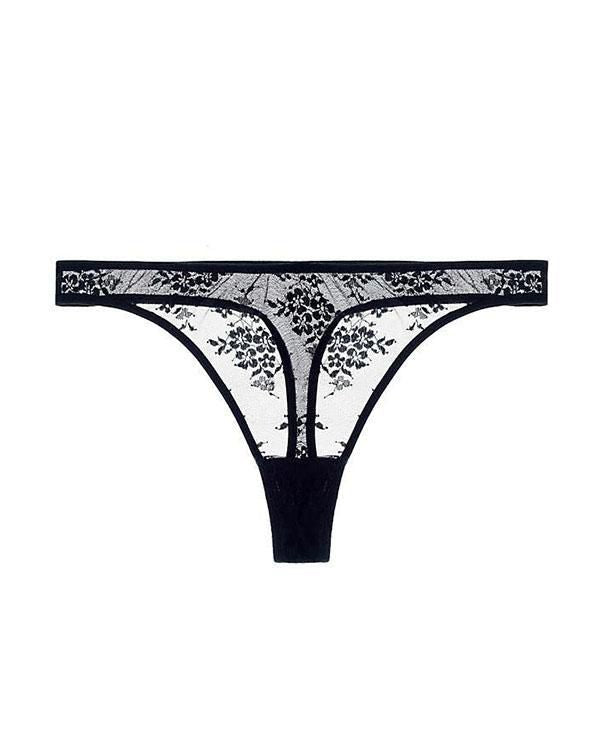
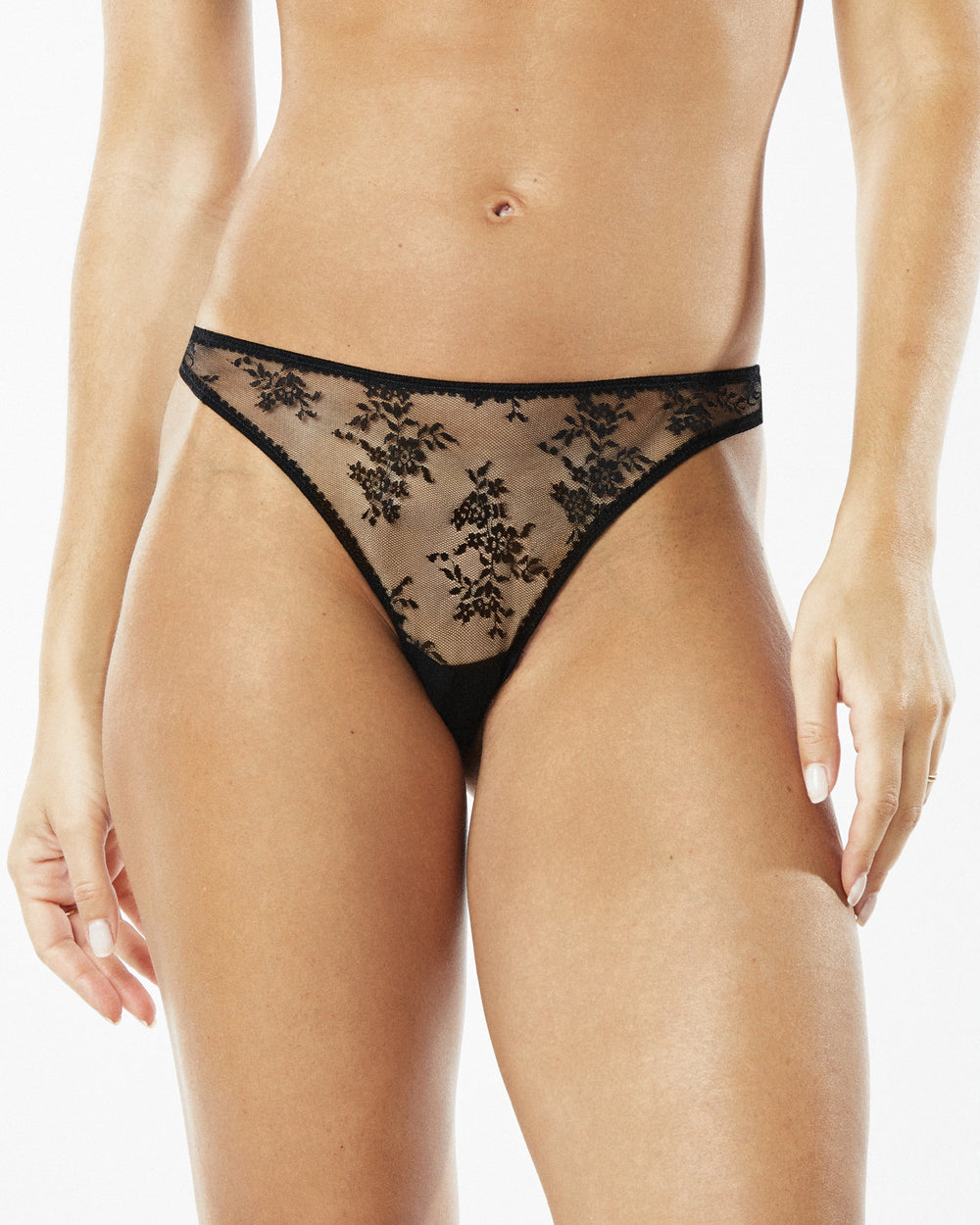
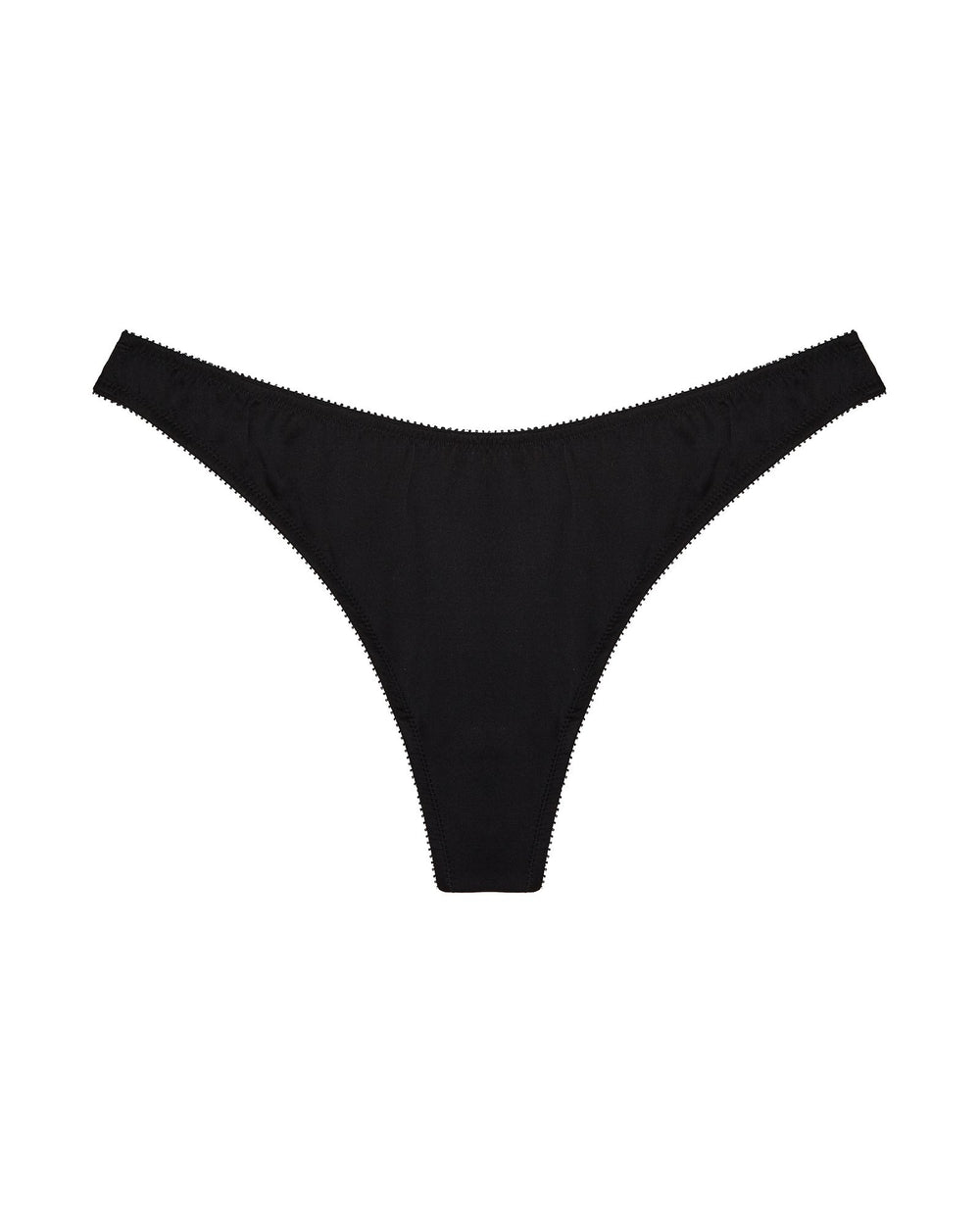
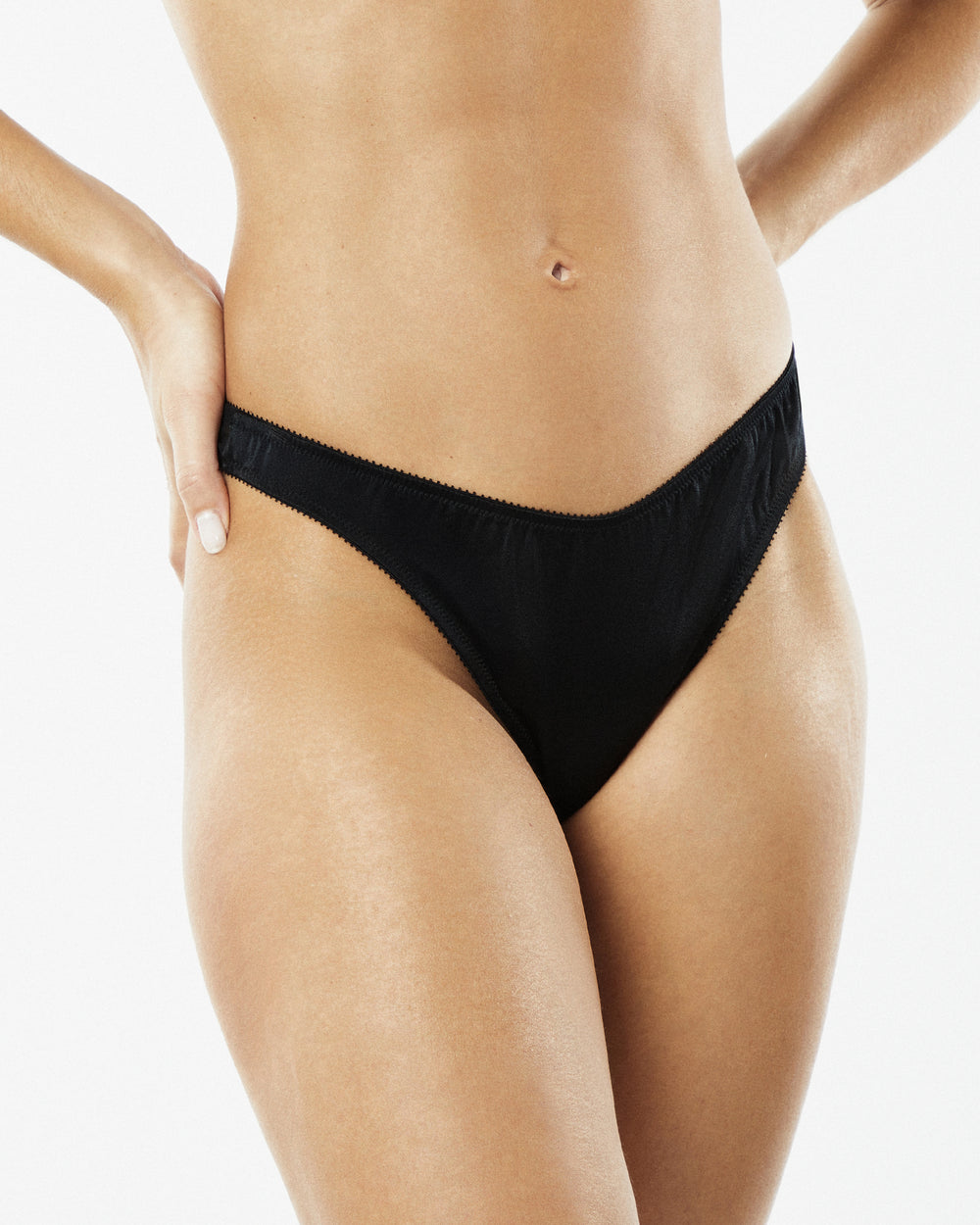
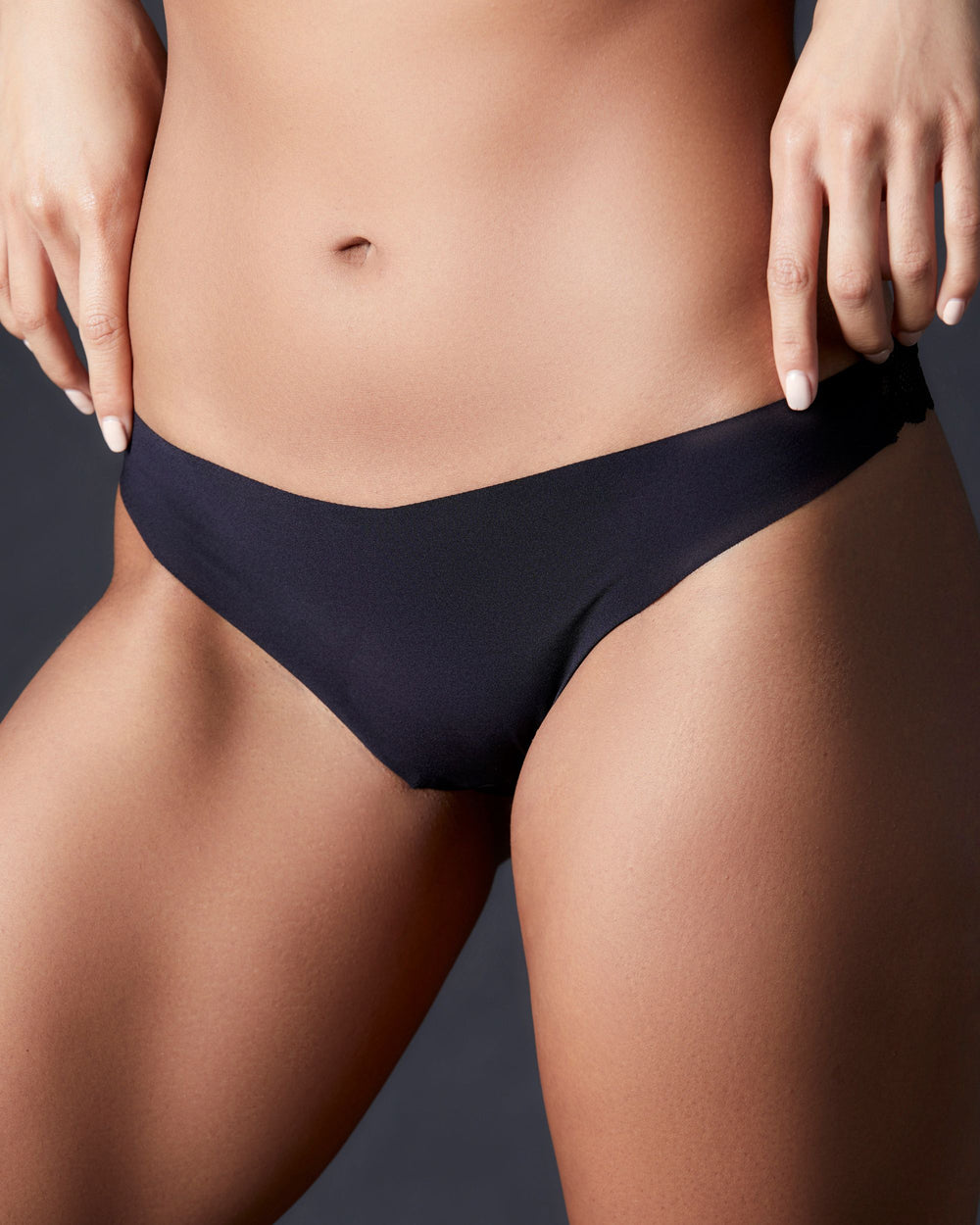
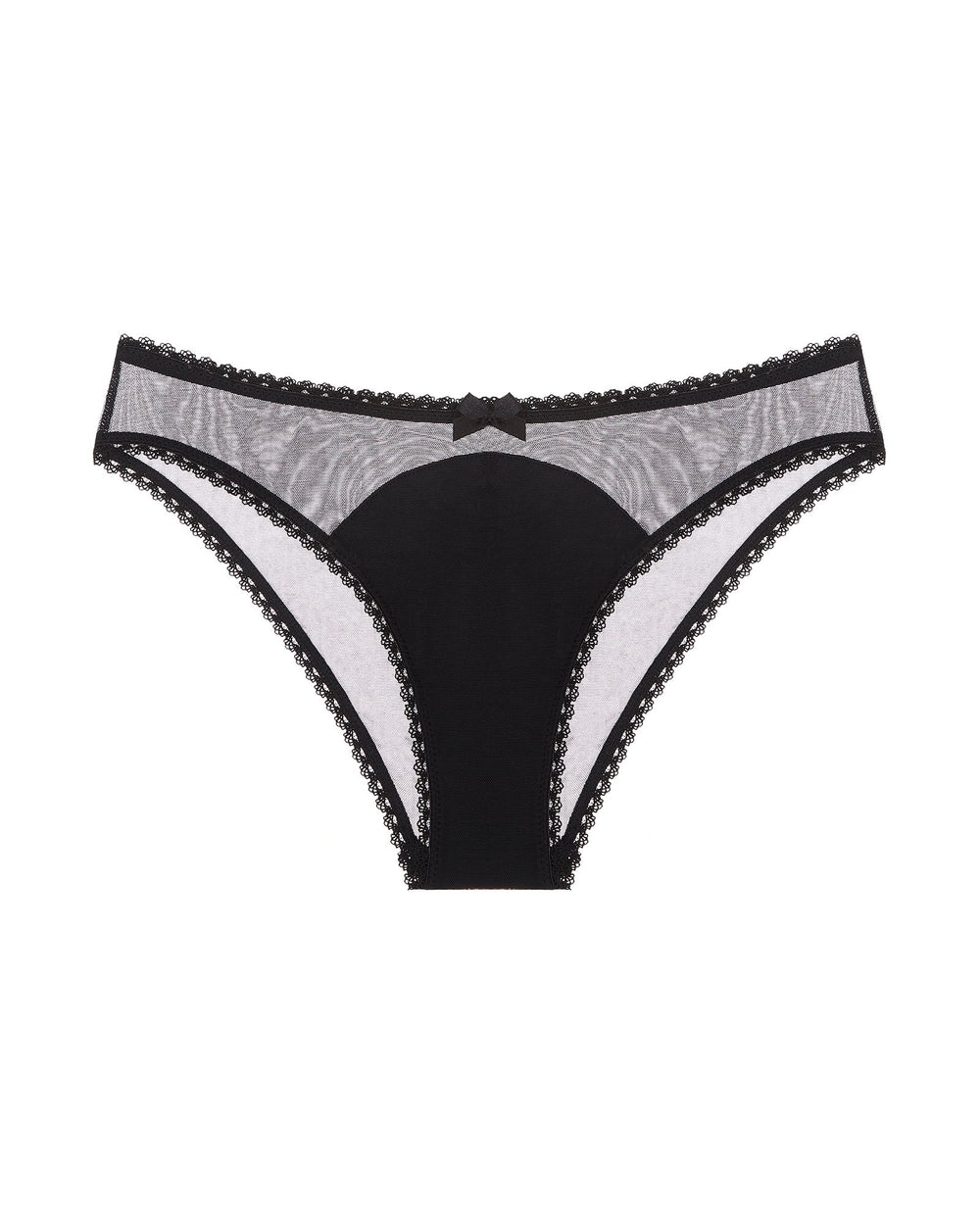
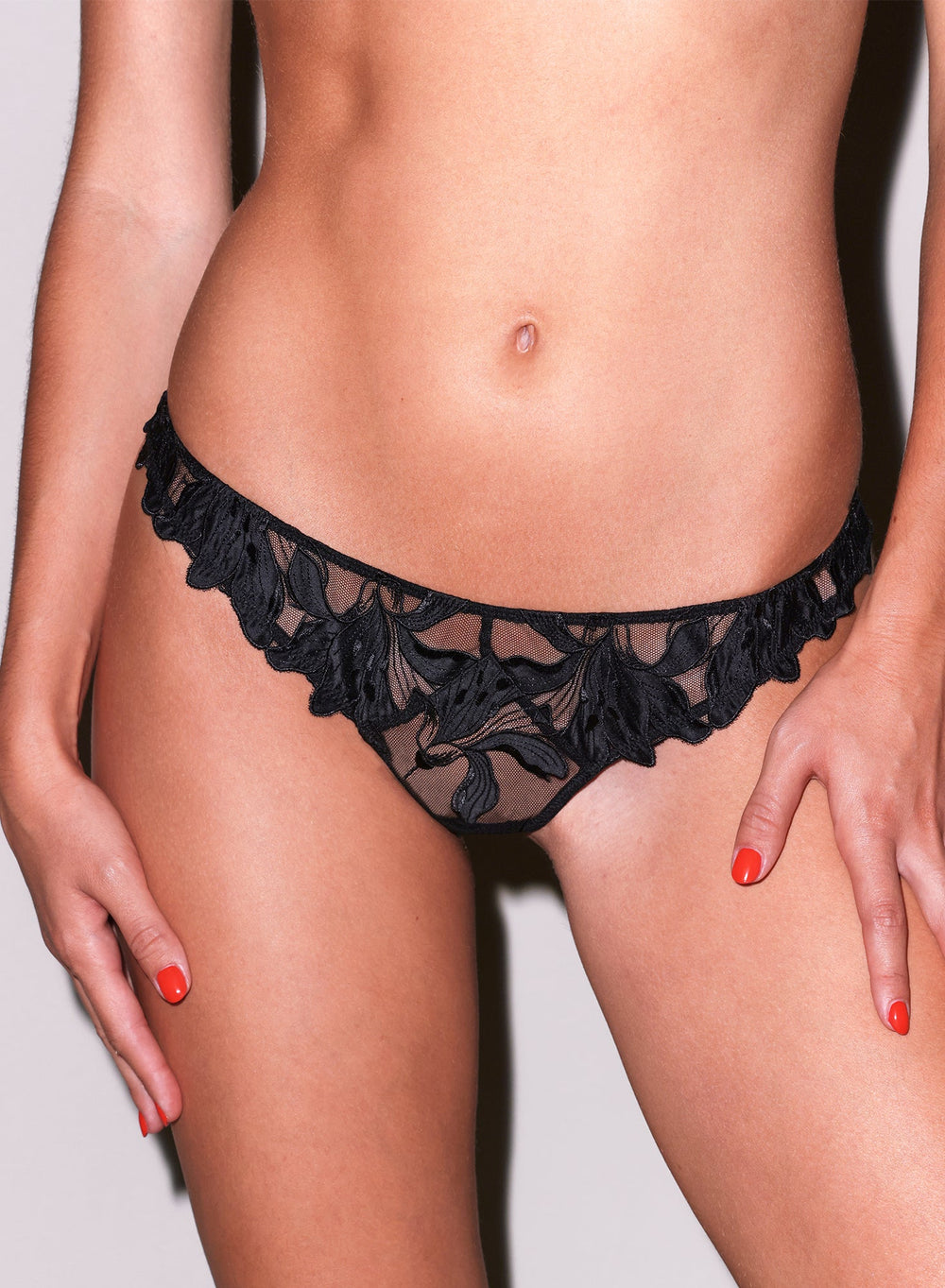
The bikini is the most familiar everyday underwear silhouette. It sits at or just below the hip bone, with full front coverage and moderate rear coverage — more than a thong, less than a boyshort or brief. The sides are typically cut straight or slightly curved, and the leg opening sits at a comfortable mid-thigh level. Most women own more bikini-cut underwear than any other style, simply because it works well across most situations and body types.
Bikini vs. Cheeky Cut
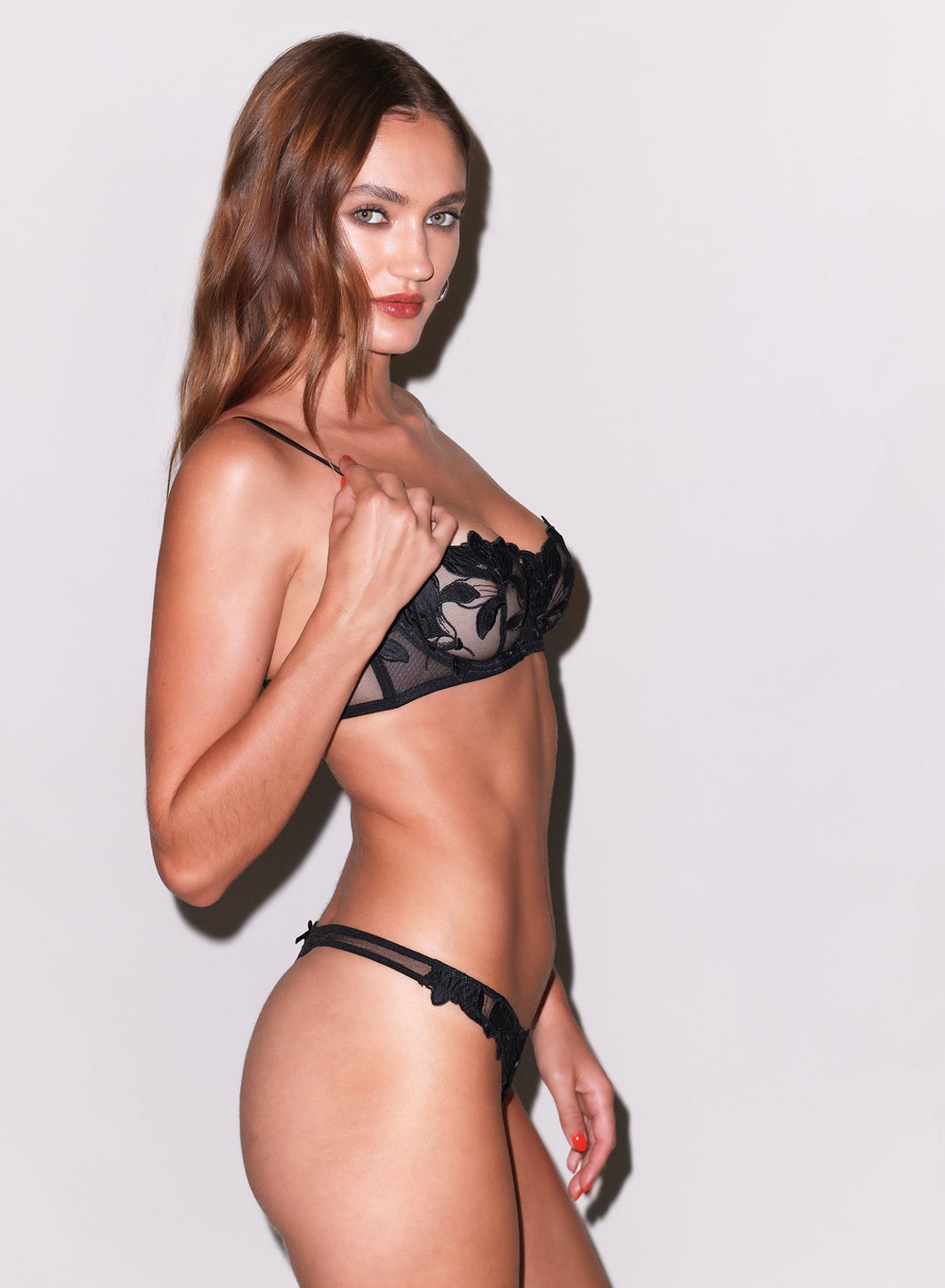
A cheeky bikini — sometimes listed simply as "cheeky" — is cut higher on the rear than a standard bikini, leaving more of the seat exposed while still providing more coverage than a thong or G-string. It sits between the two in terms of coverage: more than a thong, less than a classic bikini. Cheeky styles have become increasingly popular as a comfortable everyday option that balances coverage with a slightly more modern, fashion-forward silhouette.
When Bikini Panties Work Best
Bikinis are the most versatile everyday option for most women. They sit low enough to avoid showing above waistbands on mid-rise and high-rise clothing, offer enough coverage to feel comfortable for sustained wear, and come in a wider variety of fabrics and designs than any other cut. For days when you are not wearing fitted clothing that requires a seamless solution, a bikini in your preferred fabric is usually the easiest choice.
Shop bikini panties at Journelle.
Fitter's note: The most forgiving cut. If you're in-between sizes or trying to cut down on panty drawer chaos, a medium-rise bikini in a good modal or microfibre is the panty that fits 80% of bodies 80% of the time.
Shop Bikini Panties
Boyshorts
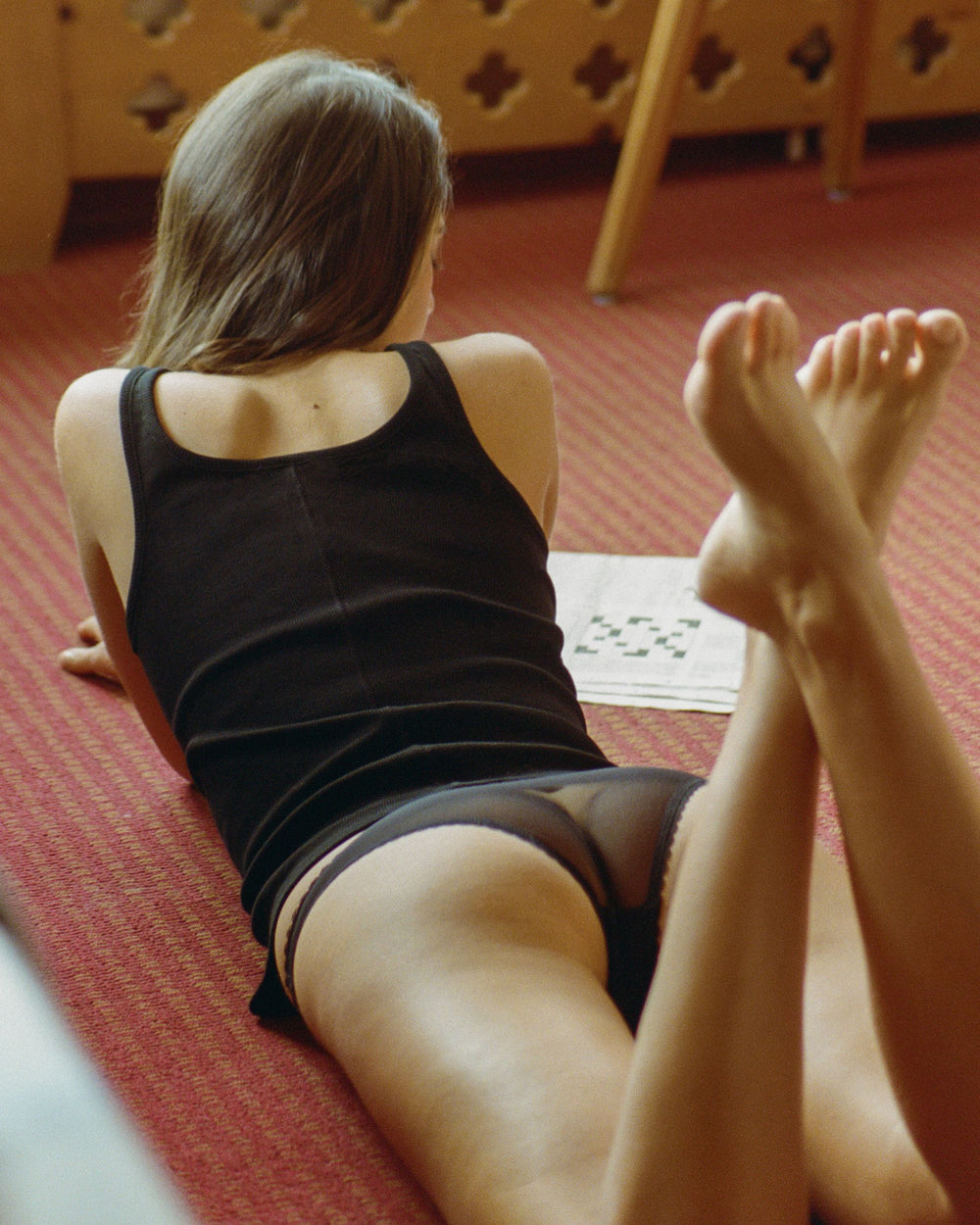
A boyshort is a full-coverage underwear style with a short, trunk-like leg — similar in shape to men's boxer briefs, but cut and proportioned for women's bodies. They cover the entire seat and extend down the upper thigh, making them one of the most comfortable and practical options in the category for women who prefer fuller coverage.
Why Boyshorts Are Worth Having
Boyshorts are particularly useful under skirts and dresses — they prevent inner-thigh chafing on warm days and add a layer of coverage that makes movement more comfortable. They also work well under pajamas, with loungewear, and for any situation where you want underwear that feels more like a second skin and less like a constant presence. Well-made boyshorts in soft fabrics are consistently one of the most comfortable underwear styles available.
The leg band is worth paying attention to when buying boyshorts: a band that is too tight will dig in and create visible lines at the thigh, which defeats the purpose. A well-cut boyshort should lie completely flat against the leg without gripping or rolling up throughout the day.
Lace Boyshorts
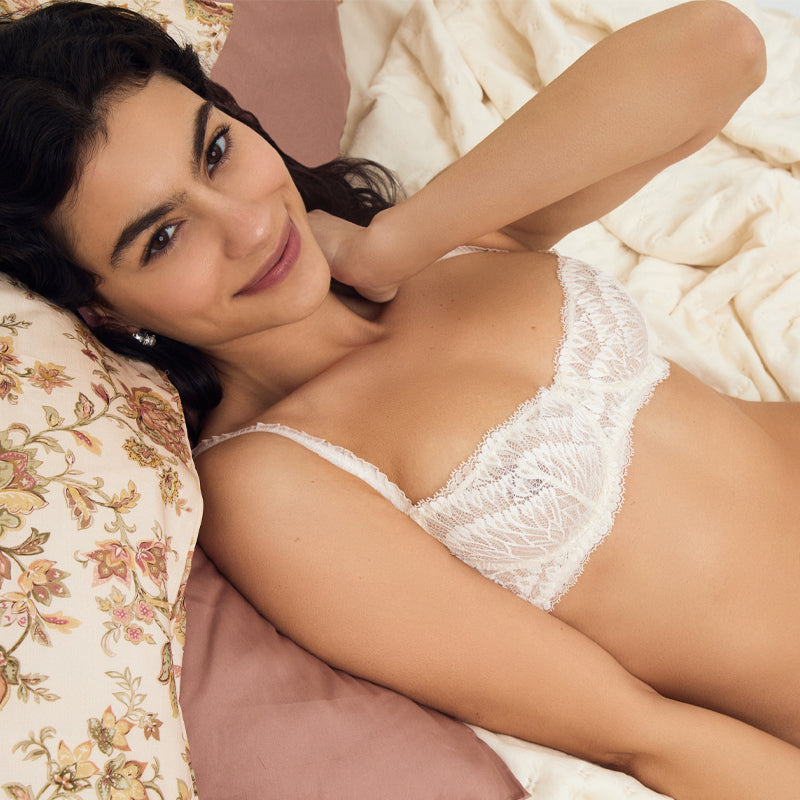
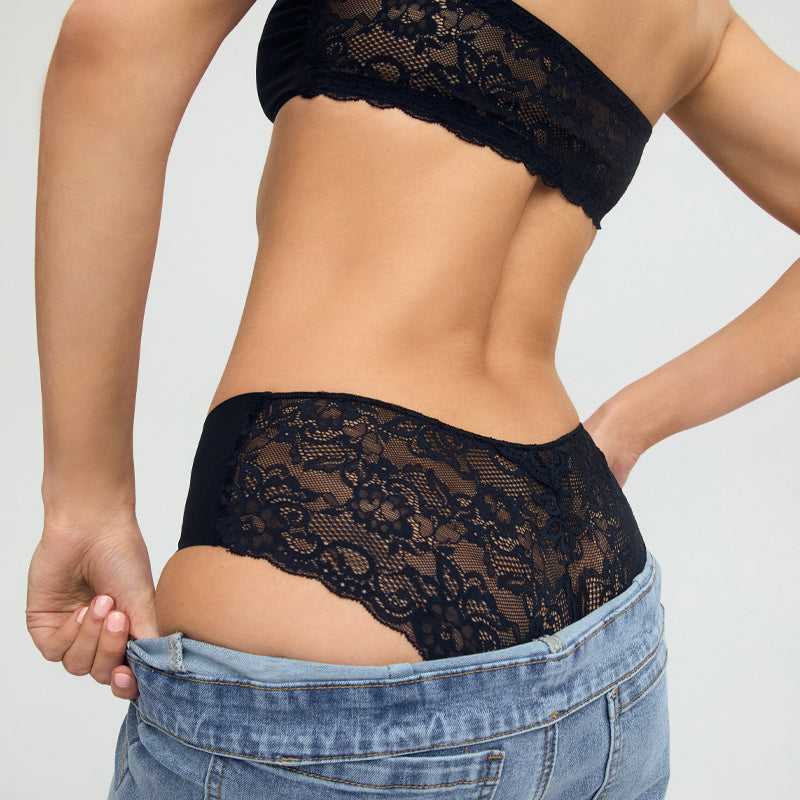
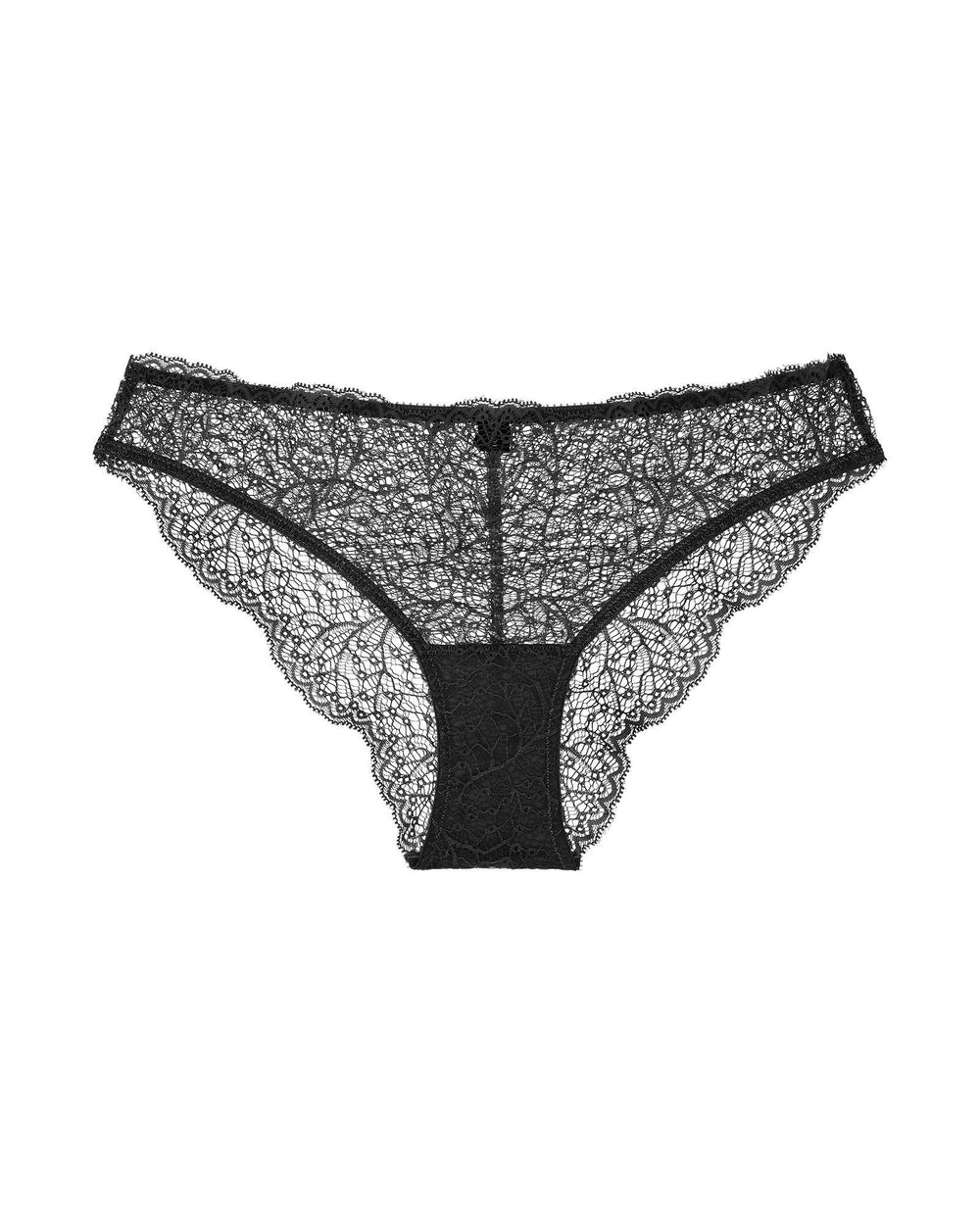
Boyshorts in lace are one of the lingerie category's more successful combinations — the full coverage of the style works well with lace because it gives the fabric enough surface area to show its detailing. A lace boyshort can function as both an everyday comfortable pair and a deliberate lingerie choice, particularly as part of a matching set.
Shop boyshorts at Journelle.
Fitter's note: The boyshort looks like it should be comfortable and often isn't — the leg band cuts into fuller thighs, and a rolled-down waistband is the most common fit failure. Buy in a size up from your bikini size if you're between.
Shop Boyshorts
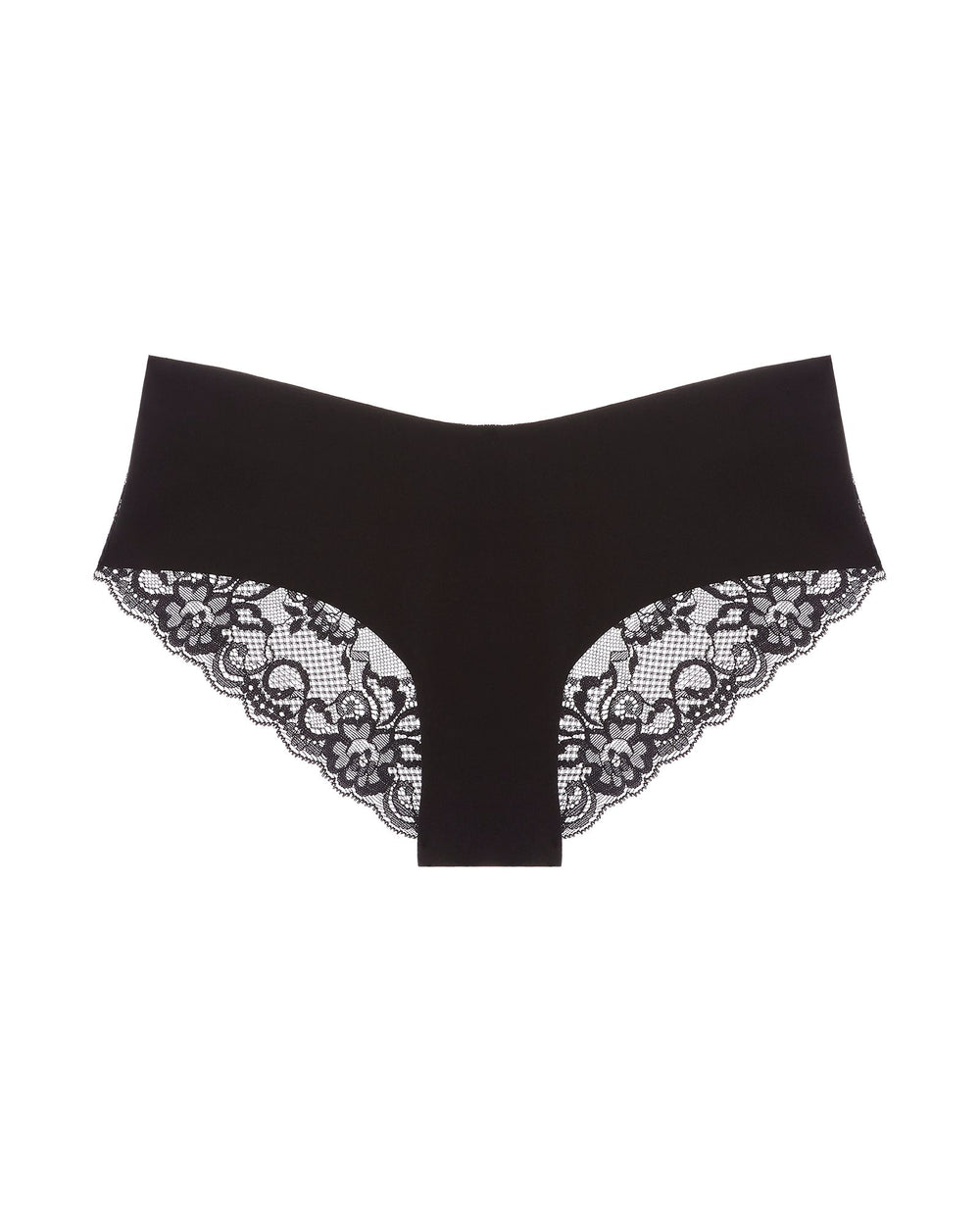
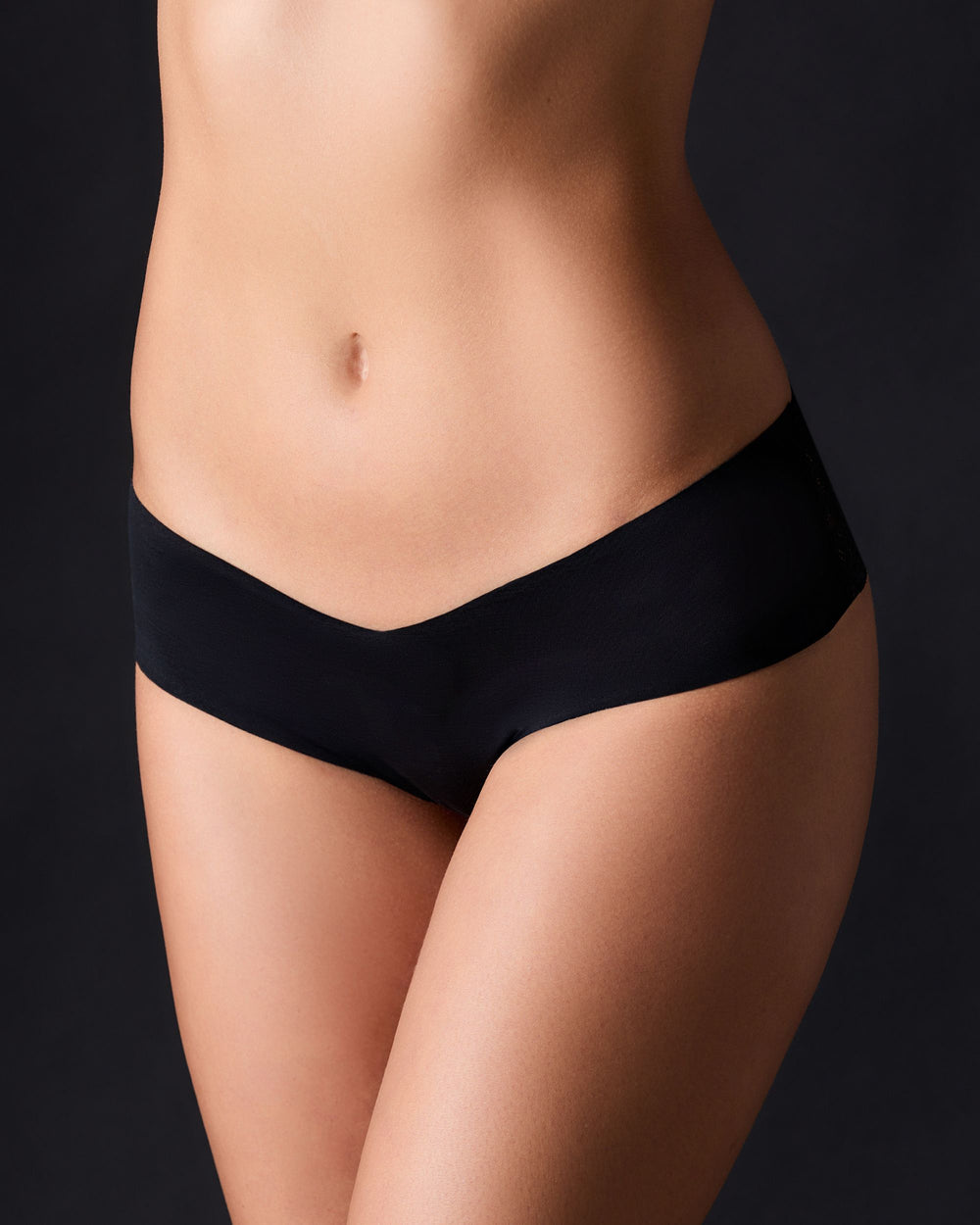
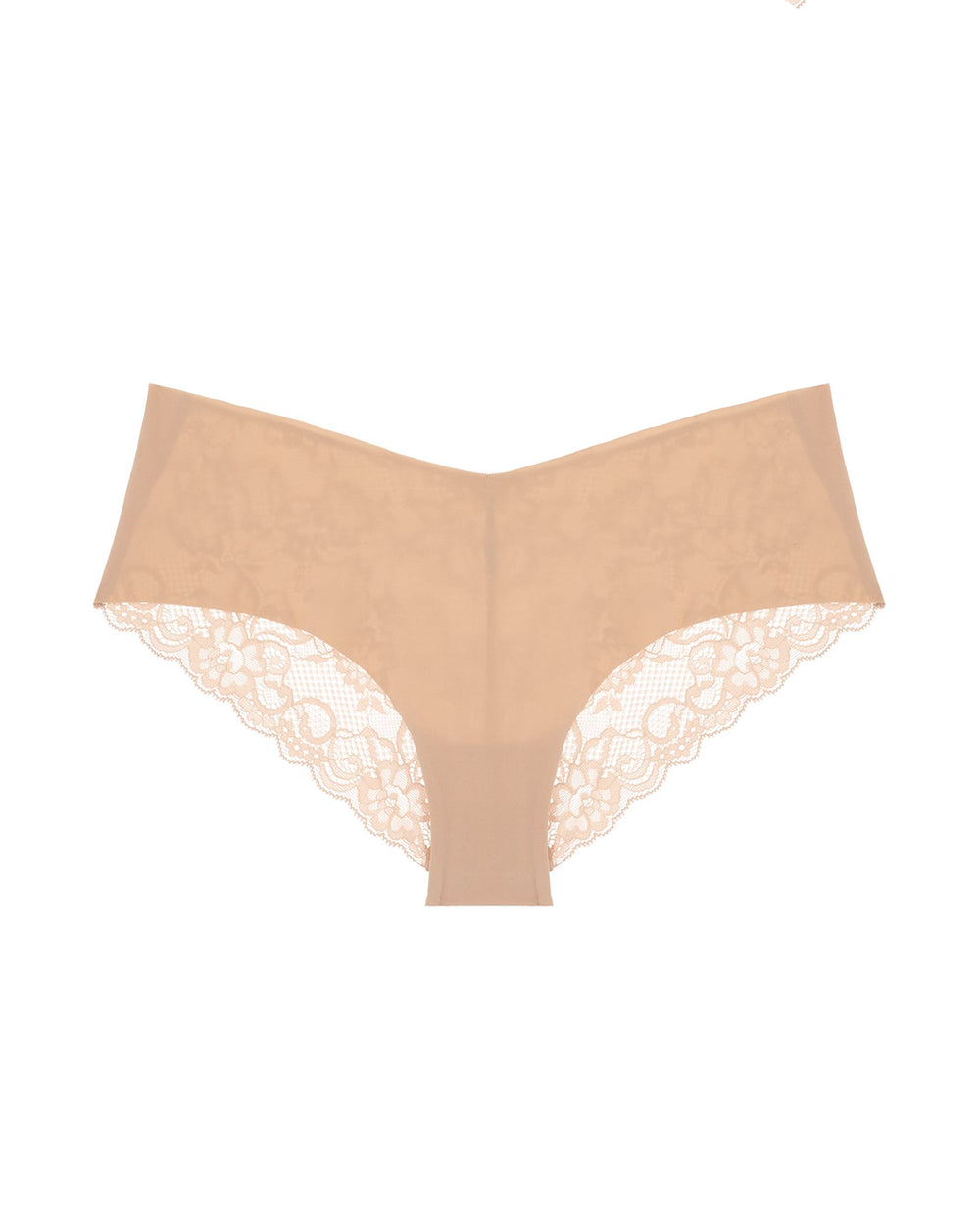
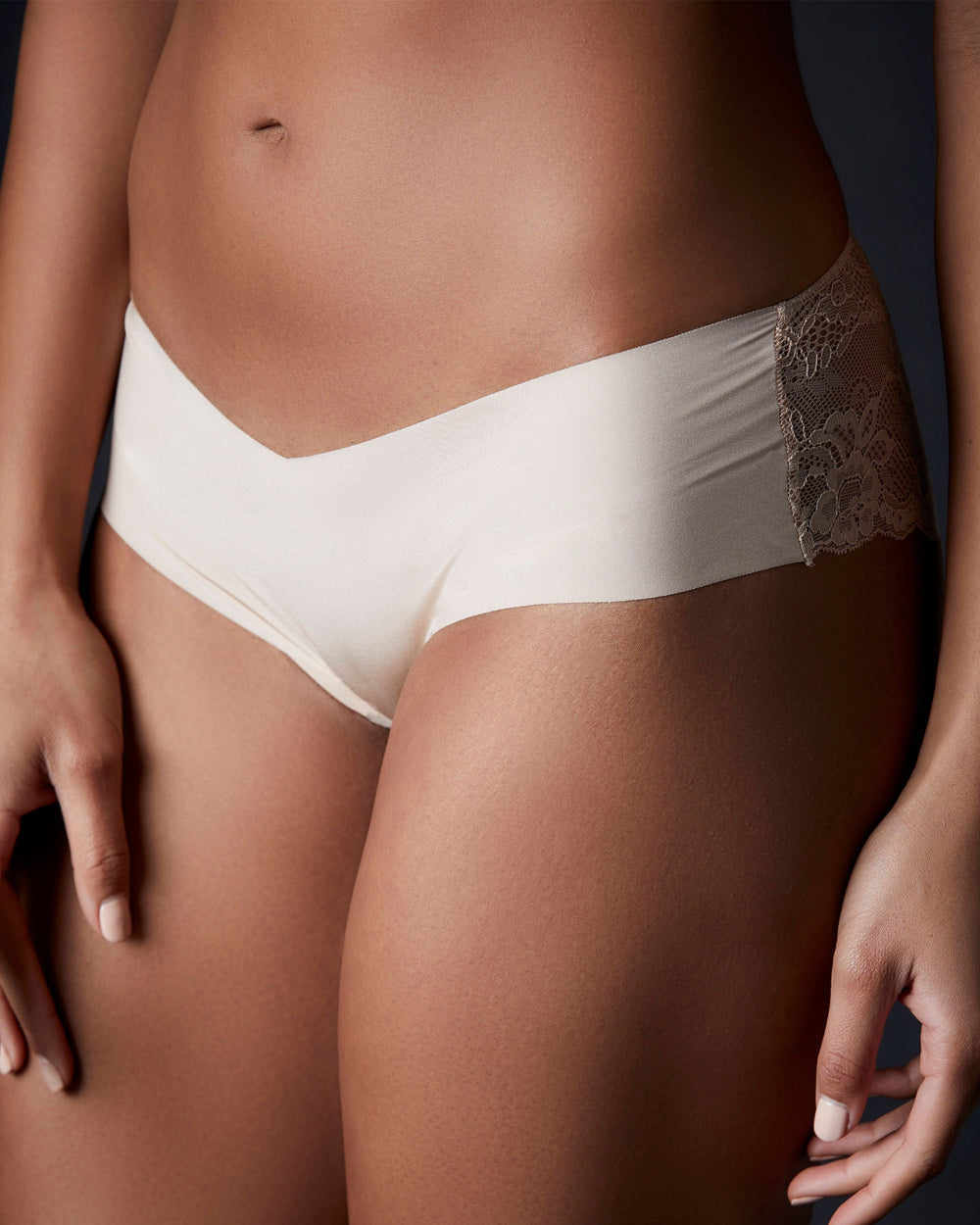
High-Waisted & Brief Styles
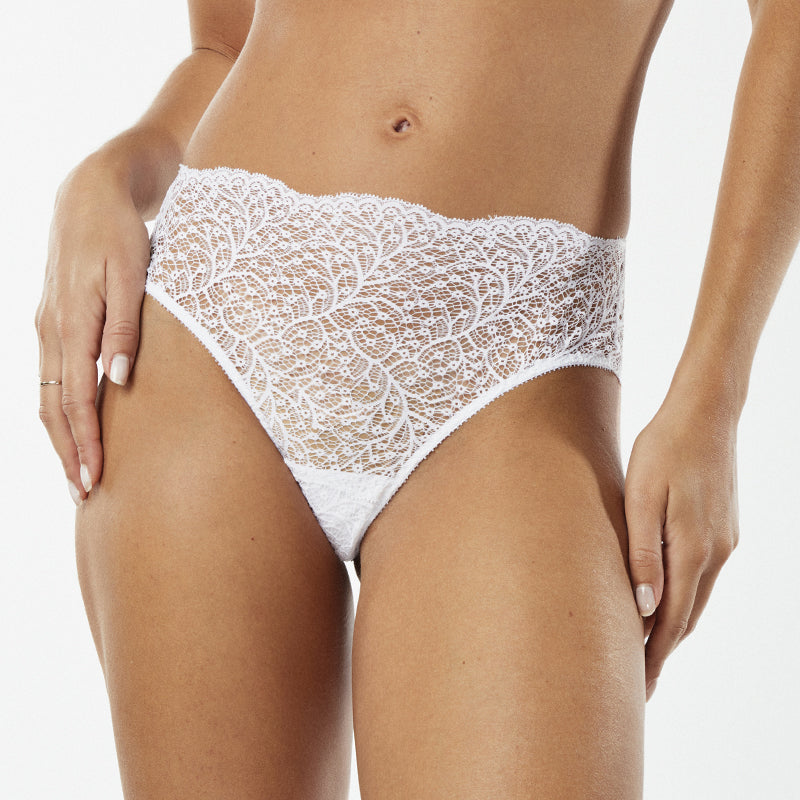
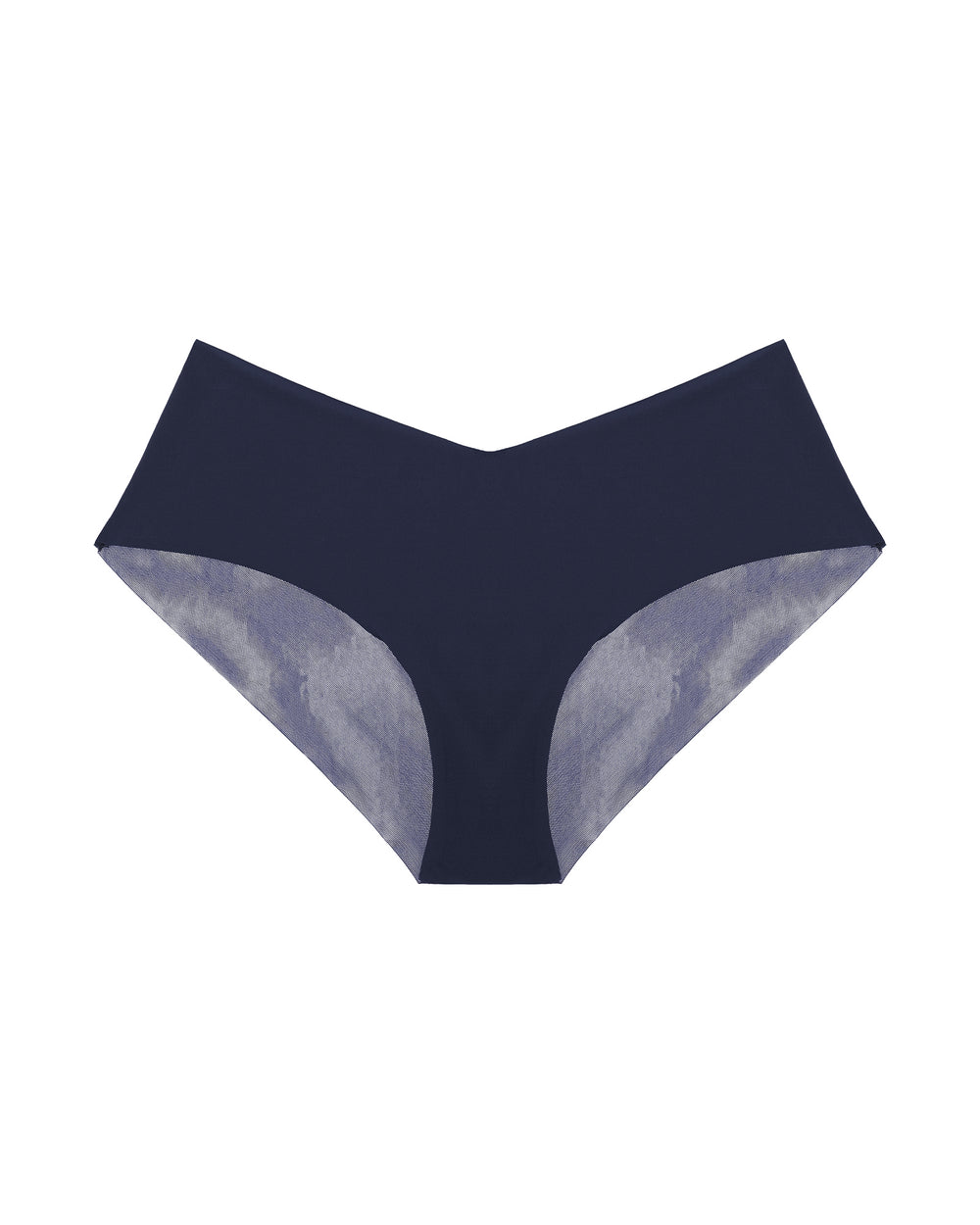
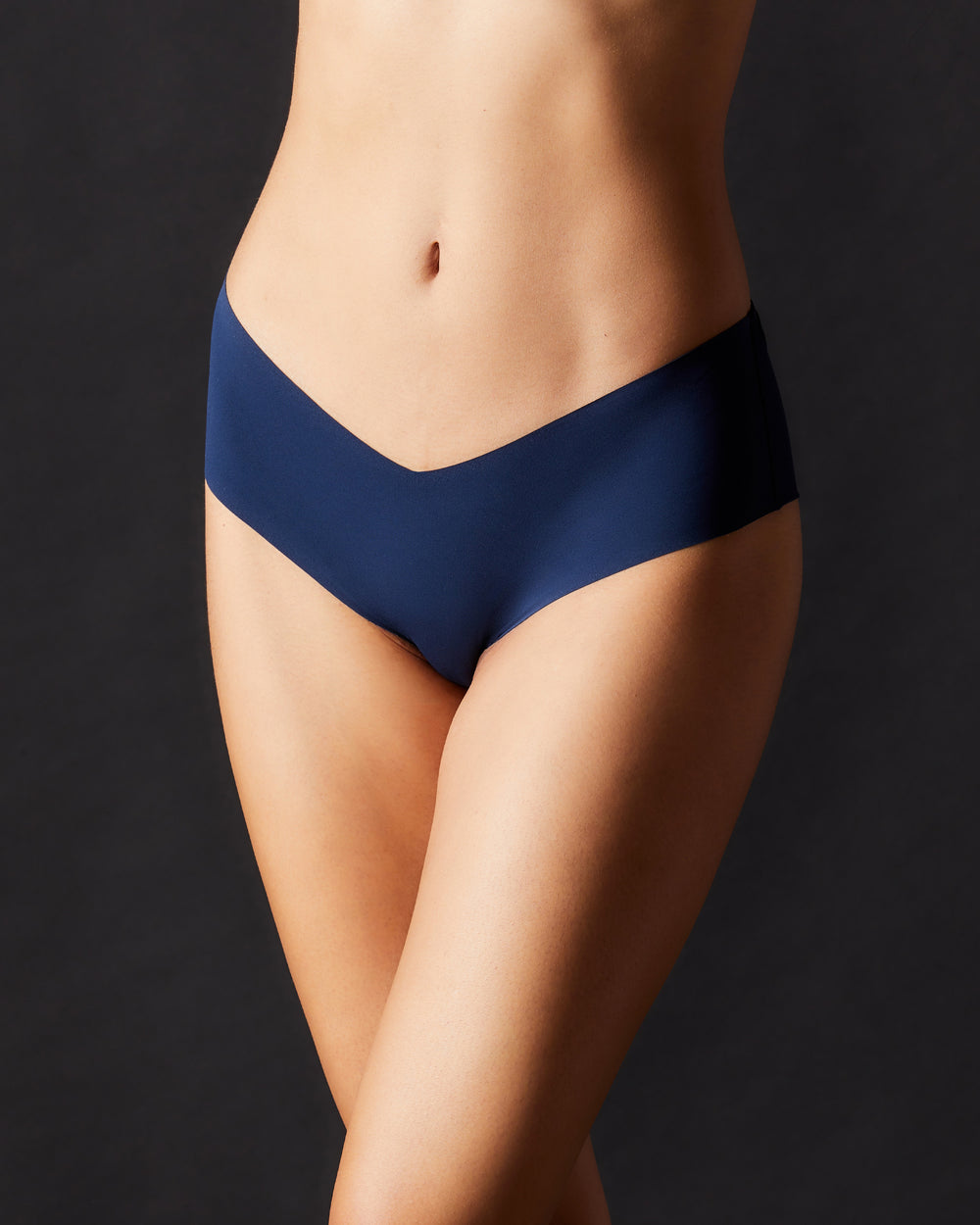
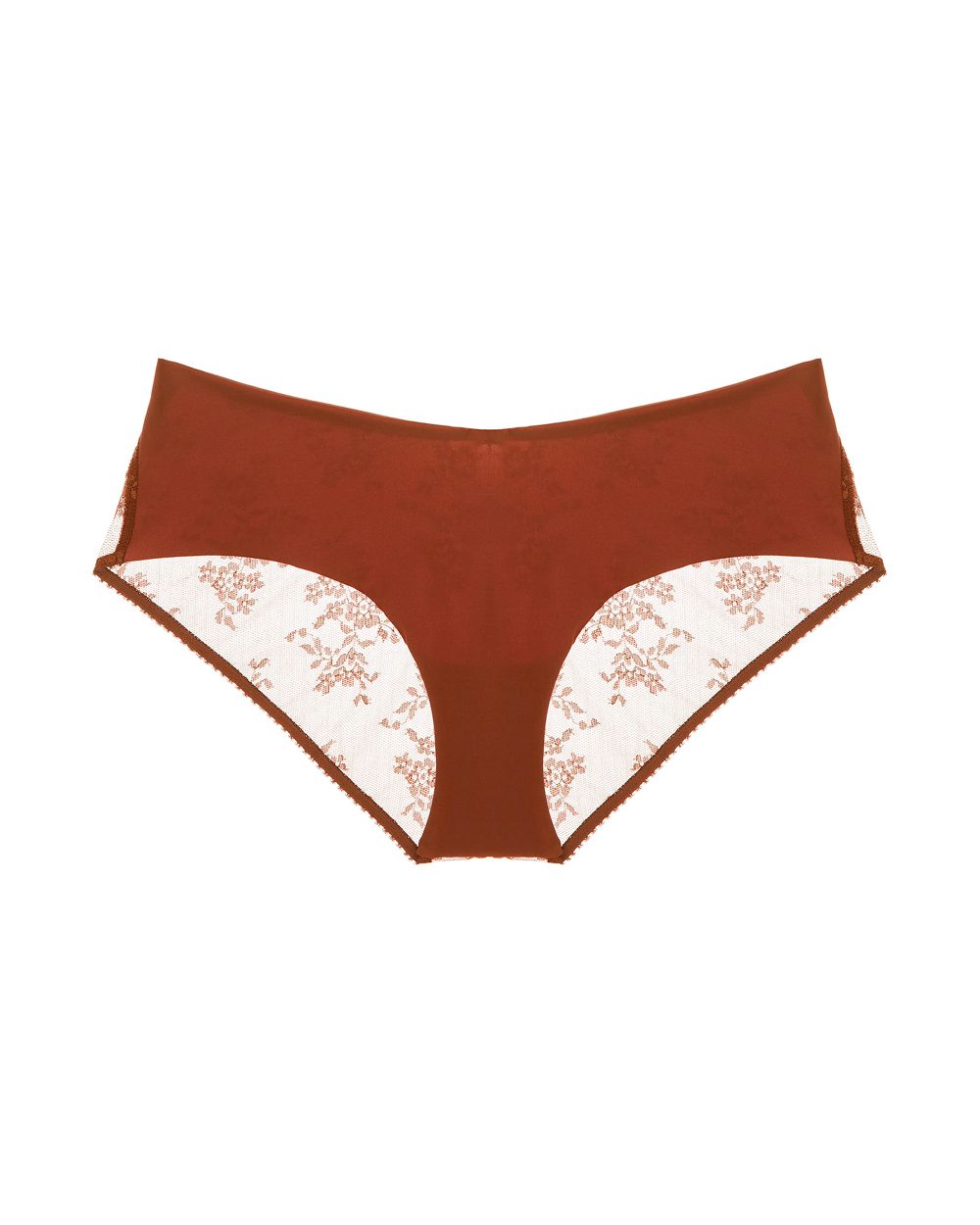
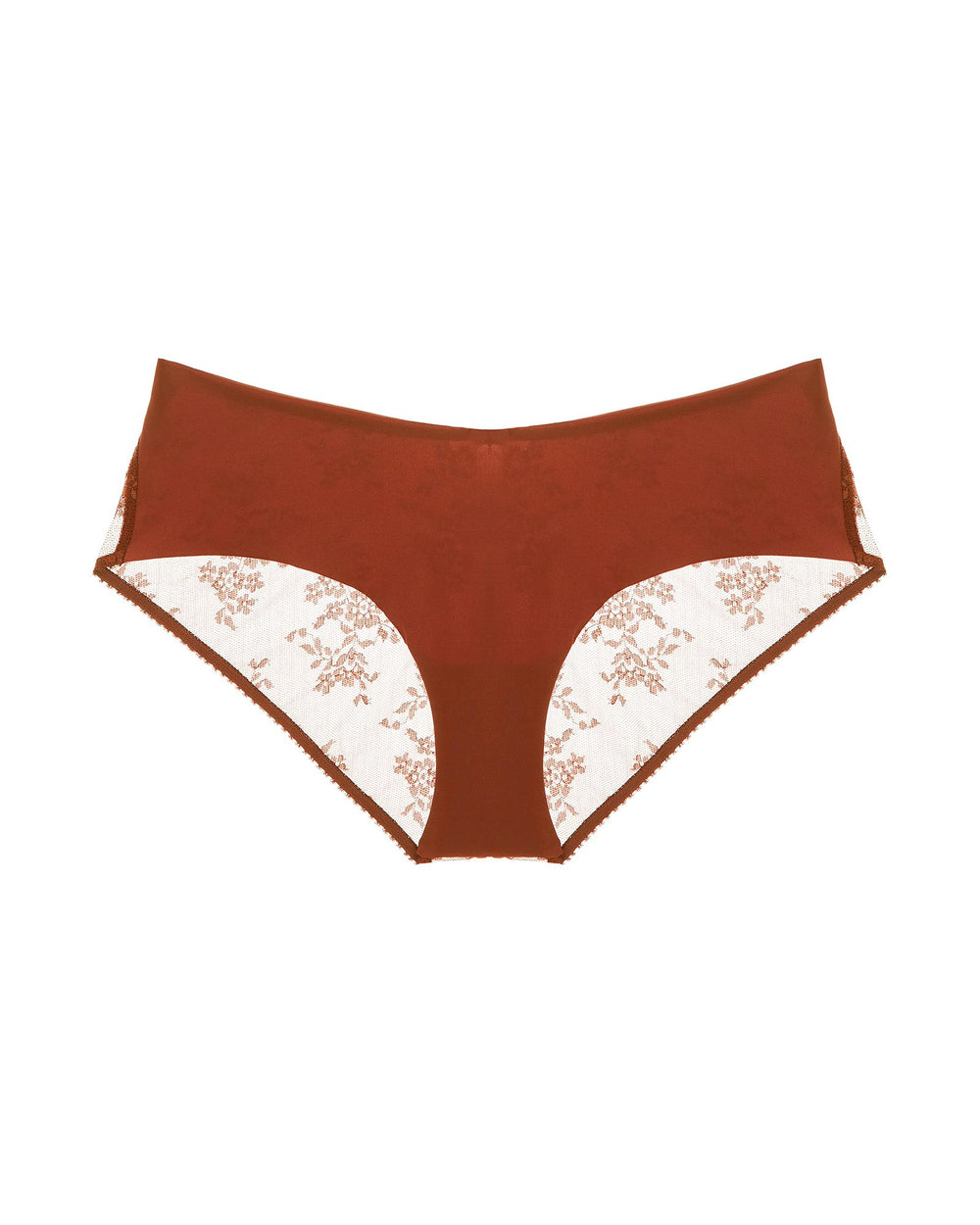
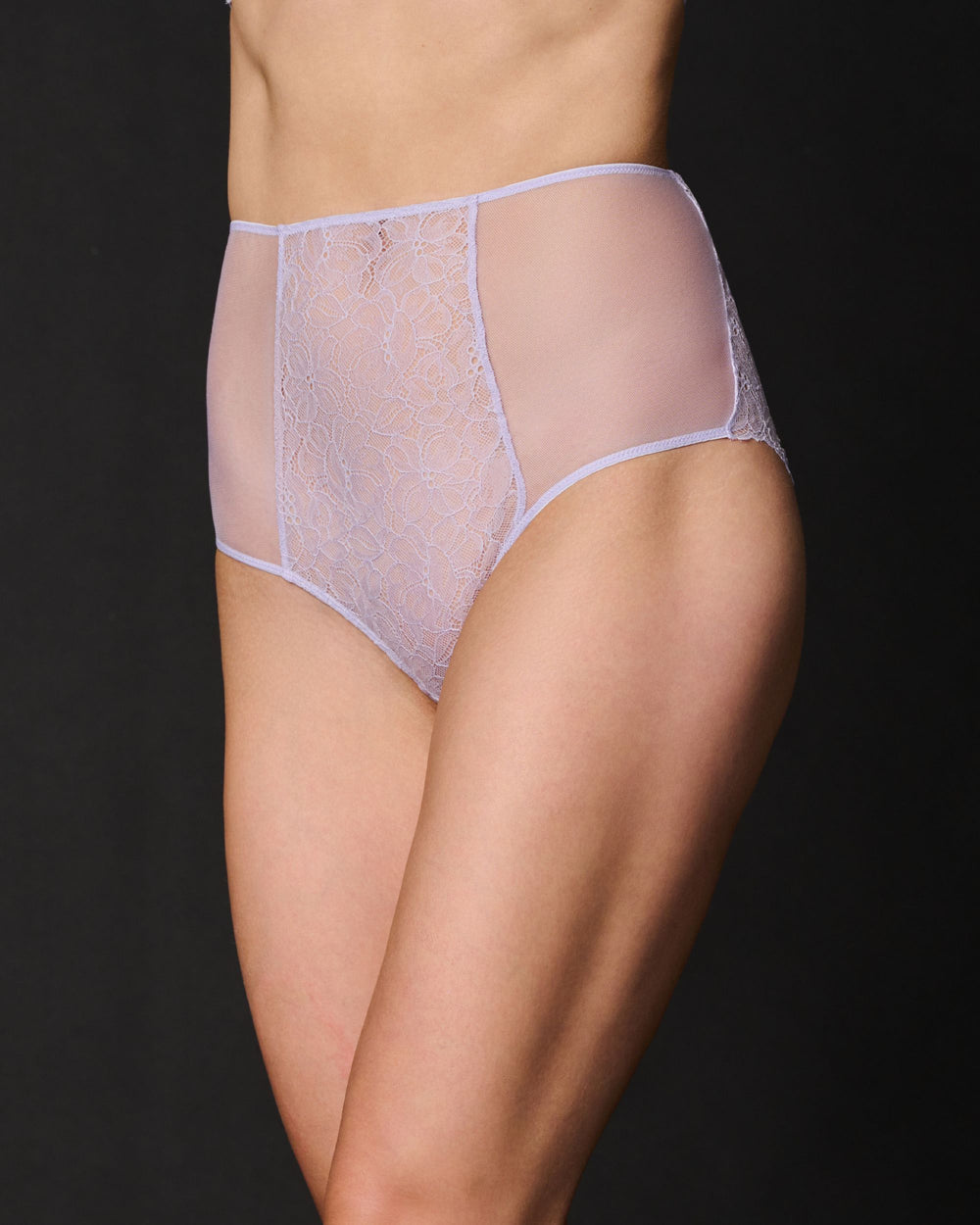
High-waisted underwear rises above the natural waist, covering more of the torso than a standard bikini or boyshort. The style has come a long way from its purely practical origins — today's high-waisted briefs include beautifully constructed lace styles, smooth shapewear-adjacent options, and everything in between. The waistband typically sits at or above the navel, which creates a smooth, clean line and can feel more comfortable and secure for many women than a lower-rise cut.
High-Waisted vs. Brief
The terms are related but not identical. A brief is any underwear with full seat coverage and a higher leg cut than a boyshort — typically rising to the hip or higher at the sides. A high-waisted brief specifically refers to a style where the waistband sits above the natural waist. Both offer more coverage than bikini cuts, but a high-waisted style is the more defined silhouette of the two.
When High-Waisted Underwear Makes Sense
High-waisted styles work particularly well under high-rise trousers, skirts, and dresses where a lower-cut waistband might peek above the garment's waist. They are also a comfortable everyday choice for women who find lower-rise underwear tends to shift during the day, and a flattering option under bodycon clothing when you want a smooth, contained silhouette without the compression of shapewear.
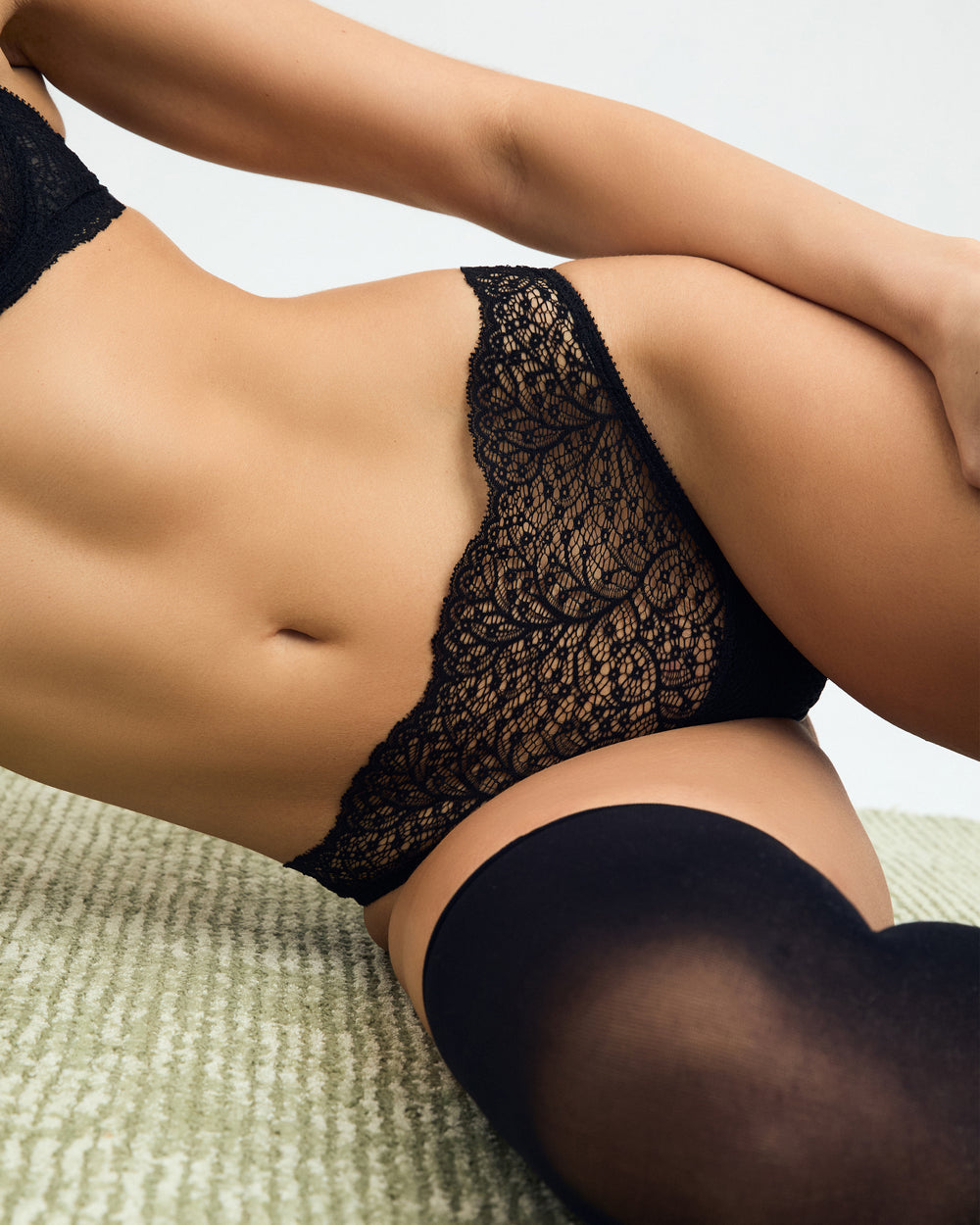
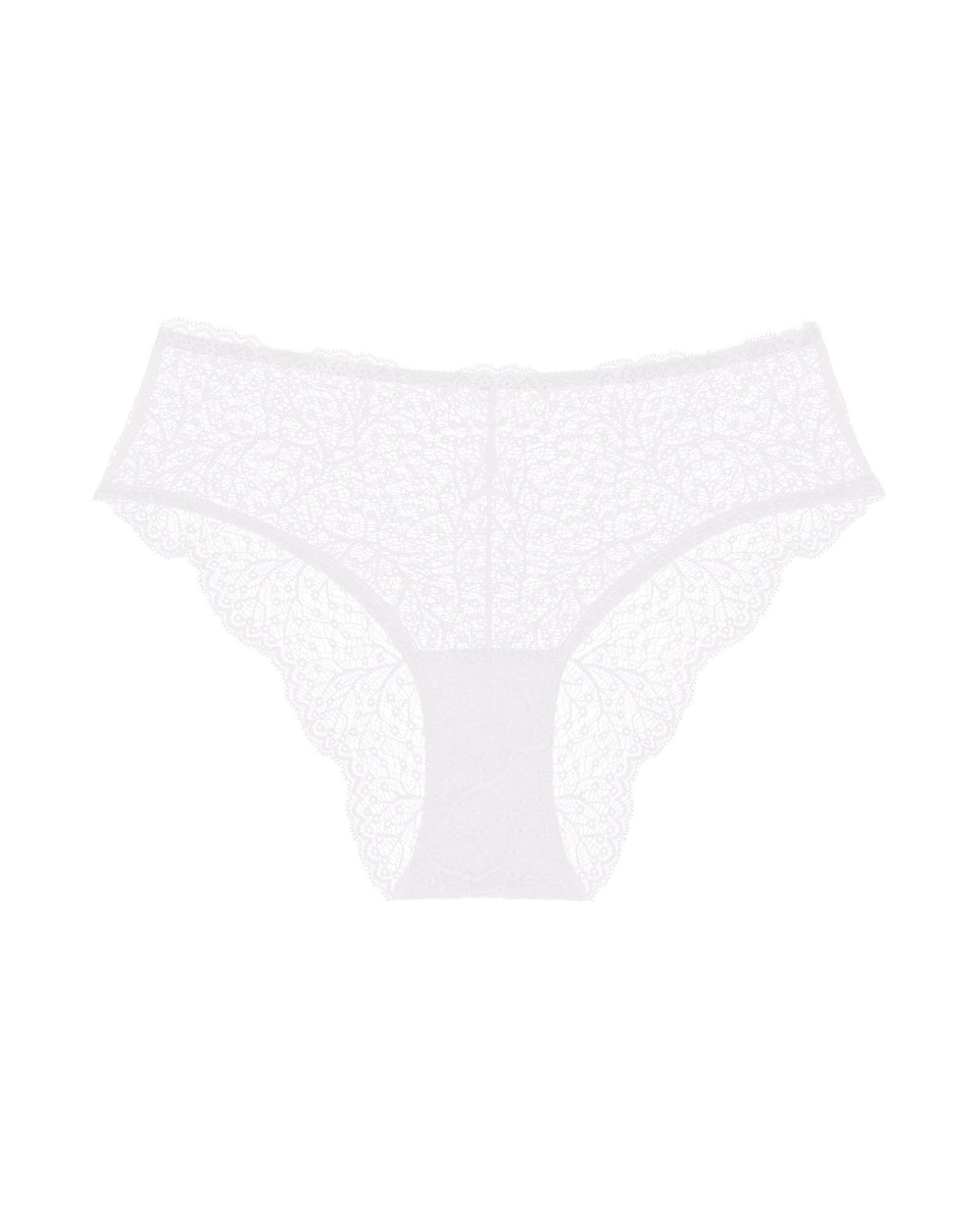
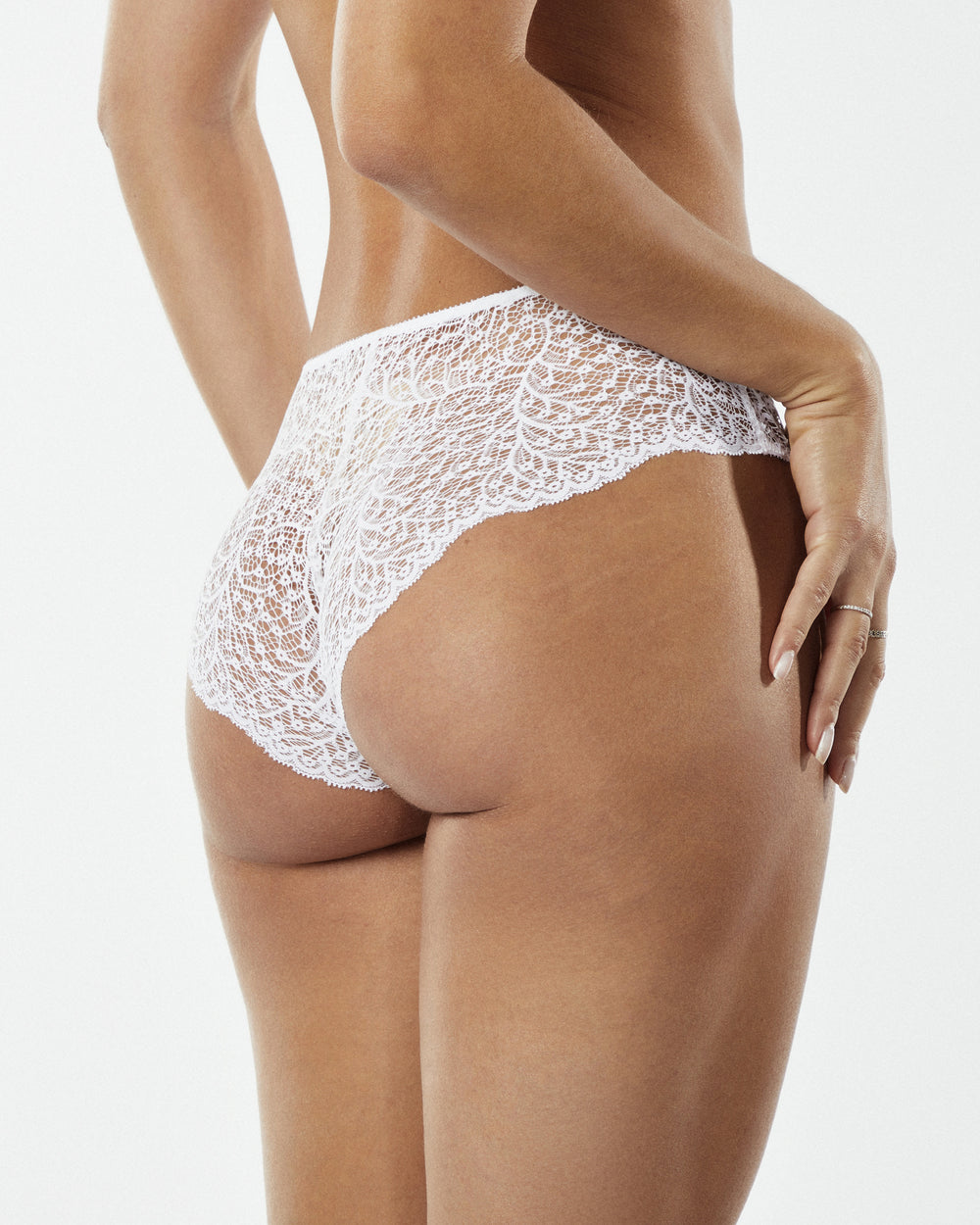
Lace high-waisted briefs are worth noting specifically — the silhouette pairs especially well with lace because the extended coverage gives the fabric room to make a statement. A high-waisted lace brief is one of the most elegant pieces in the category and one of the most versatile for both lingerie and everyday wear.
Shop high-waisted underwear at Journelle.
Fitter's note: Don't confuse "high-waist" with "shaping". A true high-waist brief should sit at the natural waist without squeezing; if it's rolling down by hour two, it's too small, not "just the style".
Shop High-Waisted Underwear
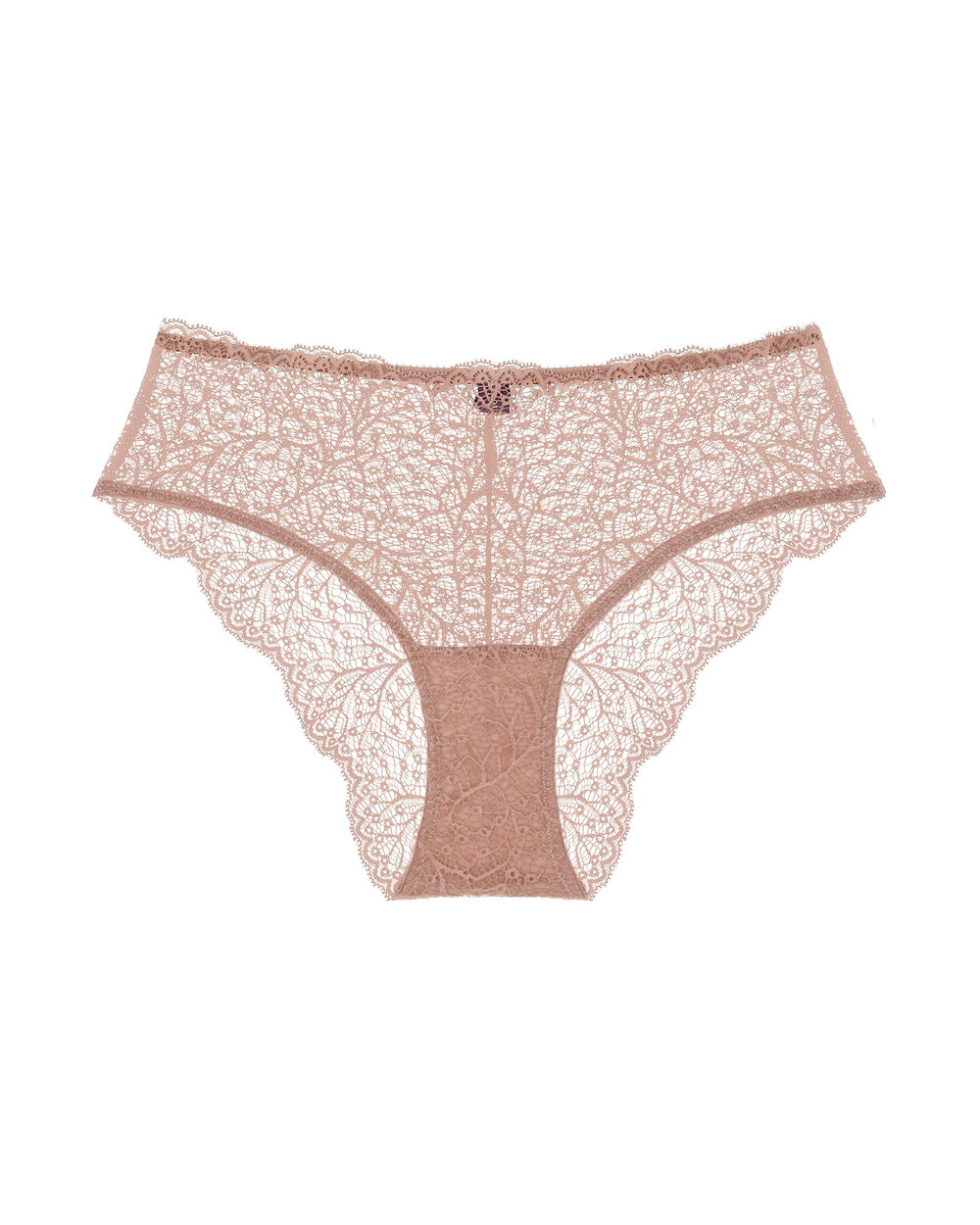
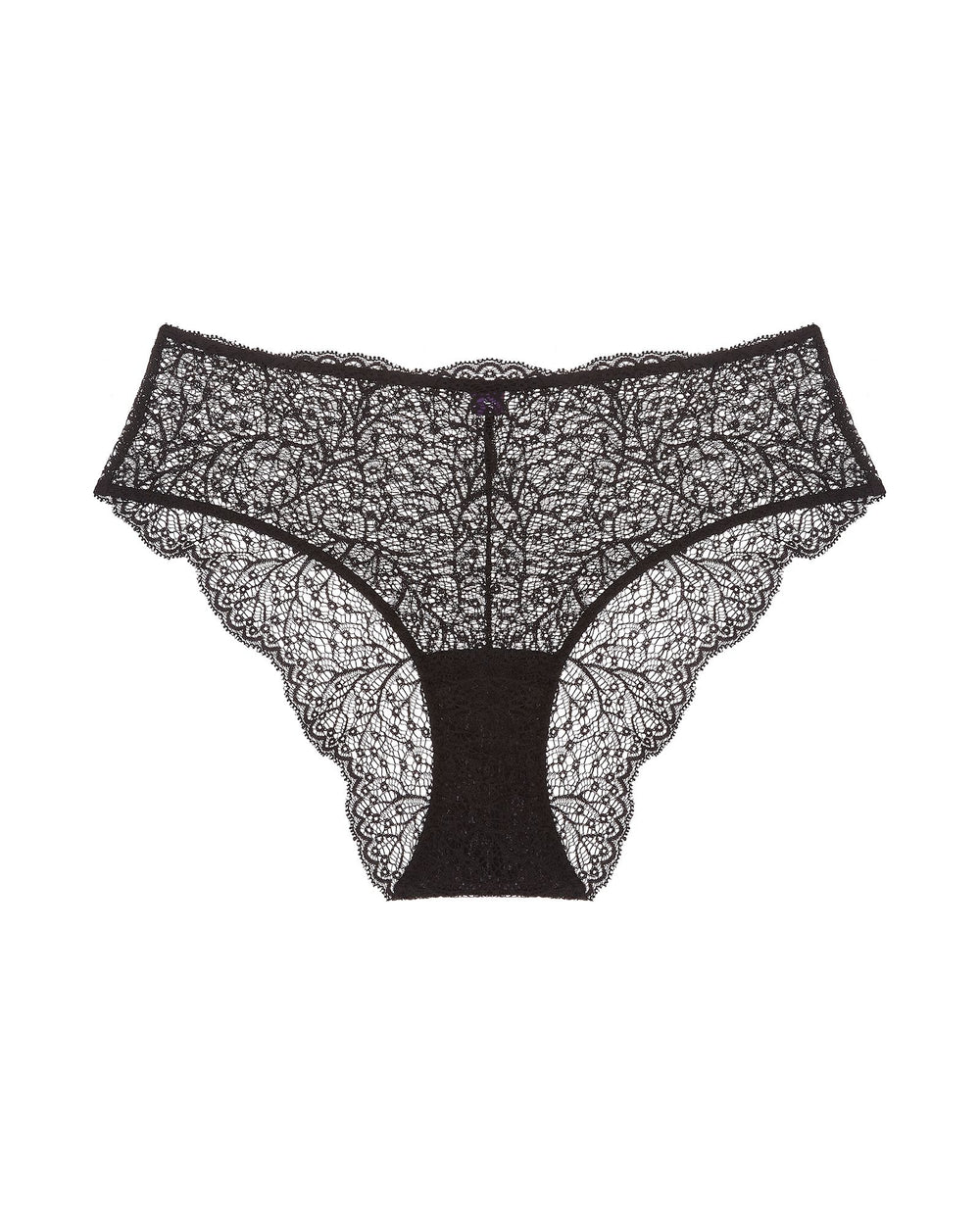
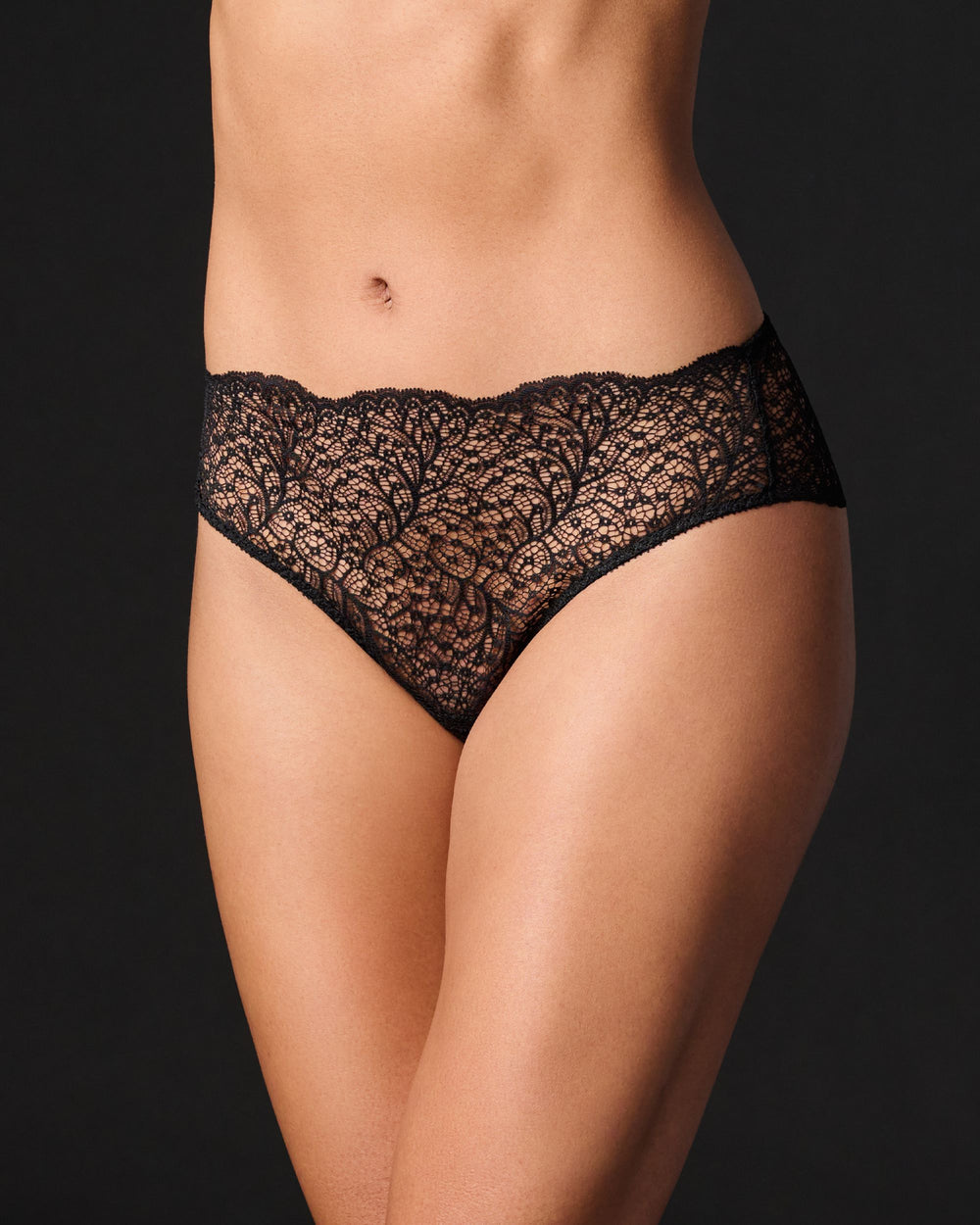
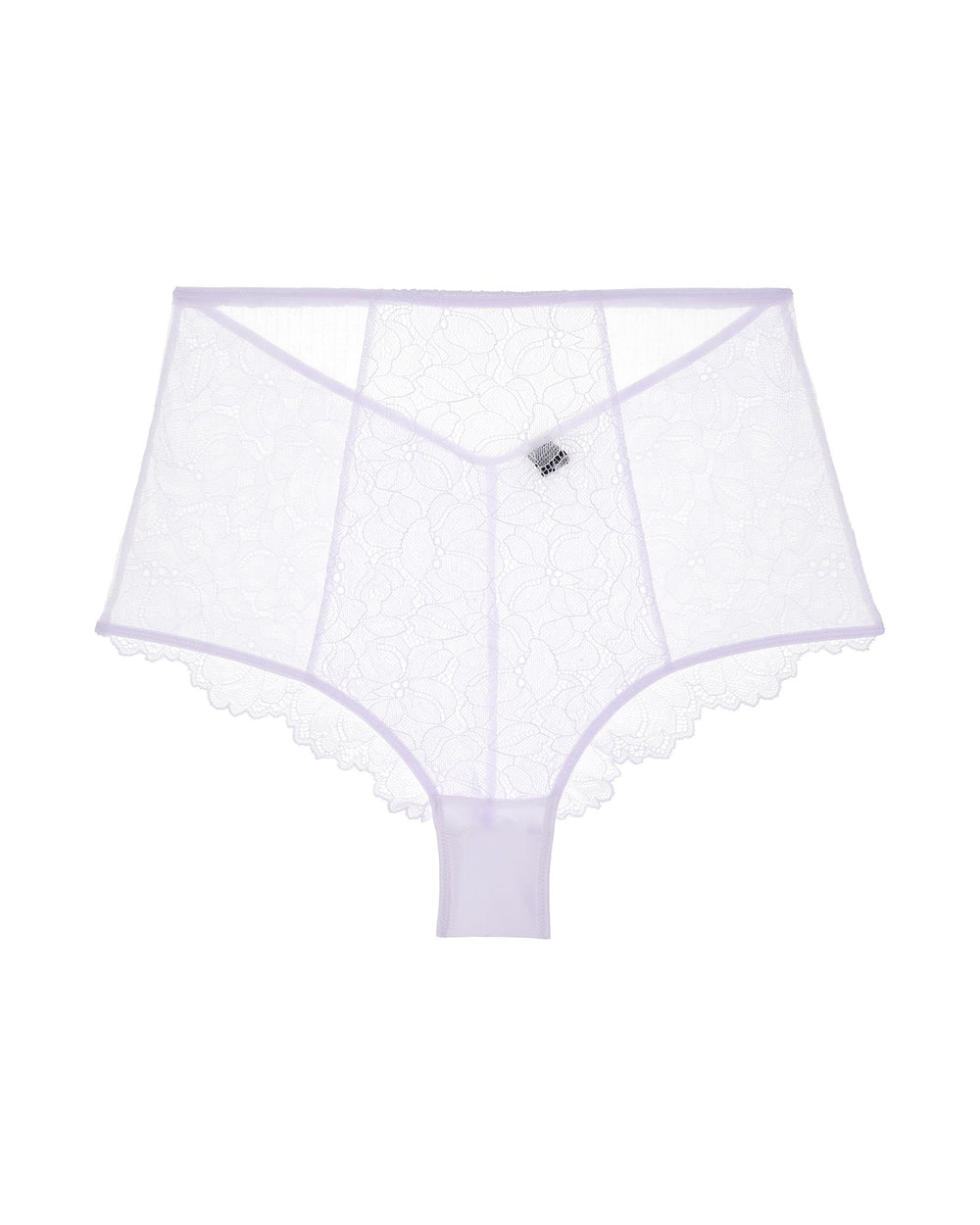
Seamless Underwear
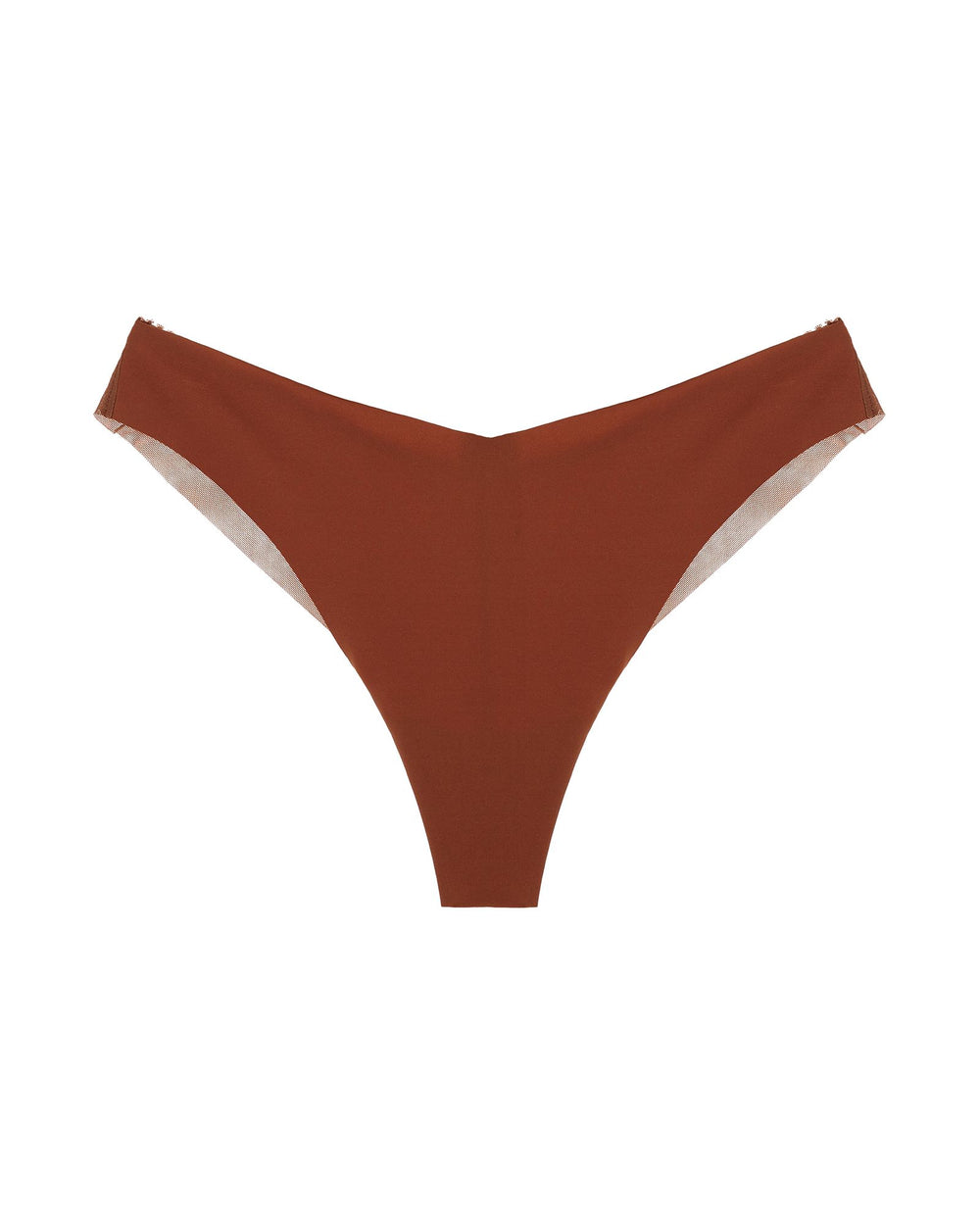
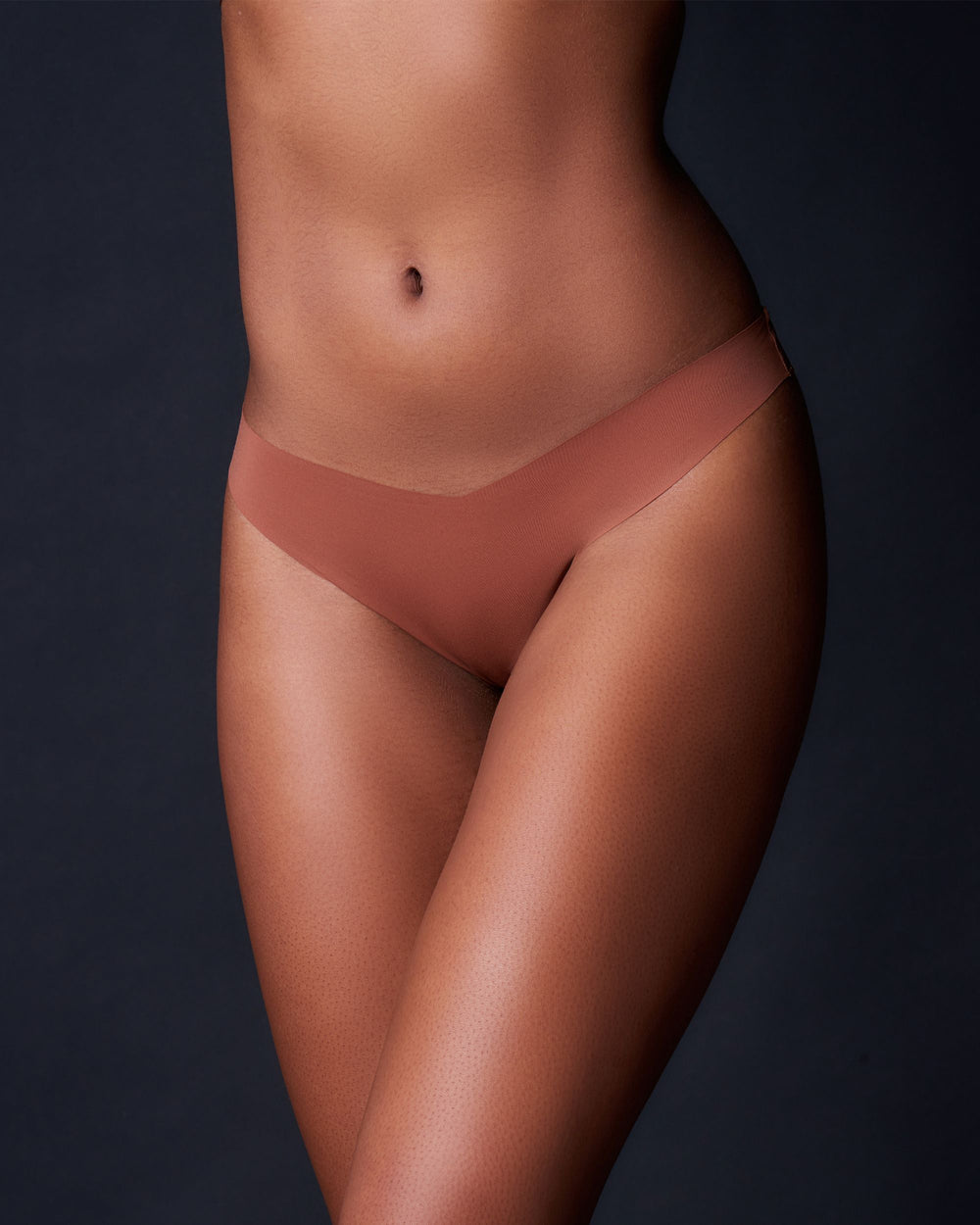
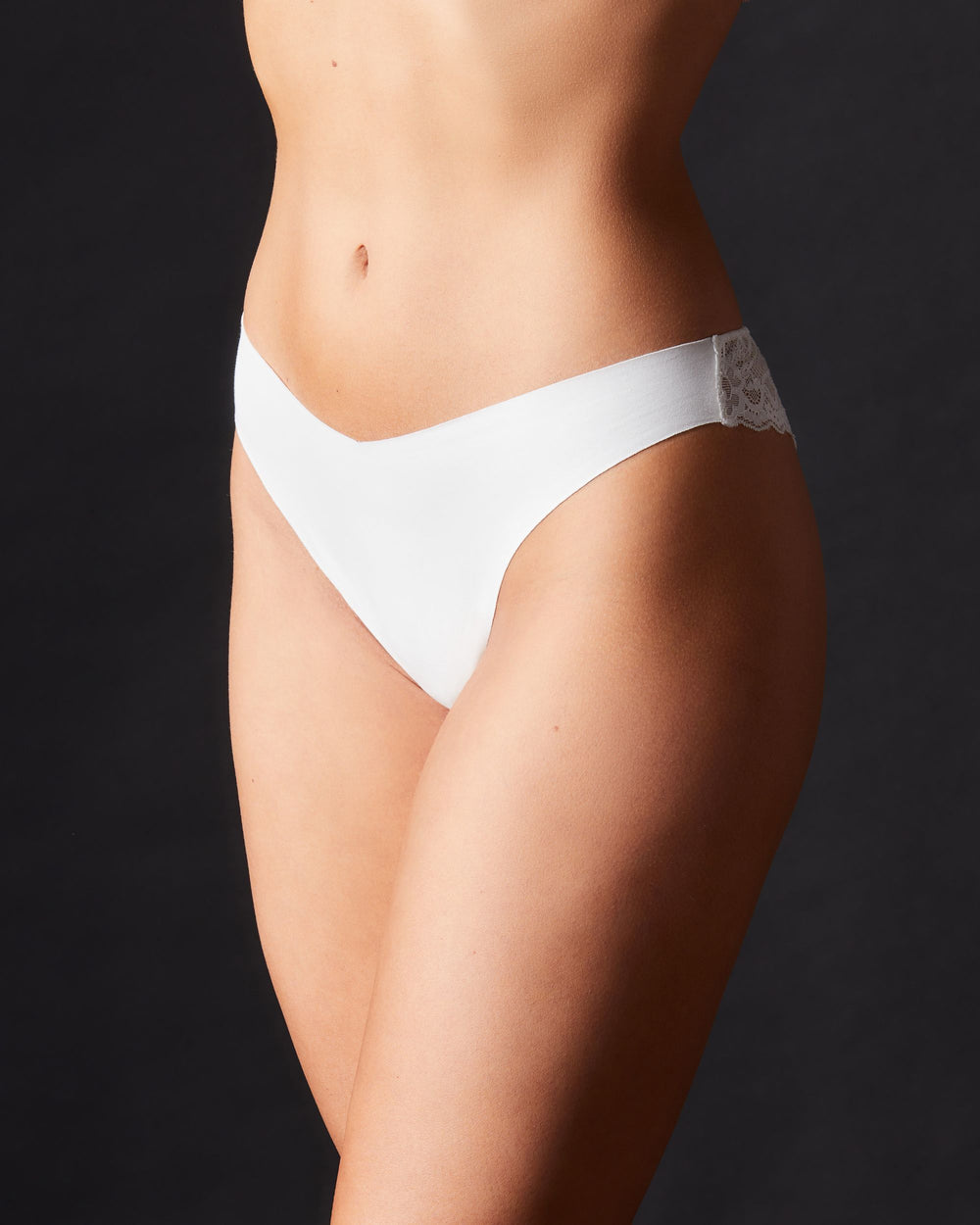
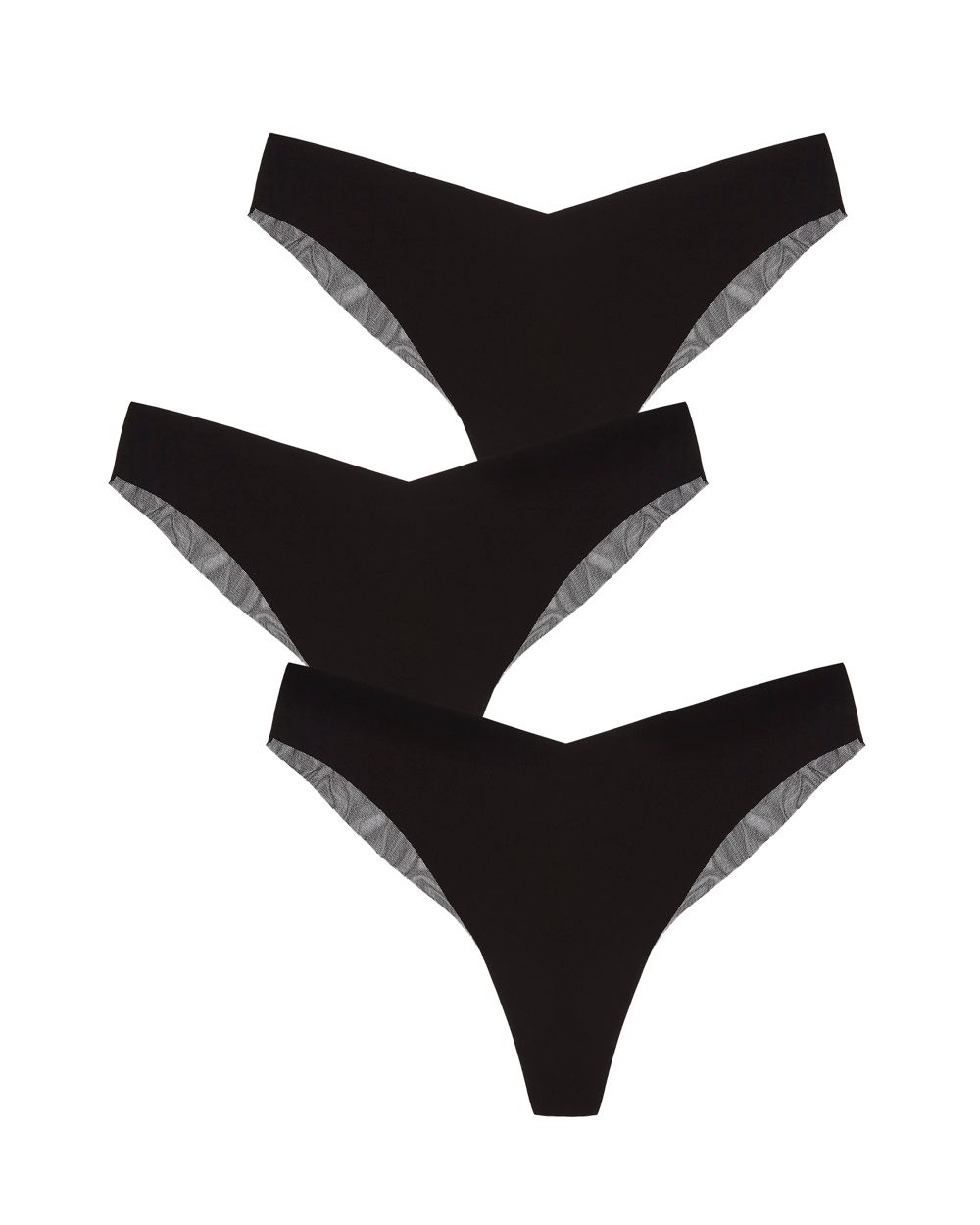
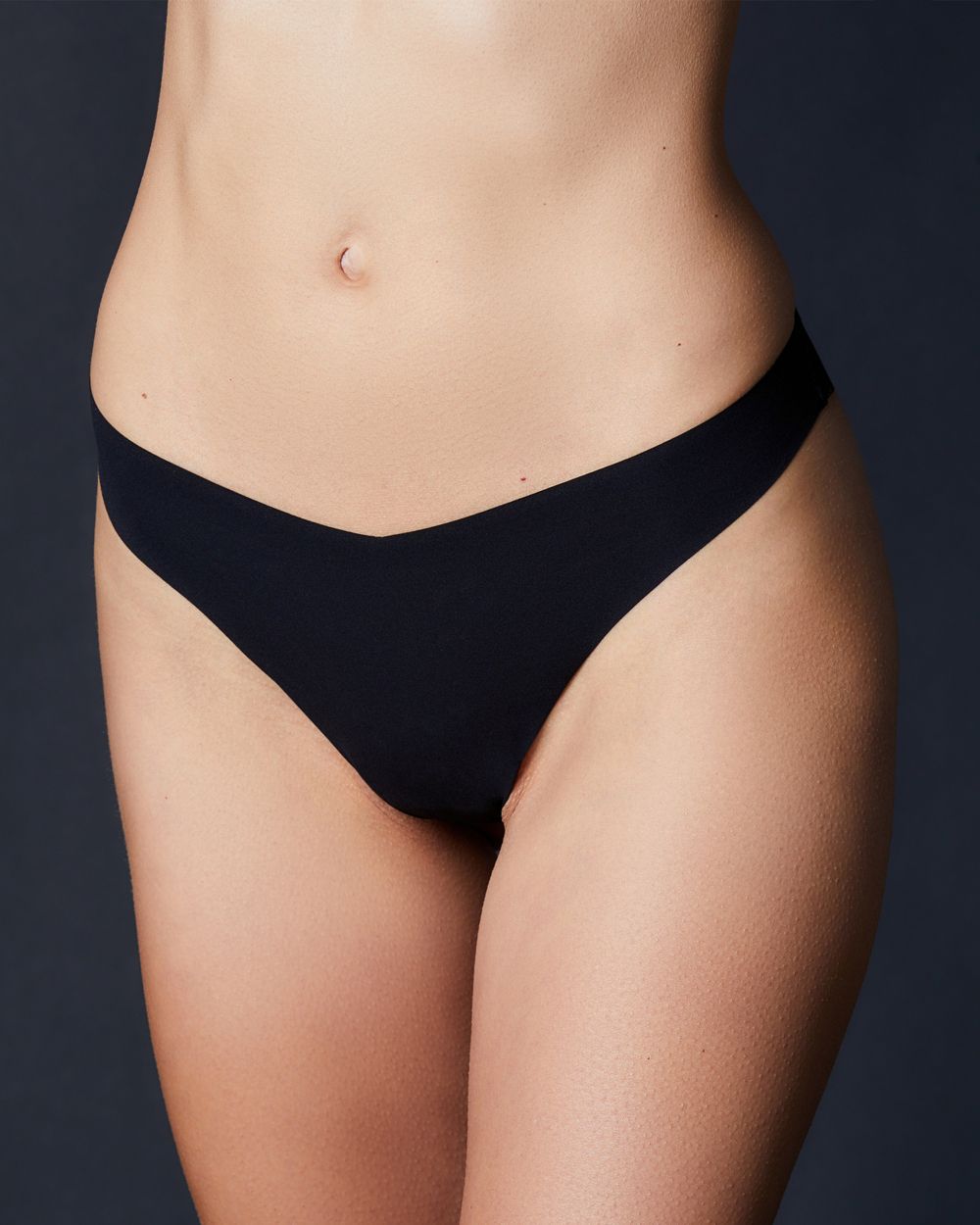
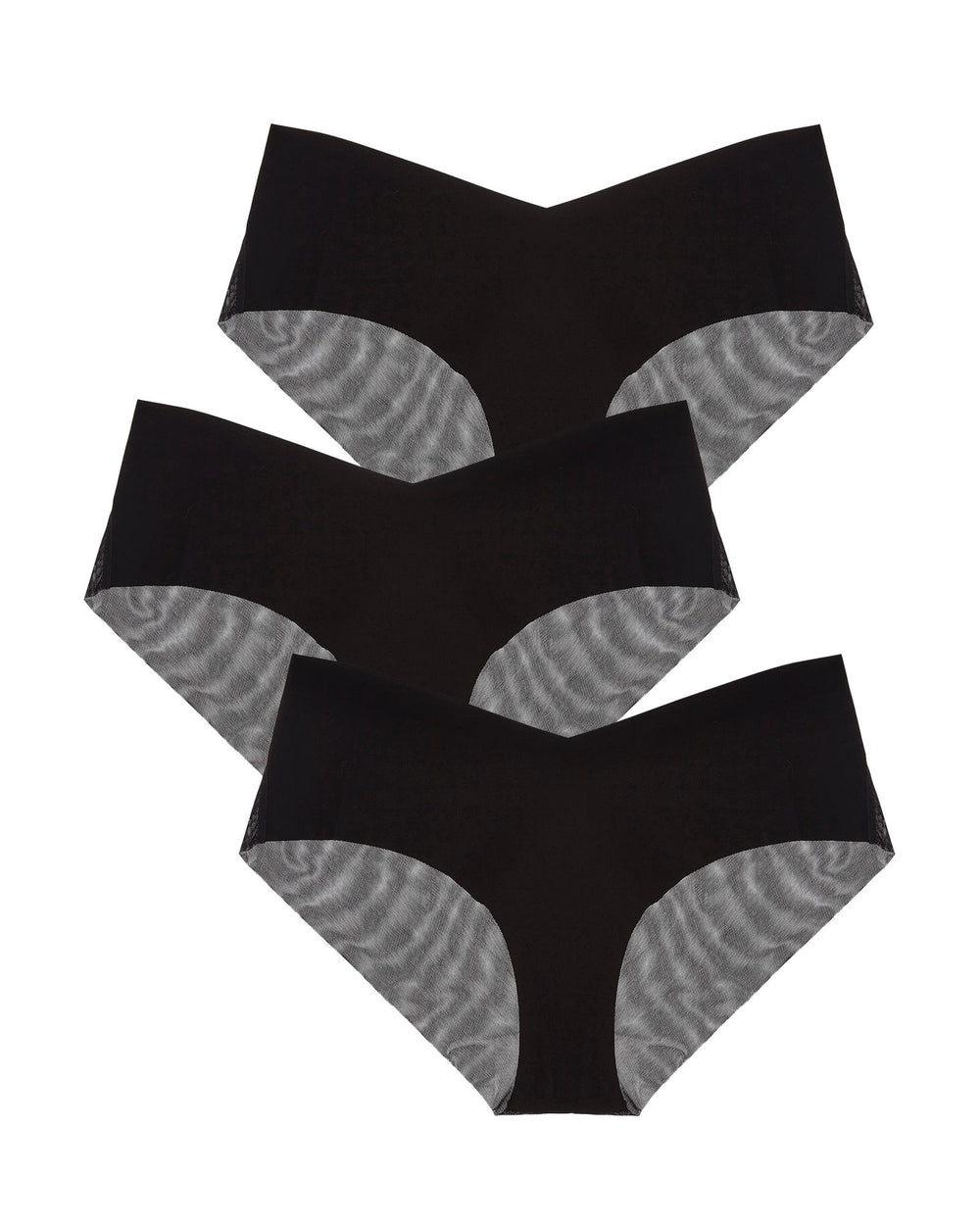
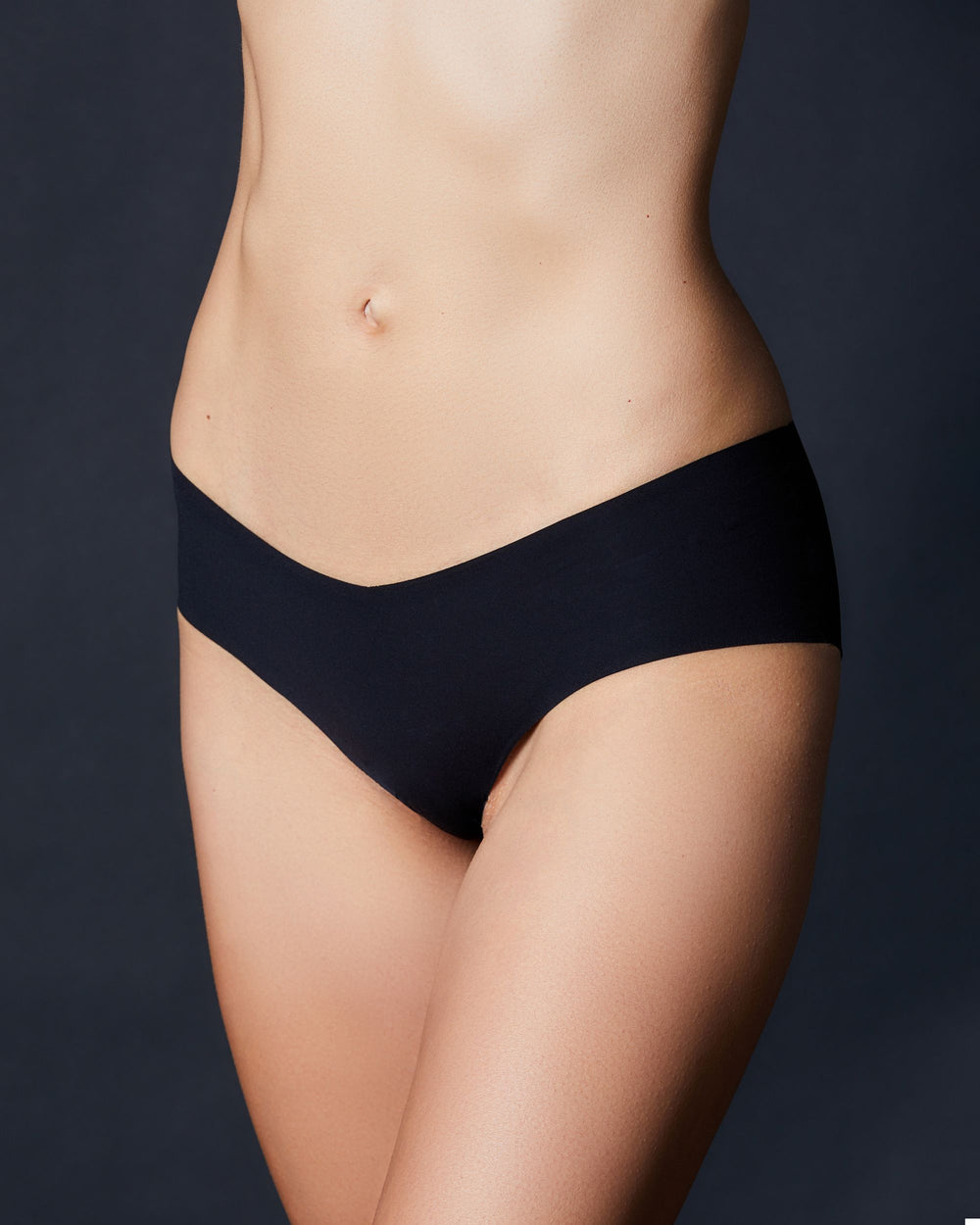
Seamless underwear is not a cut — it is a construction method. Seamless underwear can be a thong, bikini, boyshort, or brief; what distinguishes it is that it is made without sewn seams, typically from a knitted or bonded fabric that creates a smooth, uninterrupted surface. The result is underwear that sits flat under the finest, lightest, or most form-fitting clothing without creating any visible lines or ridges.
Who Seamless Underwear Is For
Anyone who wears fitted clothing regularly will find seamless underwear useful. It is the most reliable solution for visible panty lines under jersey dresses, fitted trousers, silk skirts, or anything light-coloured and close-fitting. Seamless styles are also typically made from soft, stretchy microfiber or modal blends that feel gentle through long days of wear.
The trade-off is breathability — seamless synthetic fabrics are generally less breathable than cotton or lace, which is worth considering for warmer weather or very active days. That said, many women find seamless underwear comfortable enough for year-round everyday use.
Explore Journelle's seamless underwear collection, and read more in our blog post: Seamless Panties: Your Go-To Underwear Essential.
Fitter's note: Seamless is a finish, not a cut — you can get seamless thongs, bikinis, or briefs. The quality differentiator is the edge: bonded or laser-cut edges sit flat; sewn-edge "seamless" styles create the very line they're meant to avoid.
Shop Seamless Underwear
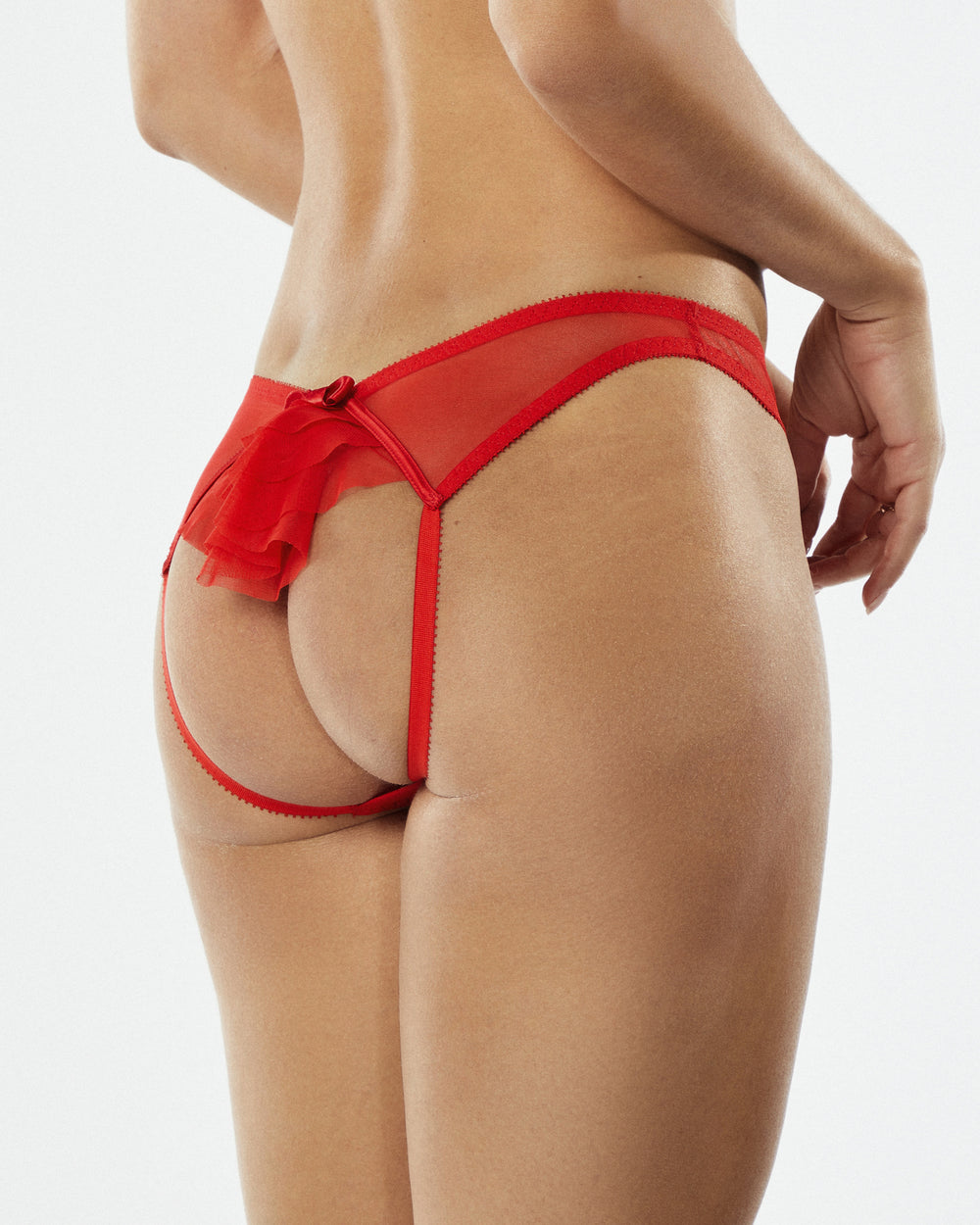
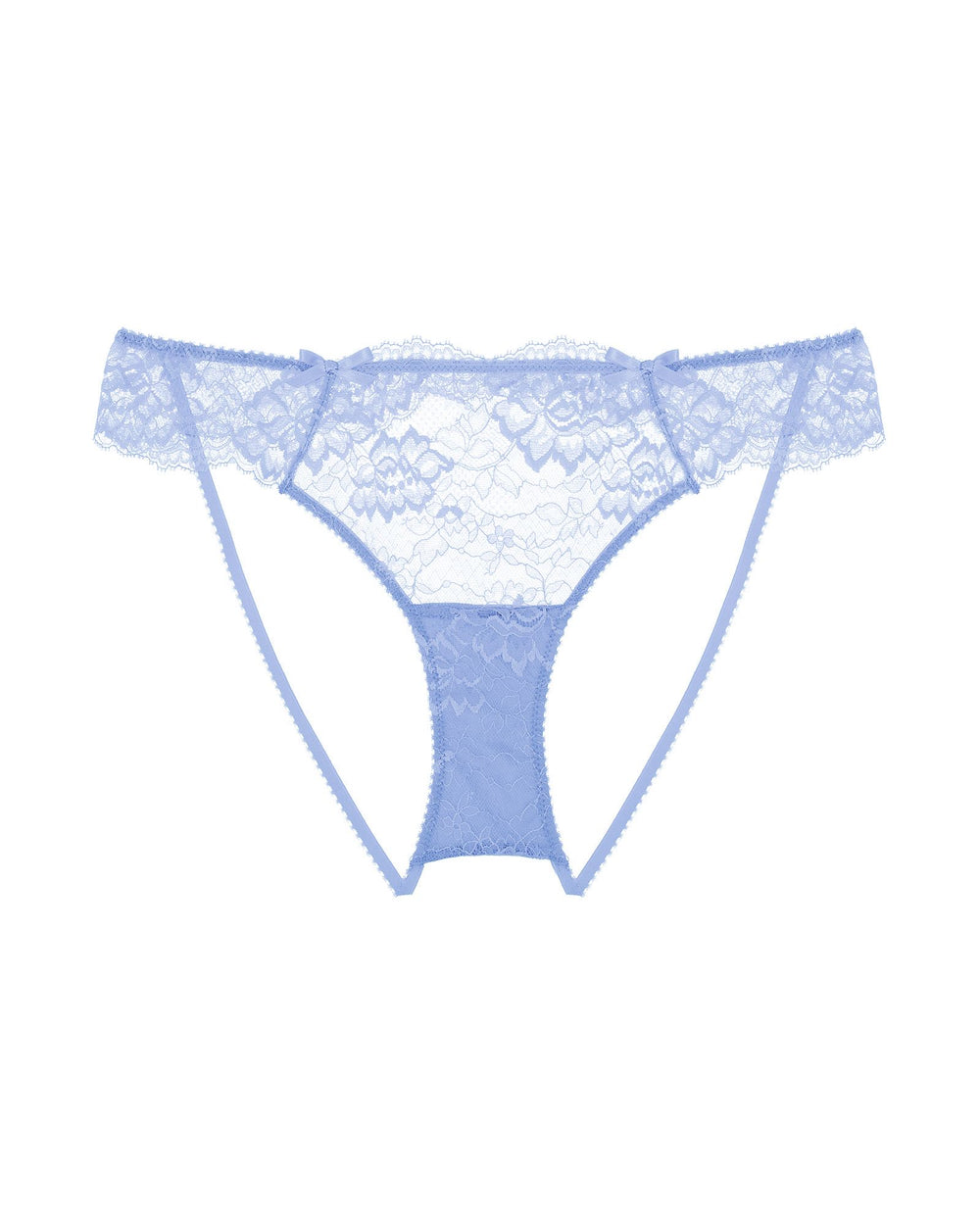
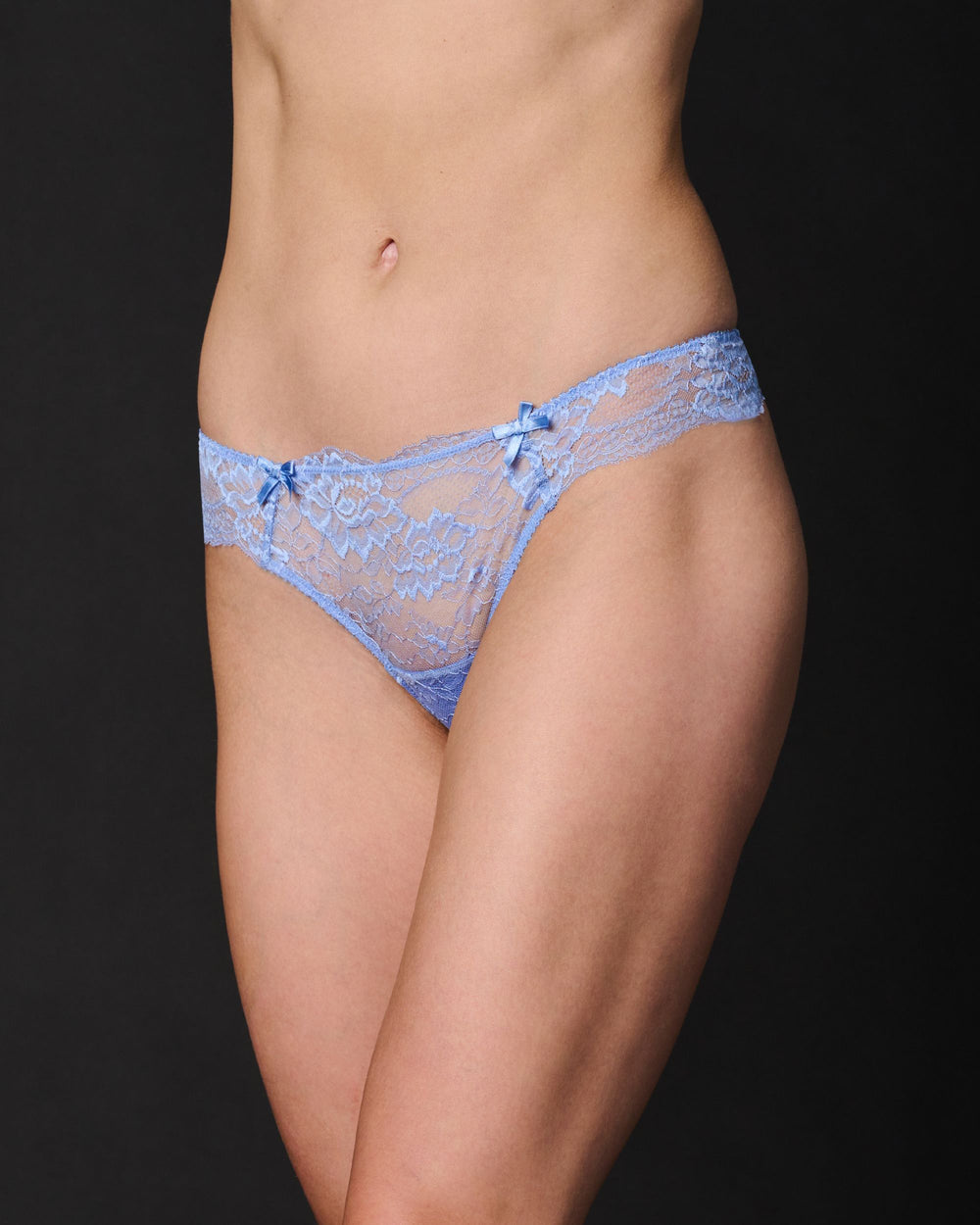
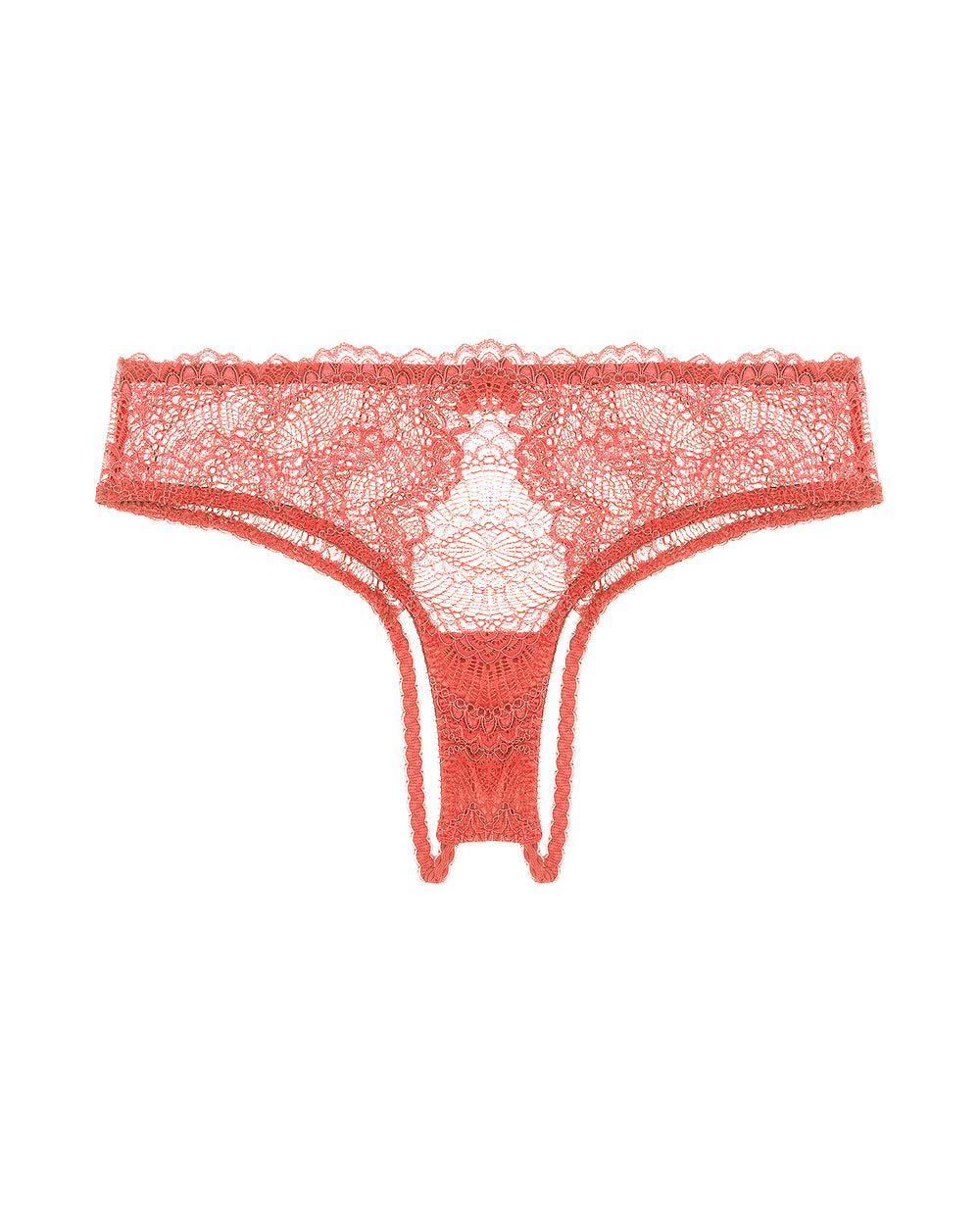
Ouvert Styles
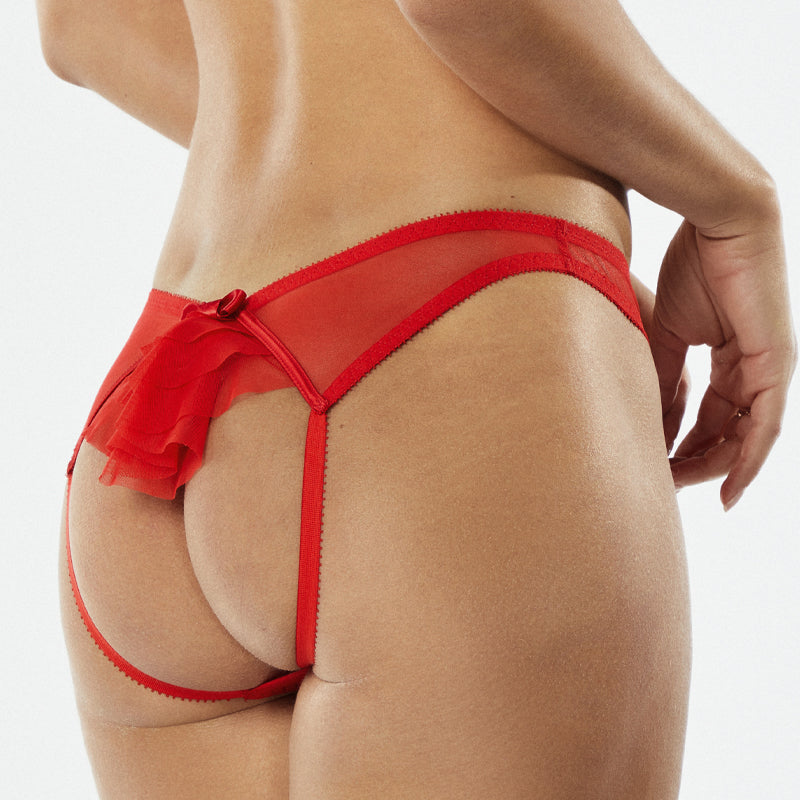
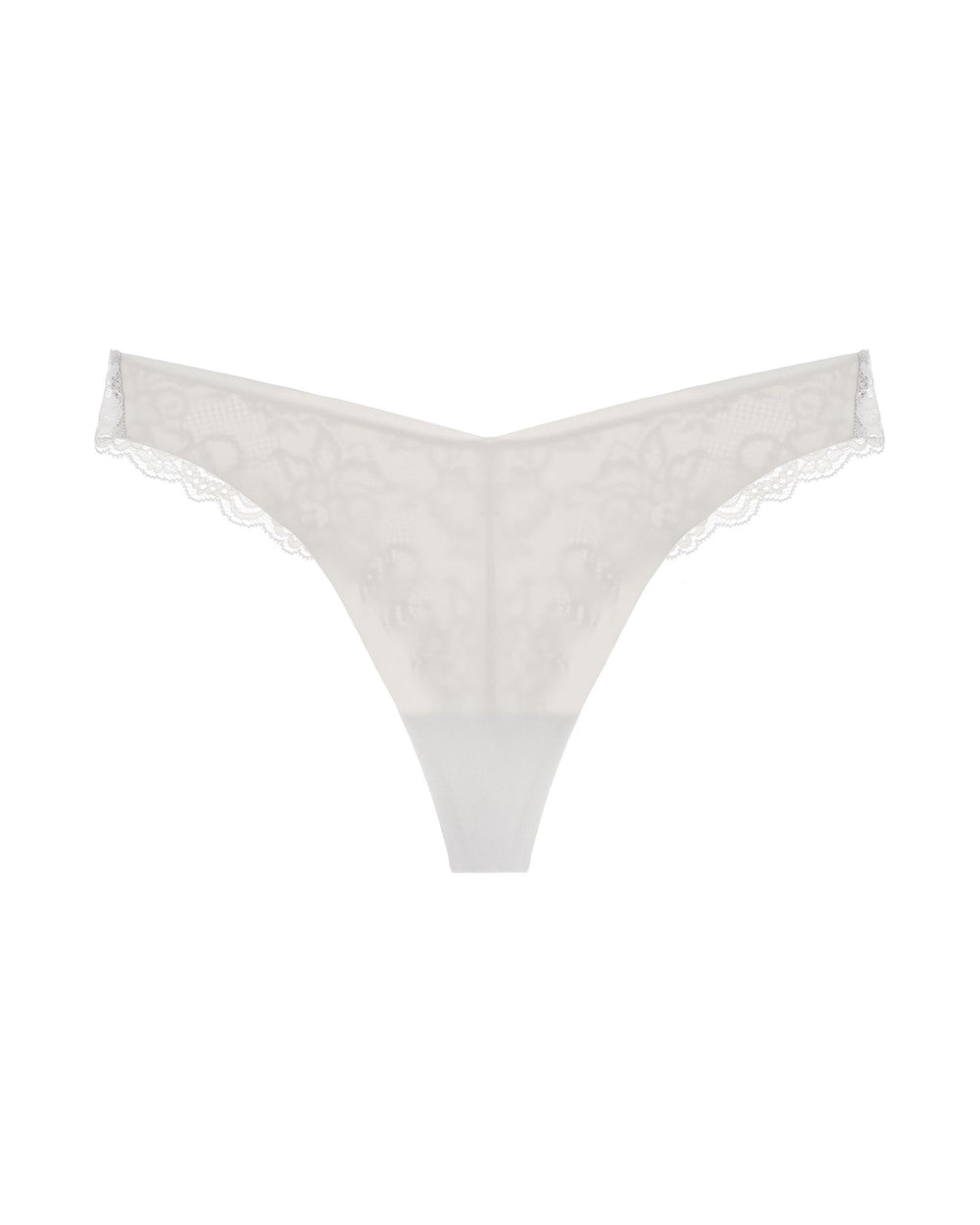
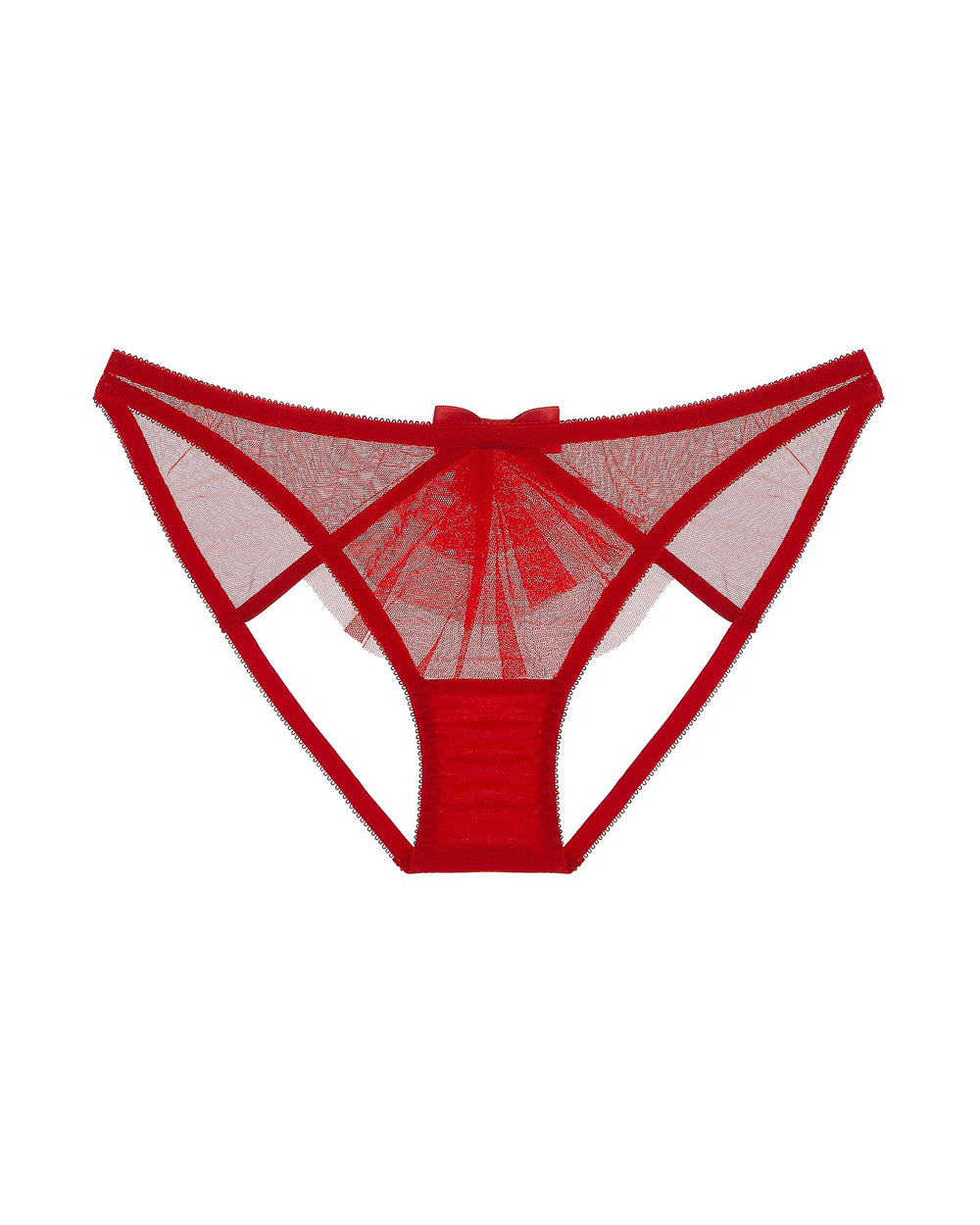
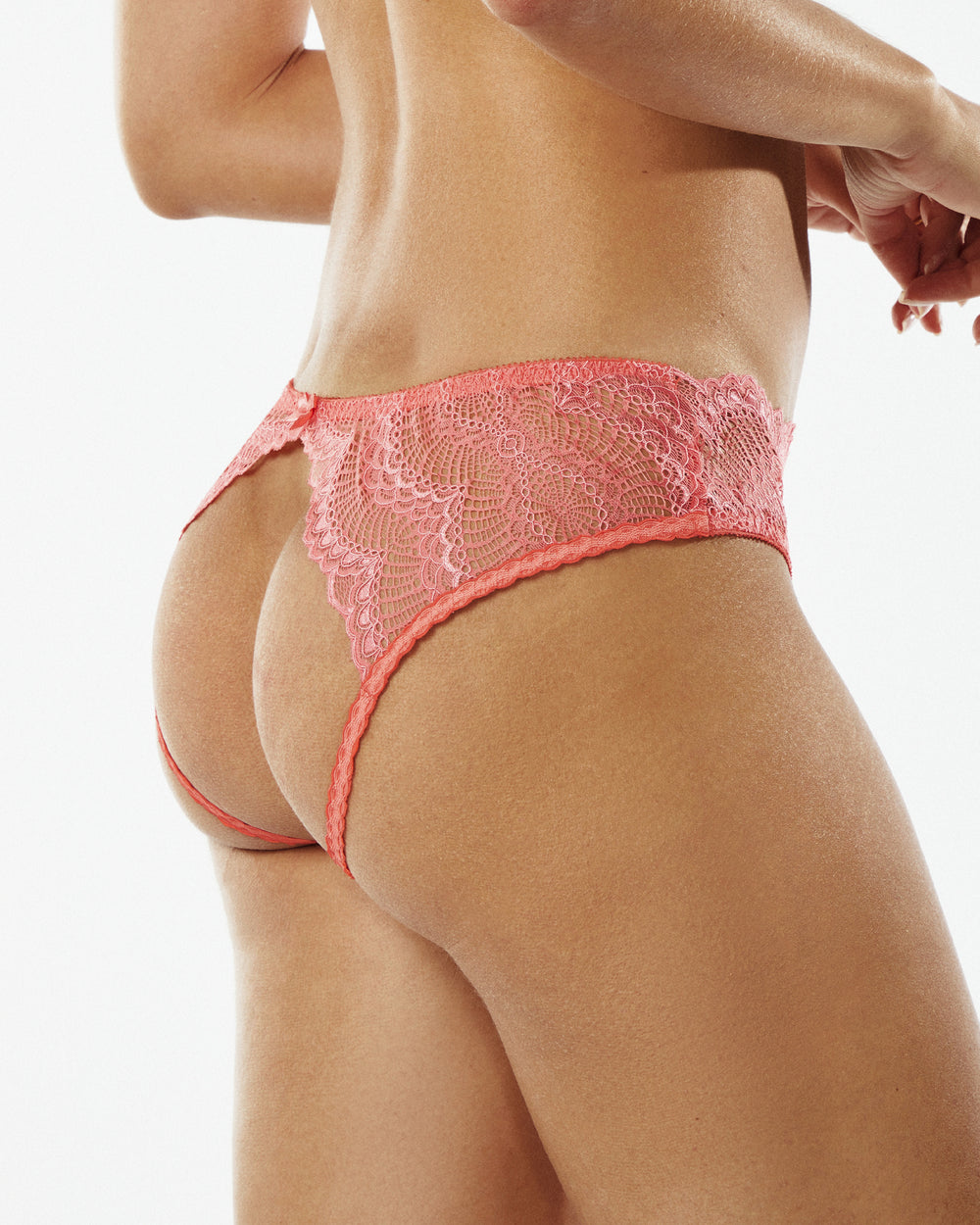
Ouvert — from the French word for "open" — refers to underwear with an open construction at the crotch. The style is unlined and intentionally revealing, designed for intimate wear rather than everyday use. Ouvert panties are typically made from fine lace or mesh and are available in a range of silhouettes including bikini, brief, and thong cuts.
For a deeper look at the style — including how it differs from other open lingerie designs — read our blog post: Are You Open to Ouvert?
Shop Ouvert Styles
Basics & Panty Packs
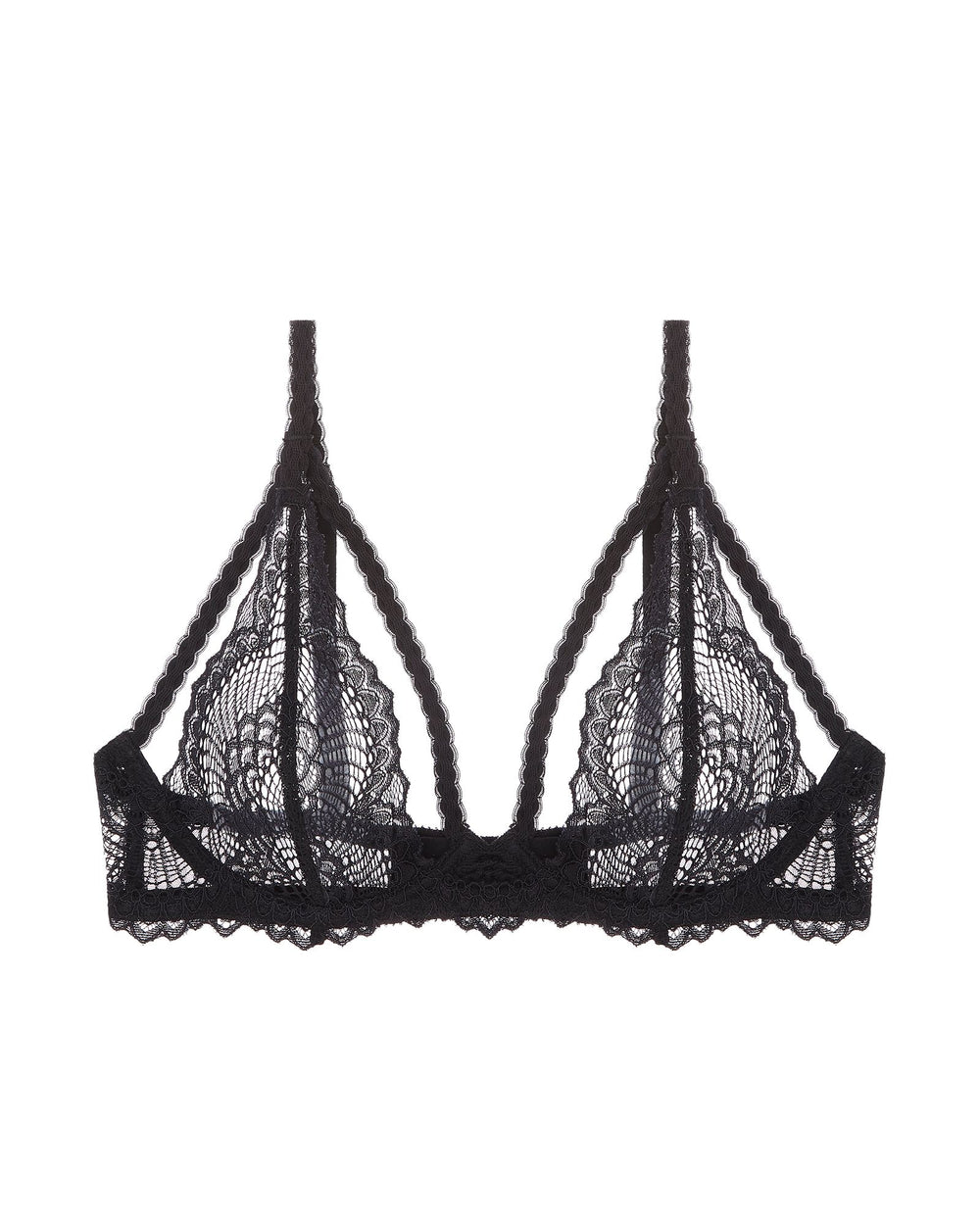
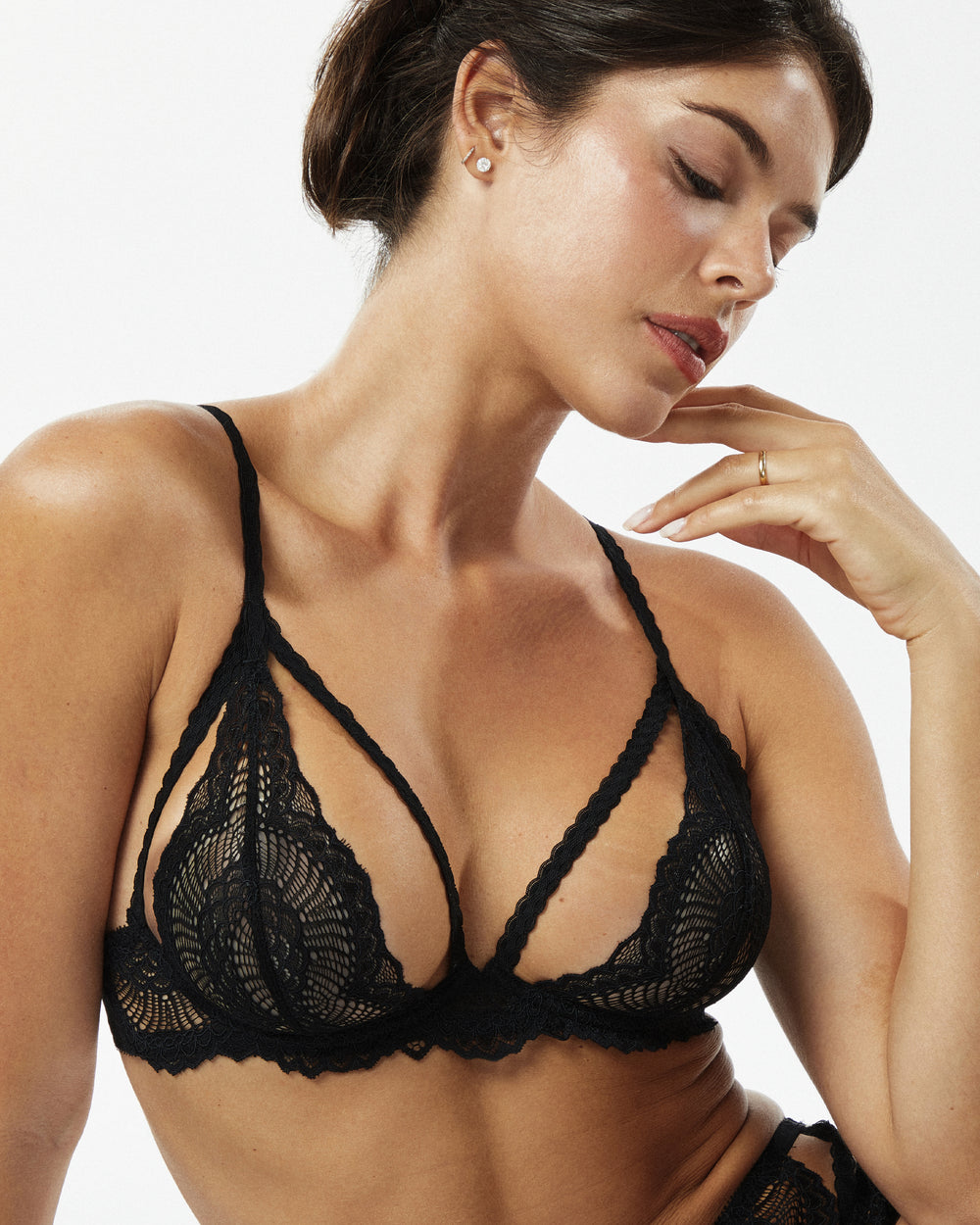
Not every pair of underwear needs to be a considered purchase. A foundation of well-made basics — soft, clean, reliable everyday pairs in neutral colors — is the most practical part of any underwear wardrobe. Journelle's basics collection covers everyday styles built for regular wear, while panty packs offer a cost-effective way to stock up on a single style you have already identified as a favourite.
If you are building a wardrobe from scratch, basics are the logical starting point: get the everyday layer right first, then add more considered or decorative styles around it.
Shapewear
Shapewear sits at the intersection of underwear and foundation wear — it functions as underwear but uses compression fabrics and structured construction to smooth and support the silhouette under clothing. Modern shapewear has improved substantially from earlier generations of restrictive garments: the best contemporary styles are comfortable to wear for a full day, smooth without compressing, and designed to be genuinely invisible under form-fitting clothing.
Shapewear is not a substitute for well-fitting underwear in other categories — it is a specific solution for specific occasions when you want a particularly smooth silhouette under a dress or outfit. Browse shapewear at Journelle.
Choosing the Right Underwear for Every Outfit
The most useful way to think about underwear is to match the cut to the clothing rather than reaching for the same style regardless of what you are wearing. A quick guide:
Under Fitted Dresses and Skirts
A seamless thong or G-string is the cleanest option under bodycon, jersey, or very lightweight fabrics where any fabric texture at the back will show through. Under a midi or maxi dress where the fabric is heavier or more structured, a seamless bikini or brief works equally well. For short dresses and skirts where you want coverage if the hem moves, a boyshort adds a layer of security.
Under Tailored Trousers and Slacks
Seamless styles are the most reliable choice under fitted trousers. A seamless bikini or thong works for standard fits; under very slim or lightweight trousers, a thong or G-string eliminates any possibility of lines at the seat or sides.
Under High-Waisted Bottoms
High-waisted underwear is the obvious choice — the waistband stays hidden within the garment's waist rather than visible above it. Alternatively, a bikini or thong with a low-enough rise to sit entirely beneath the waistband of the trouser or skirt also works well.
For Everyday Comfort
On days when fit and comfort matter more than what shows under clothing, a bikini or boyshort in a soft, breathable fabric — cotton, modal, or a soft lace — is usually the most comfortable choice for sustained wear. Seamless styles in microfiber are also excellent for long days.
For Lingerie Wear
When the underwear itself is the point, the cut matters less than the fabric, the finish, and the fit. A beautifully made lace thong, a high-waisted lace brief, a fine ouvert style, or a matching set in any of the above — the priority shifts from invisibility to presence. Choose based on what makes you feel good rather than what disappears.
Caring for Your Underwear
Underwear is washed more frequently than almost any other garment, which means the quality of care directly affects how long it lasts. A few habits that make a meaningful difference:
- Wash in cool or cold water — heat degrades elastic and fades color faster than any other factor.
- Use a gentle detergent, and a mesh laundry bag if machine-washing delicate lace or embellished styles.
- Wash similar colors together; wash light lace separately from darker garments to prevent color transfer.
- Air-dry wherever possible. Even cotton and microfiber underwear last significantly longer when kept out of the dryer. Lace and embellished styles should always be air-dried.
For full care instructions, see Journelle's wear and care guide.
Panty Sizing & Fit
Panty fit fails more often than any other piece of lingerie, and almost never because of the size on the tag. The three real reasons a panty doesn’t work are wrong rise for your torso, wrong cut for your hip shape, and wrong fabric for your activity. Size matters — but it’s the last of the four variables, not the first. This section walks through all four.
How to Measure Yourself
You need two measurements to size a panty accurately: your waist and your hip. A soft measuring tape, over bare skin or a single layer of clothing.
Waist. Find the narrowest point of your torso — usually 1-2 inches above your navel, not at your trouser waistline. Tape flat against the skin, snug but not tight, breathe out. Record the number.
Hip. Stand with feet together. Measure the fullest point of your hips and bum — for most bodies, this is 7 to 9 inches below the waist. Tape level all the way around (look in a mirror to check it’s not riding up at the back). Record the number.
That’s it. Hip is the more important of the two numbers for panties — cup, cut, and seat fit are all hip-driven. Waist determines rise and band fit.
Size Chart
| Size | Waist (in) | Hip (in) | UK | EU |
|---|---|---|---|---|
| XS | 24–25 | 34–35 | 6 | 34 |
| S | 26–27 | 36–37 | 8 | 36 |
| M | 28–29 | 38–39 | 10 | 38 |
| L | 30–32 | 40–42 | 12 | 40 |
| XL | 33–35 | 43–45 | 14 | 42 |
| XXL | 36–38 | 46–48 | 16 | 44 |
Sizing by waist and hip isn’t universal across brands — see the brand notes below for specific quirks. If your waist and hip fall in different sizes, go with the hip number first for cuts that sit on the hip (bikini, thong, boyshort) and the waist number for cuts that sit at or above the waist (high-waist, briefs).
Rise — the Dimension Most People Ignore
Rise is the distance from the crotch seam to the waistband. It’s not printed on the tag and it’s the single biggest reason a correctly-sized panty still feels wrong.
Low-rise (sits 2-3 inches below the natural waist). Works on shorter torsos. On a long torso, a low-rise will ride into uncomfortable territory within an hour — the panty is trying to reach a waistline that’s further away than it was designed for.
Mid-rise (sits 1 inch below or right at the natural waist). The default. Fits the widest range of bodies and is the rise most bikini and boyshort styles use.
High-rise (sits at the natural waist or 1 inch above). Flattering on most torsos, especially with higher-rise trousers. The one to try first if you’ve spent years rolling-down waistbands.
High-waist (sits 2+ inches above the natural waist). Shaping, tuck-in-friendly, and the right choice under a fitted skirt or dress where you don’t want a waistband line. Not shaping wear — shaping briefs have built-in compression; a standard high-waist brief just has a taller band.
If you’ve hated every panty you’ve ever tried, the problem is almost certainly rise, not size. Measure your torso length (natural waist to crotch) once and you’ll know which rise range you’re in.
Size Up or Size Down — By Fabric and Cut
A single brand will often have the same size number run a half-size small in stretch lace and a half-size large in woven silk. Two rules that hold across most brands:
Stretch fabrics (modal, microfibre, stretch lace, seamless knits) run closer to the size chart — take your measured size. If you’re between sizes on stretch fabric, size down; it will recover shape in wash.
Wovens and stiff lace (silk charmeuse, Leavers lace, structured cotton) run smaller than the chart. If you’re between sizes on a woven, size up.
By cut: thongs run smaller (size up if between). Bikinis run true. Boyshorts run smaller through the thigh (size up if you have muscular or fuller thighs). High-waist briefs run true at the waist but can be tight at the hip — go by hip measurement, not waist.
The Four Fit Tests We Use in the Fitting Room
Once a panty is on, check these four things. Any single failure means it’s the wrong piece — size, cut, or rise.
1. Does the leg band dig? A red line on the thigh that lasts more than ten minutes after taking the panty off means the leg band is too tight. That can be a size-too-small issue, or a cut issue — some brands cut their leg bands narrower than others. If you’re between brands, try a wider-band cut (bikini instead of thong, for example).
2. Does the waistband roll down? A waistband that rolls within the first hour is either too small in the waist (waistband elastic is stretched to the point of not lying flat) or the wrong rise for your torso length. More often the second.
3. Does the seat sag or gap? The back of the panty should lie flush against your bum without bunching, gaping, or loose fabric. A gap means too big in the hip. Bunching at the leg means the cut is wrong for your shape (often a boyshort on a fuller bum).
4. Is there visible panty line (VPL) under clothes? If yes, the fix is a finish change, not a size change — switch to a bonded-edge seamless, a laser-cut thong, or a G-string. Sizing up or down won’t eliminate VPL if the seam profile is the problem.
Brand Sizing Notes
| Brand | Runs | Strongest In | Notes |
|---|---|---|---|
| Commando | True to size | All cuts | The safe bet if you’ve never been sized. Bonded edges across most styles. |
| Hanky Panky | One-size (stretch lace) | Thongs, bikinis | Actually fits roughly US 4-14 well; outside that range, seek alternatives. |
| Cosabella | Small | Thongs, lace | If you’re between sizes, always size up. |
| Chantelle / Simone Perele | EU sizing, true to size | Everyday, high-waist | The chart above translates — use US size column. |
| Wacoal | True to size | Briefs, shaping | Wide cut range, good for fuller figures. |
| Natori | True to size | Bikinis, thongs | Seamless range runs slightly small; size up for Bliss Perfection styles. |
| Fleur du Mal | Small | Silk, luxury | European-style sizing; size up for silk styles specifically. |
| Eberjey | True to size | Modal, boyshorts | Soft modal runs generous; size down only on the thong styles. |
When Your Problem Isn’t the Size
Three patterns we see in the fitting room that read as “I need a different size” but aren’t:
“Every panty digs into my hip/waist.” Not a size problem — it’s a fabric problem. Rigid elastic waistbands dig on most bodies after two hours regardless of size. Look for panties with a jacquard waistband, wide-covered elastic, or no separate waistband at all (bonded-edge seamless).
“My thong rides up all day.” Not a size problem — almost always a rise problem. Low-rise thongs on long torsos ride up because the body is longer than the panty was designed for. Switch to a mid-rise thong in the same size and 90% of the discomfort goes away.
“Panty line shows through leggings.” Not a size problem — a finish and cut problem. Under leggings, you need a G-string or a laser-cut thong. No amount of sizing up or down makes a sewn-edge bikini invisible under athleisure.
Frequently Asked Questions About Women's Underwear
What is the difference between a G-string and a thong?
A G-string has the most minimal back construction possible — typically a single thin string. A thong has a slightly wider strip of fabric at the back, usually T-shaped, which sits between the cheeks and connects to the waistband. Both eliminate visible panty lines, but a thong feels more substantial and stays in place more reliably for most women.
What underwear is best for avoiding visible panty lines?
Seamless styles in any cut are the most reliable solution — the bonded or knitted construction lies completely flat with no seams to show through fabric. For very fitted or lightweight clothing, a seamless thong or G-string is the cleanest option. A seamless bikini or brief works well under most other fitted styles.
What is the most comfortable everyday underwear?
Comfort is personal, but the most commonly cited everyday favorites are soft bikini styles in cotton or modal, and boyshorts in modal or soft lace. Seamless microfiber styles are also very comfortable for long days. The most important factor is fit — underwear that is too tight, too loose, or cut for a different body proportion will be uncomfortable regardless of the fabric.
What underwear works best under high-waisted jeans or trousers?
High-waisted underwear is the most straightforward option — the waistband sits within the garment's waist rather than below it. Alternatively, any bikini or thong cut low enough to sit entirely beneath the trouser's waistband also works well.
What is a cheeky cut?
A cheeky cut sits between a standard bikini and a thong in terms of rear coverage — higher at the back than a classic bikini but more covered than a thong. It leaves more of the seat visible while still providing more coverage than a minimal style. Cheeky cuts are popular as an everyday option that balances comfort and a slightly more fashion-forward silhouette.
What are ouvert panties?
Ouvert — French for "open" — refers to underwear with an open construction at the crotch. The style is made for intimate wear rather than daily use and is typically constructed from fine lace or mesh. See our blog post Are You Open to Ouvert? for more detail on the style.
How many pairs of underwear should I own?
A practical everyday wardrobe includes enough pairs to rotate through a full week or two without running low — typically ten to fourteen pairs for most women. Within that, having a range of cuts (a few seamless styles for fitted clothing, a few comfortable everyday pairs, and a few more considered lace or lingerie styles) gives you the flexibility to match underwear to outfit and occasion without having to compromise.
Shop All Women's Underwear at Journelle
From seamless everyday basics to beautifully crafted lace styles, Journelle carries women's underwear across every cut, every fabric, and every occasion. Use this guide to find the styles that work for your body and your wardrobe, then explore the full collection.
Shop all panties at Journelle →
Explore Underwear Styles
A curated selection of panties designed for comfort, fit, and everyday wear. Explore thongs, high-waisted styles, seamless options, and more.