

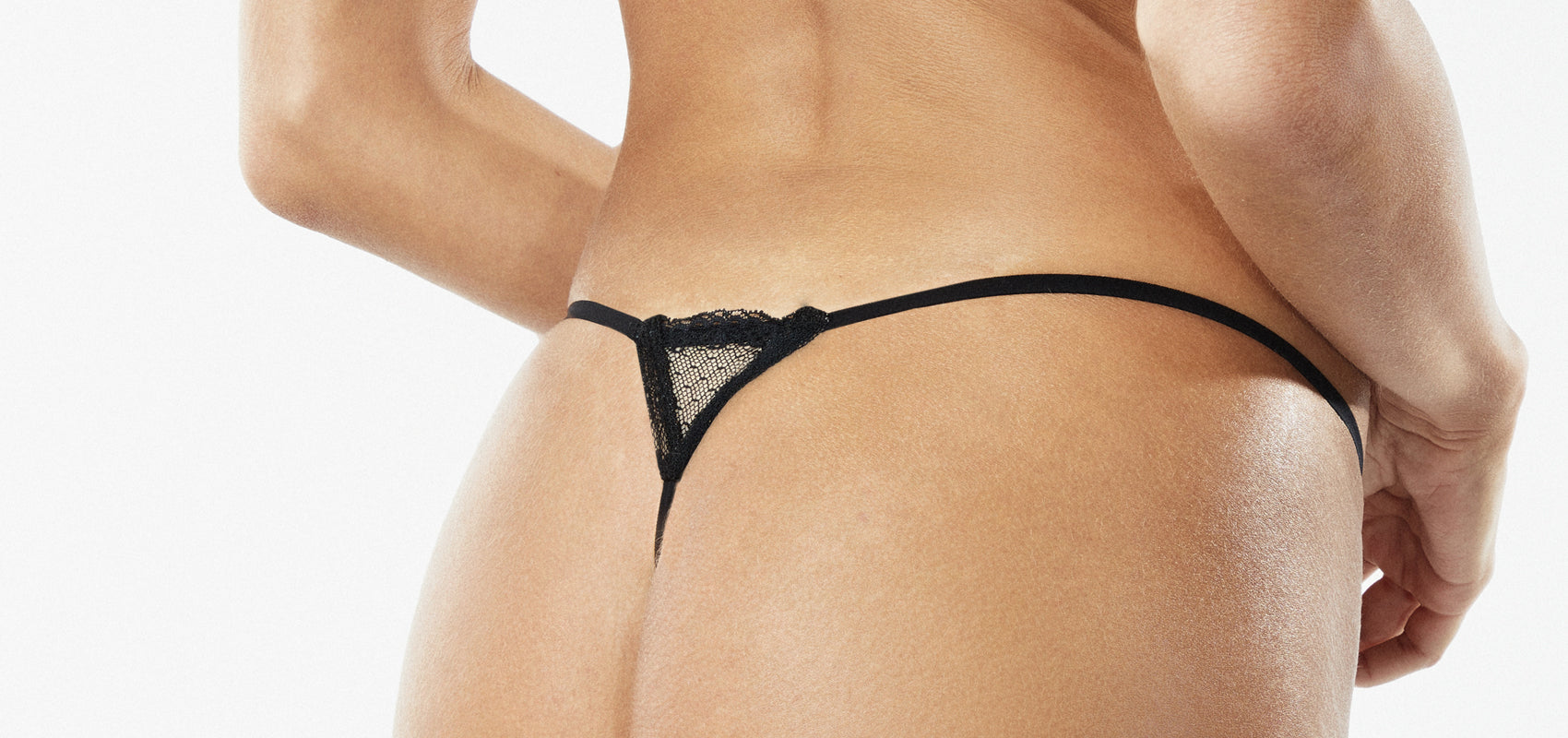
G-Strings 101: What They Are + How They Differ From Thongs and Other Styles
Key Highlights
Here are the main things to know about g-strings:
-
A g-string is a style of underwear with minimal coverage, defined by a slender string at the back.
-
The biggest difference between a g-string vs thong is fabric: g-strings use less of it, with a narrower back.
-
One of the most common reasons to choose a g-string is a smooth, no-panty-line finish under fitted clothing.
-
Comfort comes down to fit, fabric, and personal preference—small details make a big difference.
-
Different underwear styles serve different outfits; g-strings are a go-to when you want a seamless look.
-
For an easy, comfortable wear, focus on breathable fabrics and a size that sits flat without digging in.
Introduction
Lingerie can feel overwhelming—especially when styles start to blur together. You've likely heard of g-strings, but you may still be wondering what they are, how they compare to thongs, and when they make the most sense in your drawer. This guide breaks it down in a simple, no-stress way: what defines a g-string, how it differs from other minimal styles, and how to choose the right pair for your body, your outfits, and your everyday comfort.
Understanding G-Strings: An Introduction
A g-string is a type of underwear with a minimalist design: a small panel in the front connected to a waistband and a very thin string in back. Because there's so little fabric at the rear, it's the most minimal of all panty styles—made to disappear under clothing.
That "barely there" construction is exactly why g-strings are so popular under tighter silhouettes: leggings, bodycon dresses, and slim trousers where visible panty lines can be distracting. If you're looking to explore styles, you can browse the full selection in our g-strings collection.
What Sets G-Strings Apart From Other Underwear Styles
When you compare a g-string vs thong, it mostly comes down to fabric and shape. Both are designed for minimal coverage, but a thong typically has a narrow strip of fabric in back and a slightly more substantial waistband—offering a bit more structure.
A g-string takes the concept further, using a very thin string at the back (sometimes extremely narrow) and a small front panel. The result is the most "invisible" look possible under clothing—especially under lighter fabrics or tighter cuts.
In simple terms: a g-string is the most minimal end of the thong spectrum. Other styles like bikinis or briefs offer more back coverage, which can feel different for comfort and can show lines under certain outfits.
A Brief Look at the History and Evolution of G-Strings
The idea of minimal, thong-like garments has existed for centuries across different cultures, often as practical clothing in warm climates. The modern lingerie version, though, is most closely tied to fashion and swimwear.
In the 1970s, designer Rudi Gernreich is often credited with popularizing the thong-style swimsuit, created in part as a response to public decency rules that required minimal coverage. From there, the style made a natural jump from swimwear into lingerie.
Today's g-strings have evolved far beyond a purely functional piece. Modern versions focus on comfort (better elastics, softer seams) and design—everything from breathable everyday pairs to intricate lace styles meant to be seen (or simply enjoyed).
Key Differences Between G-Strings, Thongs, and V-Strings
When you shop for women's lingerie, you'll often see g-strings, thongs, and v-strings grouped together because they all aim for minimal coverage and a smooth finish under clothing. The difference is in the cut: g-strings have the thinnest back, thongs usually have a slightly wider fabric strip, and v-strings use a V-shaped detail at the back for a distinct look.
If you're deciding between them, think of this section as your quick fit-and-function guide—what each style covers, how it feels, and when it tends to work best.
Comparing Coverage and Design Features
The main difference between these styles is back coverage. A g-string offers the least—just a thin string. A thong typically has a narrow strip of fabric (wider than a g-string). A v-string uses a V-shaped piece of fabric at the back, which can feel a touch more anchored while still staying minimal.
Front coverage varies by brand and style, but most g-strings, thongs, and v-strings use a small front panel. All three aim to reduce visible panty lines, but the exact comfort and "disappearing" effect depends on the fabric, seam finish, and waistband design.
Here are the main parts of the design explained in a simple way:
|
Style |
Back Coverage |
Front Coverage |
Key Feature |
|---|---|---|---|
|
G-String |
A single, thin string that sits between the buttocks. |
A small front panel (varies by style). |
The most minimal, "nearly invisible" back. |
|
Thong |
A narrow strip of fabric, wider than a g-string. |
A small front panel (varies by style). |
A balance of minimal coverage and structure. |
|
V-String |
A V-shaped piece of fabric at the back. |
A small front panel (varies by style). |
A distinct V-back look with minimal coverage. |
Comfort, Style, and Functionality Explained
Comfort is personal, but there are patterns. Many people like thongs for everyday wear because the wider back and waistband can feel a bit more secure. Others prefer the "barely there" feel of a g-string—especially under tight clothing—because there's less fabric to bunch, shift, or show.
From a style standpoint, all three can look discreet or deliberately pretty depending on the fabric. A g-string often reads as the most minimal and daring, while a thong is the classic middle ground. A v-string offers a slightly different aesthetic in back—great if you want something minimal, but with a design detail that feels unique.
Functionally, the goal is usually the same: prevent visible panty lines under leggings, slim dresses, silk skirts, or tailored trousers. The "best" choice depends on the outfit, the fabric of your clothing, and what feels best on your body.
Beginner's Guide to Choosing and Wearing G-Strings
If you're trying a g-string for the first time, the biggest factor is choosing the right fit and fabric. When a g-string fits well, it should feel secure without digging in—smooth under clothing, comfortable on the body, and easy to forget you're wearing at all.
Below, we'll walk through what to look for as you shop: sizing, fabric, and a simple process for picking a pair that works for your wardrobe and your comfort level.
What You'll Need to Get Started: Sizing, Fit, and Fabric Choices
With a minimal style, small fit issues can feel bigger—so sizing matters. Too tight can mean irritation; too loose can mean shifting and bunching. Fabric matters just as much, especially for everyday wear.
For daily comfort, breathable fabrics like cotton are often the easiest choice. For special occasions, lace, silk, or satin can feel elevated—just keep in mind they may be less breathable and better suited for shorter wear.
Here's what to consider when starting your search:
-
Accurate sizing: Know your hip and waist measurements and check the brand's size chart.
-
The right fit: The waistband should lie flat—secure, but never digging in.
-
Breathable everyday fabrics: Cotton is a great option for all-day comfort.
-
Special-occasion fabrics: Lace or silk can feel beautiful—especially when comfort isn't an all-day requirement.
-
Seam finish: Look for smooth edges if your goal is truly invisible under clothing.
Step-by-Step Guide to Selecting and Wearing a G-String
Choosing a g-string doesn't need to be complicated. Start with your measurements, then choose a fabric that matches your plans (everyday vs. occasion), and finish by selecting a cut that feels good on your body.
There's a wide range of styles—simple and seamless, delicate and lacy, sporty, barely-there, or statement-making. If you're new to g-strings, it's worth trying one or two different fabrics or waistband styles to see what you like best.
Here's a quick overview of the steps:
-
Measure to find the right fit.
-
Choose fabric based on comfort and occasion.
-
Pick a style that suits your wardrobe (and feels good).
Step 1: Measure and Pick the Right Size
Fit is everything. Use a soft measuring tape to measure the widest part of your hips and your natural waist, then compare your measurements to the brand's size chart. (Sizing can vary across lingerie brands, so a quick check can save you a lot of guesswork.)
A good g-string fit feels secure, smooth, and non-restrictive. The waistband should lie flat on your hips, and the back should sit comfortably—no pinching, no digging, no constant adjusting.
Step 2: Choose the Best Fabric for Comfort and Lifestyle
Fabric can change the entire experience of wearing a g-string. For everyday wear, breathable cotton is often the most comfortable choice because it's soft, absorbent, and encourages airflow—helpful for staying comfortable throughout the day.
For special occasions, lace, silk, and satin can feel elevated and beautiful. These fabrics tend to be less breathable, so many people reserve them for shorter wear—when the priority is the look and feel rather than all-day practicality.
Ultimately, the best fabric is the one that matches your day: breathable and easy for everyday, elevated and delicate when you want something special.
Featured Pick: The Journelle Sapna G-String
If you love the "invisible under clothes" idea but still want something undeniably romantic, the Journelle Sapna G-String is a beautiful place to start. Part of our newest lingerie collection named for our co-CEO Sapna, it's designed to feel simple, pure, and quietly sensual—without sacrificing everyday practicality.
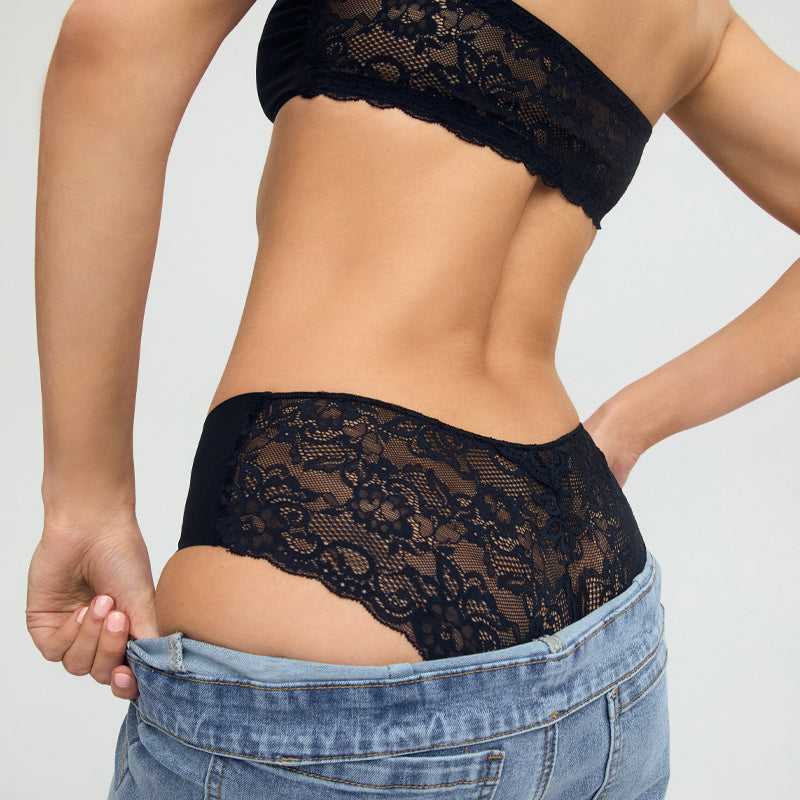
Made from floral-patterned lace with scalloped edging, it pairs a thin elastic waistband with a T-back and a triangle-shaped lace panel for added detail. The result is a low-rise fit that's made to sit smoothly and help minimize visible panty lines under clothing.
-
No visible panty lines
-
Cotton gusset
-
Low-rise fit
Caring for Your G-Strings: Washing and Maintenance Tips
Once you find a few favorites, proper care will keep them looking and feeling great—especially with delicate lace or fine elastics. Washing and storing lingerie thoughtfully helps maintain fit, softness, and longevity.
These simple habits can make a real difference, whether you're caring for everyday cotton pairs or something more delicate.
How to Wash G-Strings to Keep Them in Great Shape
Hand washing is the gentlest option—especially for lace. Use cold water and a mild detergent designed for delicates to help protect the fabric and elastic.
If you prefer machine washing, use a mesh lingerie bag and select a delicate cycle with cold water and a mild detergent. Avoid bleach and harsh soaps, which can break down fibers and elastic over time.
Here are some tips you can use:
-
Hand wash in cold water with a gentle detergent when possible.
-
If machine washing, use a mesh bag and a delicate cycle.
-
Avoid harsh detergents and bleach.
-
Air dry (lay flat or hang). Skip the dryer—heat can damage elastic.
Storage and Everyday Care Recommendations
Storage matters too. A crowded drawer can snag lace, stretch elastics, or warp shape. Give your lingerie a dedicated spot—ideally with dividers—so pieces stay organized and protected.
Folding or rolling g-strings gently helps keep them in good form and easy to find. If you're storing lace, keep it away from hooks, zippers, and hardware that can snag.
Here are some easy ways to store your lingerie so it lasts longer:
-
Store g-strings in a dedicated drawer or section of a drawer.
-
Use dividers to separate styles and protect delicate pairs.
-
Fold or roll neatly to prevent stretching.
-
Keep lace away from hooks, zippers, and anything that can snag.
Conclusion
A g-string isn't about wearing less—it's about choosing the right tool for the outfit, the moment, and your comfort. Once you know the difference between a g-string, a thong, and a v-string, it's easier to build a drawer that works with your wardrobe: smooth under leggings, invisible under silk, and as practical (or playful) as you want it to be. Focus on fit and fabric, care for them well, and you'll have a few pairs you reach for again and again.
Frequently Asked Questions
Are G-Strings Comfortable for Daily Wear?
They can be. Daily comfort depends on fit, fabric, and personal preference. If the waistband lies flat without digging and the fabric feels breathable against your skin, many people find g-strings easy to wear—especially under fitted clothing where you want a smooth finish.
What Health Considerations Should I Know About G-Strings?
Choose breathable fabrics (like cotton) when you can, and avoid anything that feels too tight or irritating. Good fit matters, and it's always a good idea to change out of damp or sweaty underwear promptly. Many people also prefer sleeping without underwear to allow airflow—regardless of style.
Which Fabrics Are Most Comfortable for G-Strings?
For everyday wear, breathable cotton is often the most comfortable because it's soft and helps manage moisture. Lace, silk, and satin can feel beautiful for special occasions, but they tend to be less breathable—so comfort may depend on how long you plan to wear them.
How Do I Find Stylish or Popular G-String Brands?
Look for lingerie retailers that curate a range of styles—everything from seamless everyday basics to lace-forward special-occasion pieces. A good assortment makes it easy to try different cuts and fabrics until you find what you reach for most.