

The Bodysuit Guide: Styles, Fit & How to Wear Them
Reviewed by Natalie, Senior Fitter at Journelle. Bodysuits fall between lingerie and apparel; this guide is built for the fit questions we hear in the fitting room about how they should sit, close, and be worn under clothes.
The bodysuit has become one of the most genuinely useful garments in a modern wardrobe — and one of the most misunderstood. It sits in an interesting position: part functional top, part lingerie, part outerwear, depending entirely on how it is made and how it is worn. A snap-crotch bodysuit in a smooth fabric can anchor a tailored work outfit and stay perfectly tucked all day. A fine lace bodysuit in the same silhouette is a piece of intimate apparel. Understanding the difference — and knowing which style to reach for when — makes the category significantly more useful.
This guide covers every major bodysuit style available at Journelle, how each one is constructed, what occasions it suits, and how to wear it. Whether you are looking for a versatile everyday layer, a considered lingerie piece, or something that crosses comfortably between the two, start here.
What Is a Bodysuit
A bodysuit is a close-fitting one-piece garment that covers the torso and fastens at the crotch — typically with snap closures, hooks, or a thong back. It fits like a top but stays anchored to the body the way a top never quite does, because it cannot ride up, come untucked, or shift during the day. That practical advantage is what has made the bodysuit a genuine wardrobe staple rather than a passing trend.
Bodysuits are made in an enormous range of fabrics and constructions — from thick ribbed jersey and structured ponte to sheer lace, fine mesh, and smooth satin. The fabric largely determines the occasion: a heavier, opaque bodysuit functions as an everyday top; a lace or mesh bodysuit is lingerie. Both are bodysuits in the same technical sense, but they live in very different parts of the wardrobe.
For a broader look at why bodysuits have become a true wardrobe building block, see our journal post: Bodysuits: Your New Wardrobe Building Block.
Shop All Bodysuits
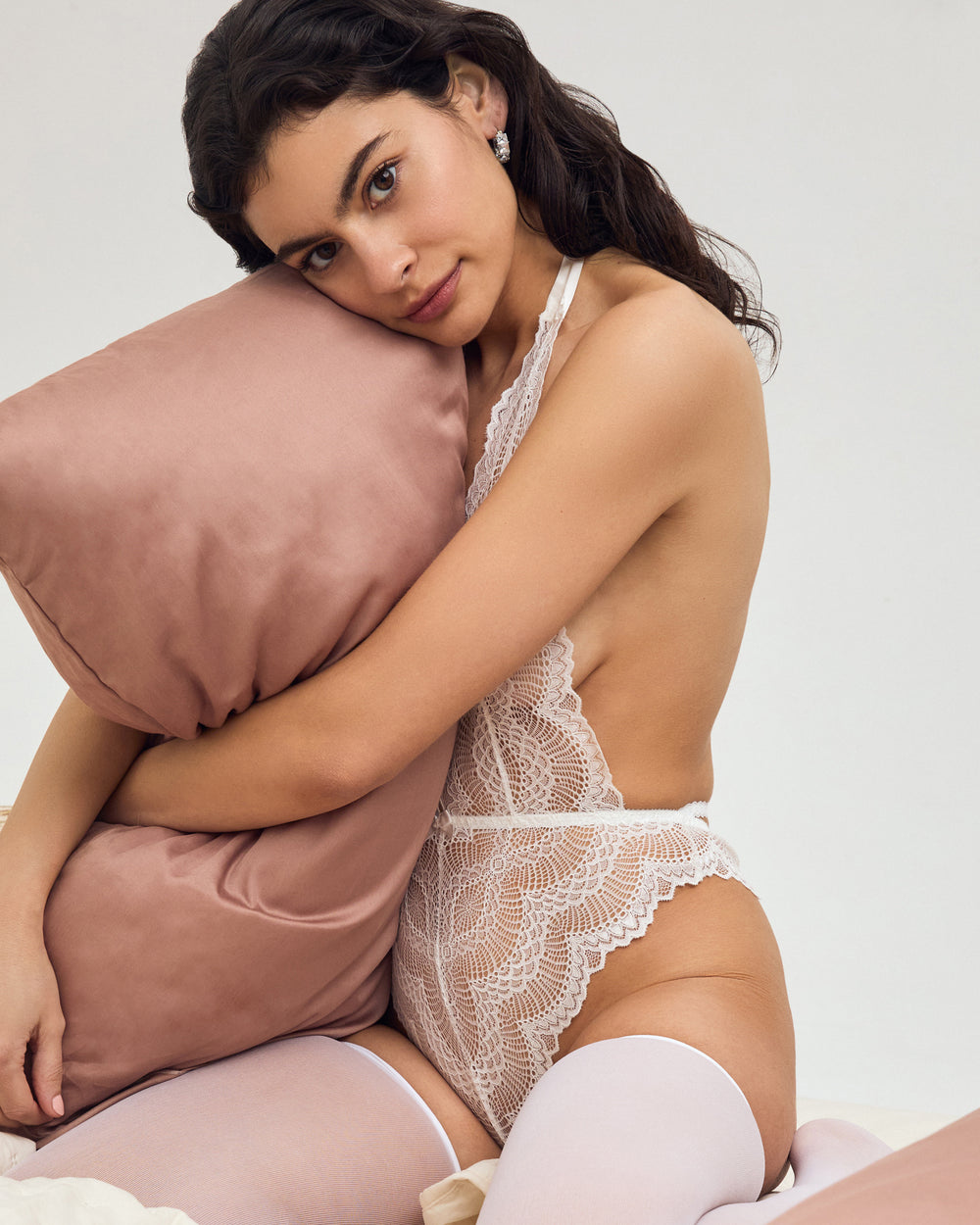
Bodysuit vs. Top: Why It Matters
The defining advantage of a bodysuit over a regular top is that it stays put. A conventional top shifts during the day — it rides up at the waist, comes untucked from trousers, creases unevenly under a blazer, and generally requires periodic readjustment. A bodysuit eliminates all of that. Because it is secured at the crotch, it sits in exactly the same position at the end of the day as it did at the start.
This makes bodysuits particularly useful for:
- Tailored dressing: Under a blazer or with high-waisted trousers, a bodysuit creates a smooth, tuck-free silhouette that no regular top can reliably replicate.
- Fitted clothing: Under anything slim or stretch-fabric, a bodysuit removes the bulk of a waistband or the possibility of a top bunching at the hips.
- Active days: When you are moving a lot — traveling, on your feet, going from meeting to dinner — a bodysuit removes one category of adjustment from an already full day.
The trade-off is practicality in bathroom situations: snap closures take a moment longer than a tucked-in top. Most women who wear bodysuits regularly consider it a minor inconvenience relative to the fit benefit.
Types of Bodysuits
The bodysuit category spans a much wider range of fabrics, constructions, and silhouettes than most people realize. Here are the major styles and what distinguishes each.
Everyday & Outerwear Bodysuits
Made from opaque, substantive fabrics — ribbed jersey, modal, ponte, or smooth cotton blends — these bodysuits function as tops. They are designed to be worn visibly as part of an outfit and are the most versatile style in the category. A well-chosen everyday bodysuit in a neutral color can anchor dozens of different looks: with tailored trousers for work, with jeans for weekend wear, with a midi skirt for an evening out.
Necklines vary significantly across this category — crew neck, V-neck, scoop neck, square neck, halter, and off-the-shoulder all appear in bodysuit form — which means you can match the bodysuit to the occasion and outfit as precisely as you would a regular top, with the added benefit of the all-day stay-put fit.
Thong Bodysuits
A thong bodysuit has a thong back rather than a full-seat snap closure, which eliminates the possibility of visible underwear lines under fitted clothing. It functions like a seamless top that becomes part of the overall smooth silhouette beneath whatever is worn over it. Thong bodysuits are particularly useful under very fitted trousers, pencil skirts, or any clothing where a snap closure at the seat might create a visible line.
Shop Lace Bodysuits
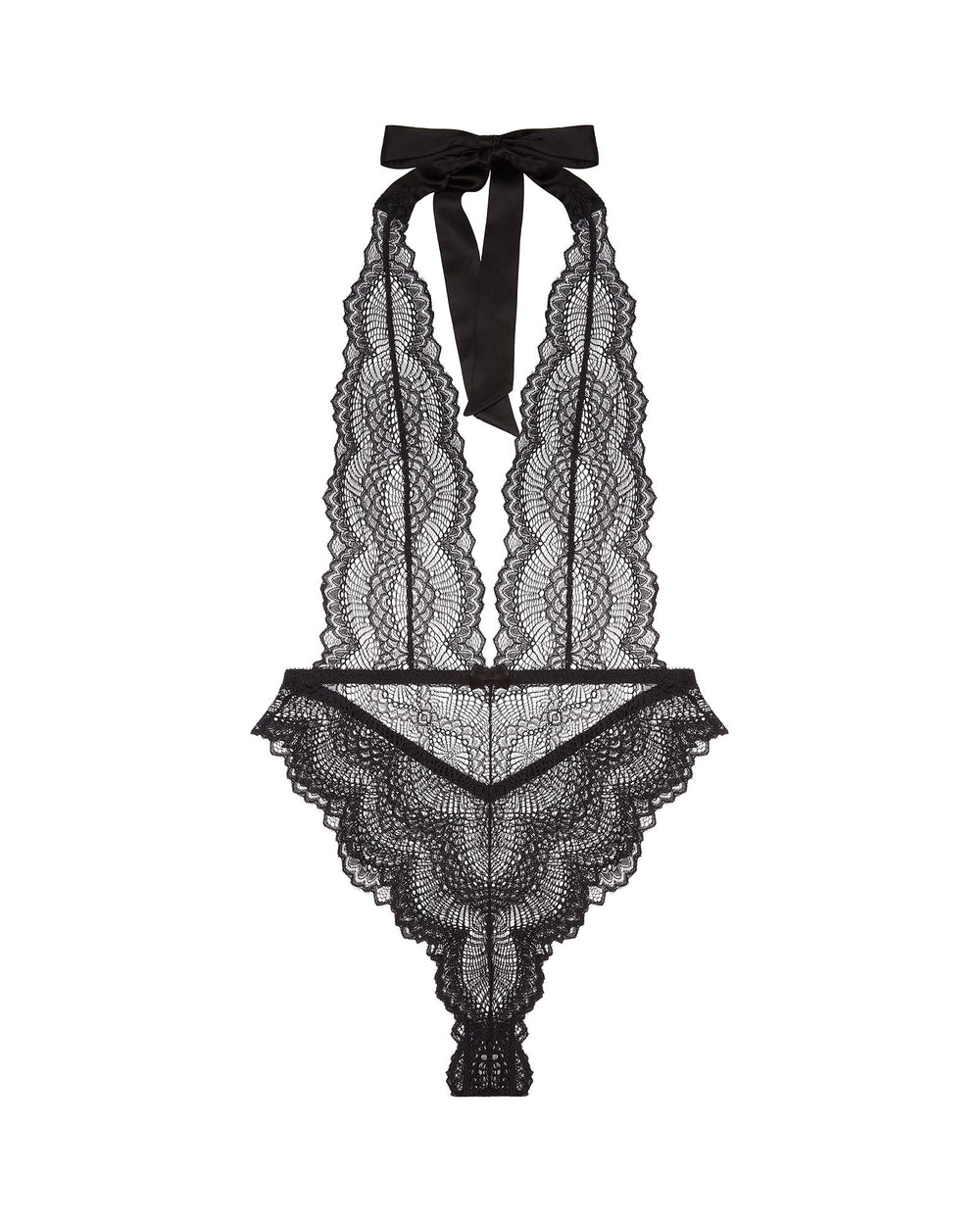
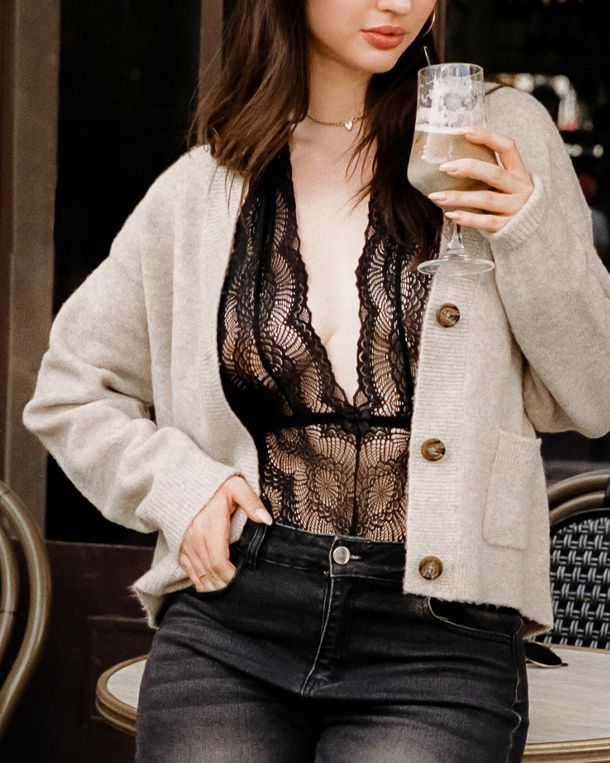
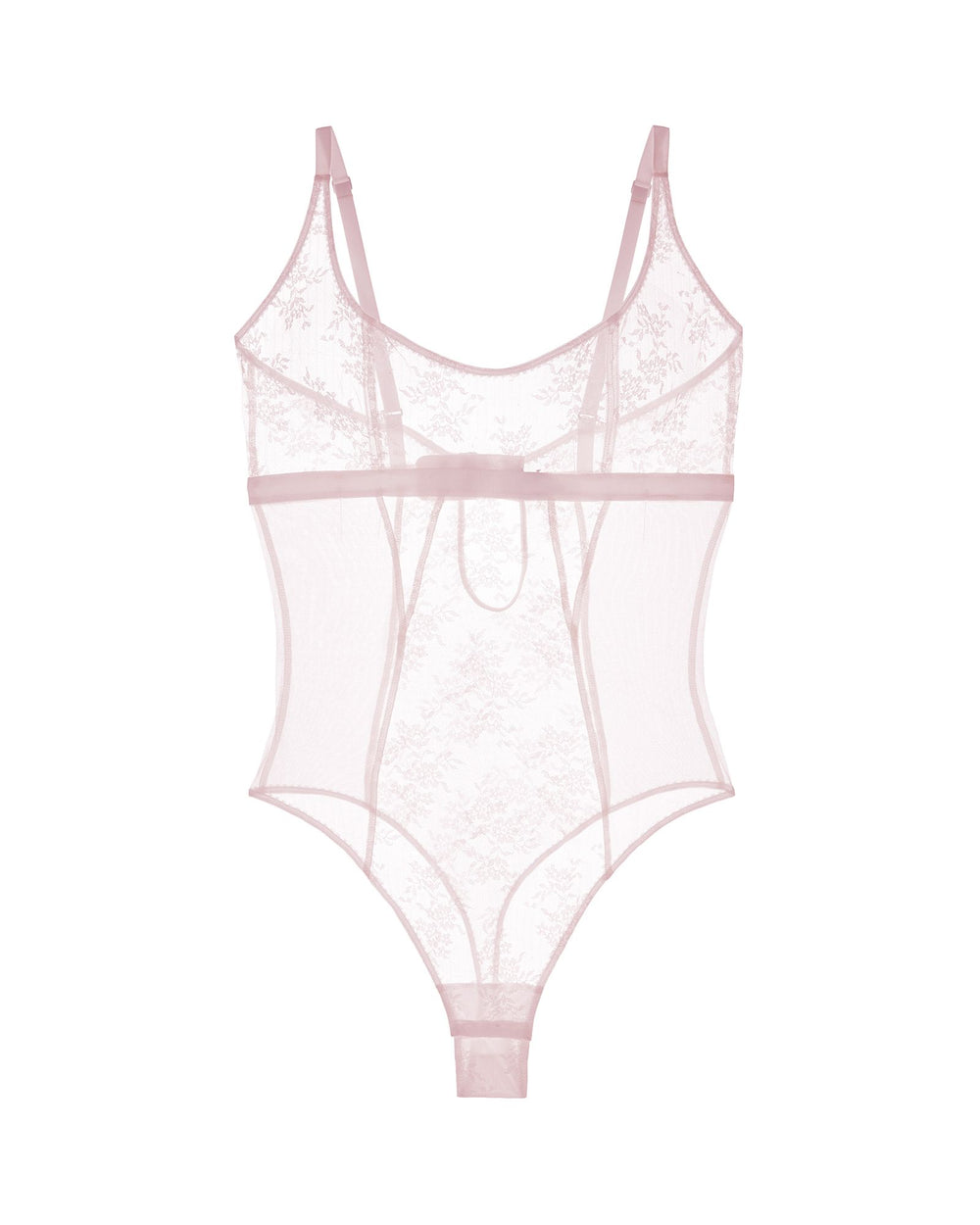
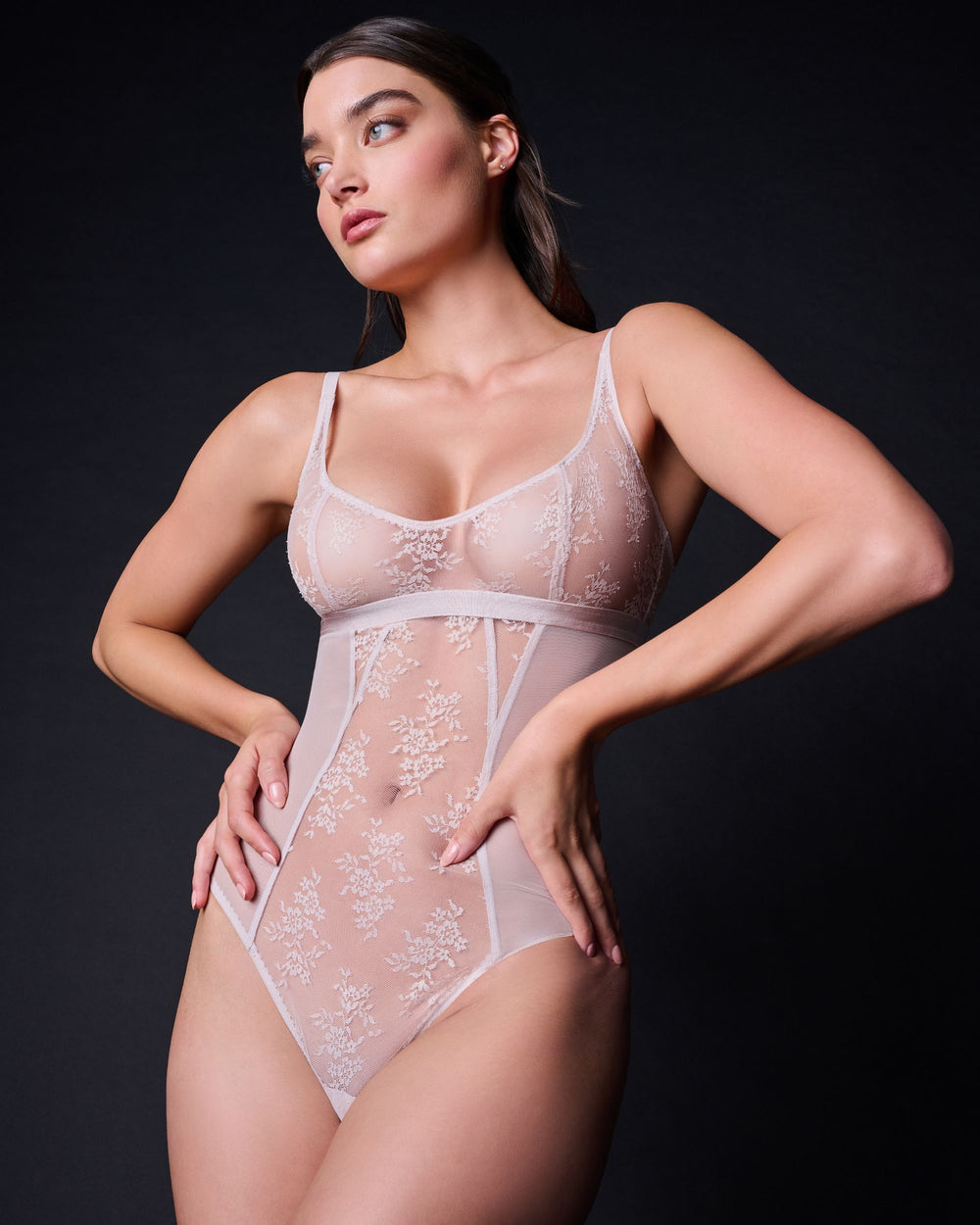
Lace Bodysuits
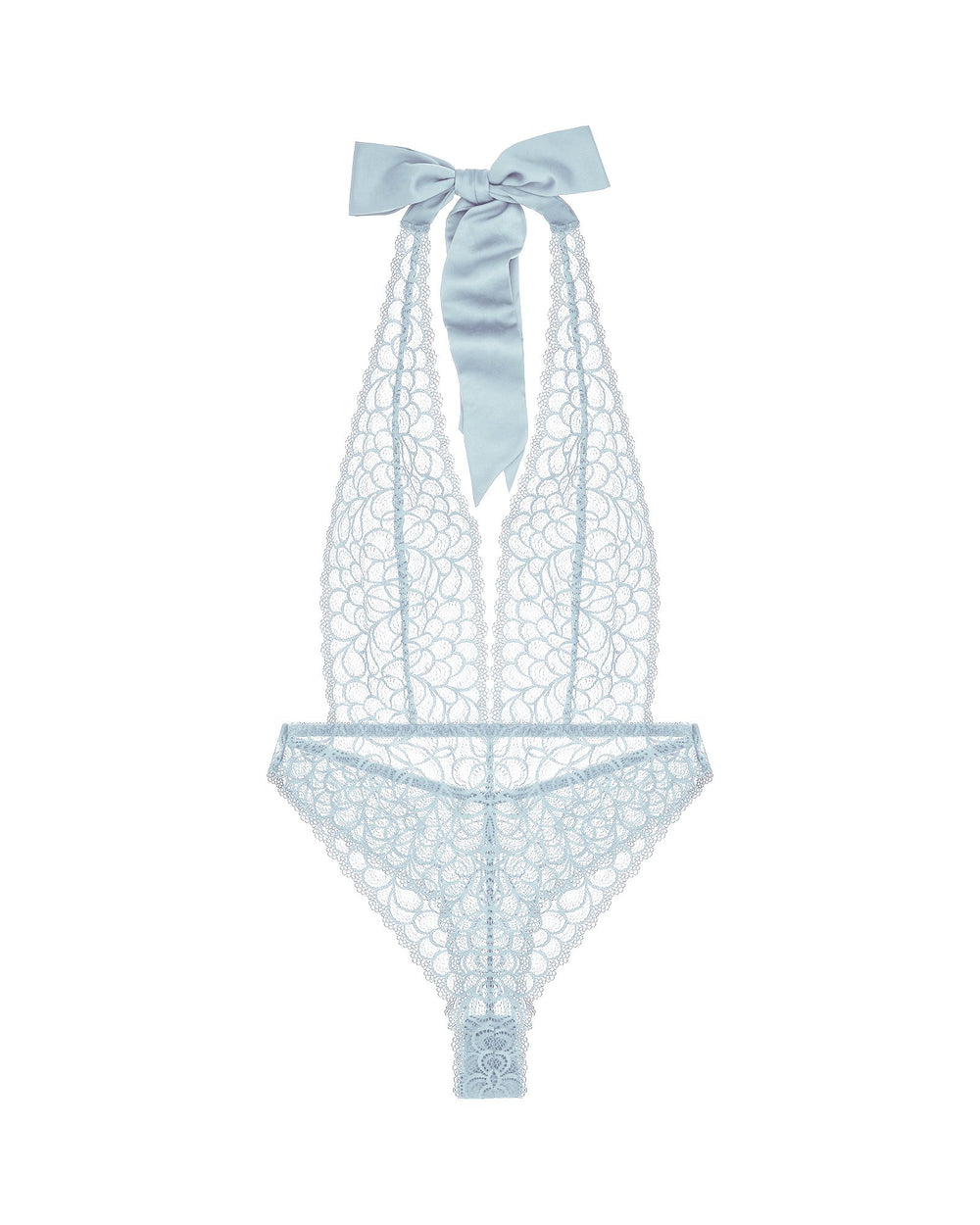
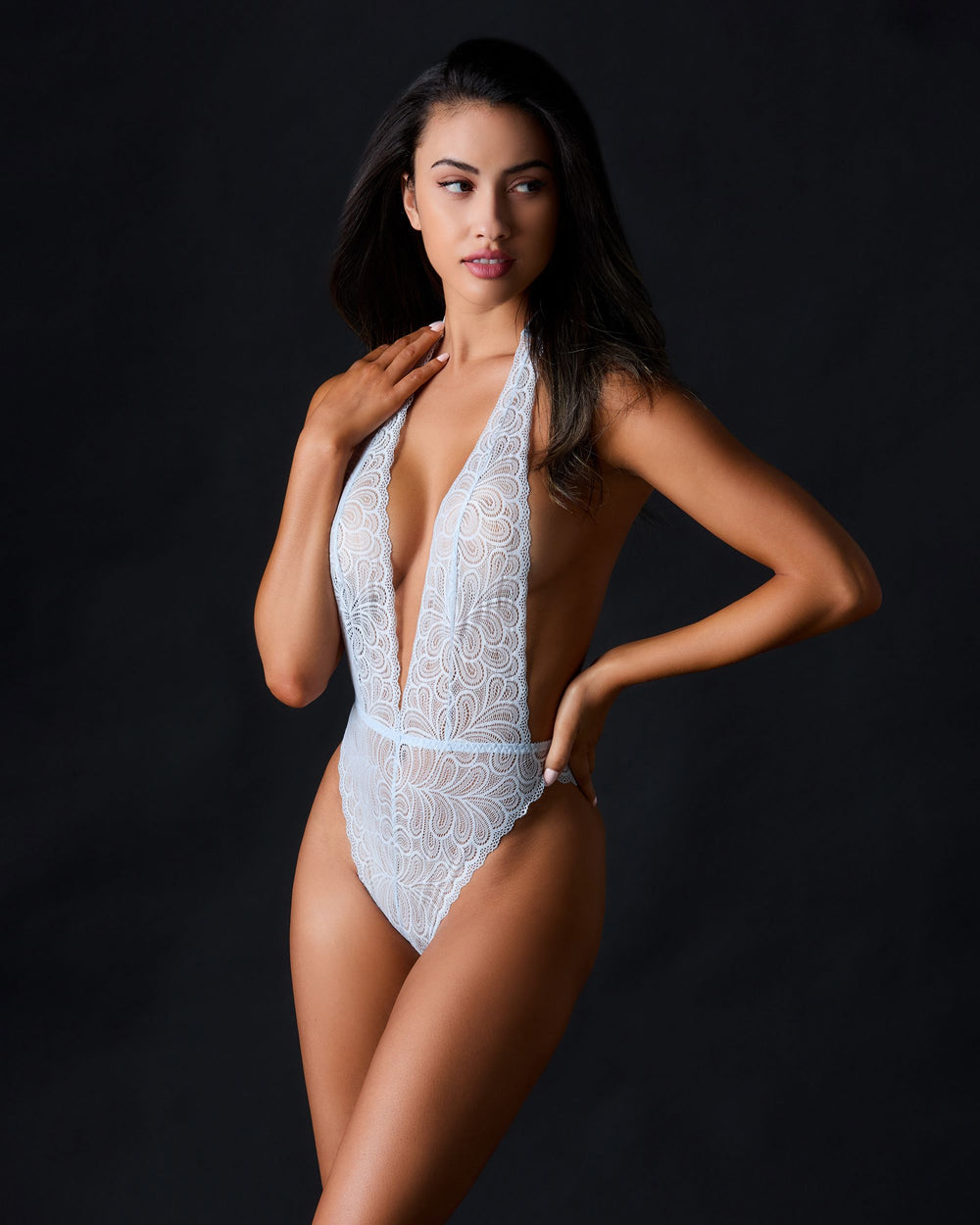
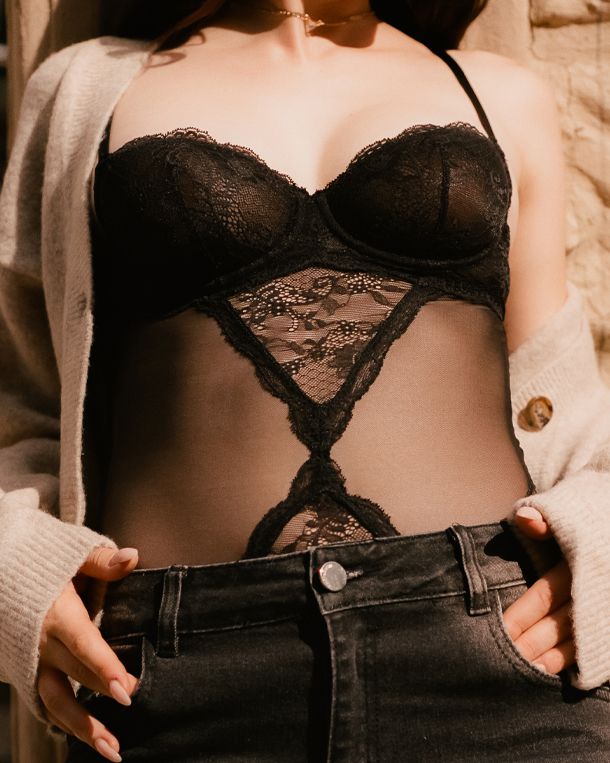
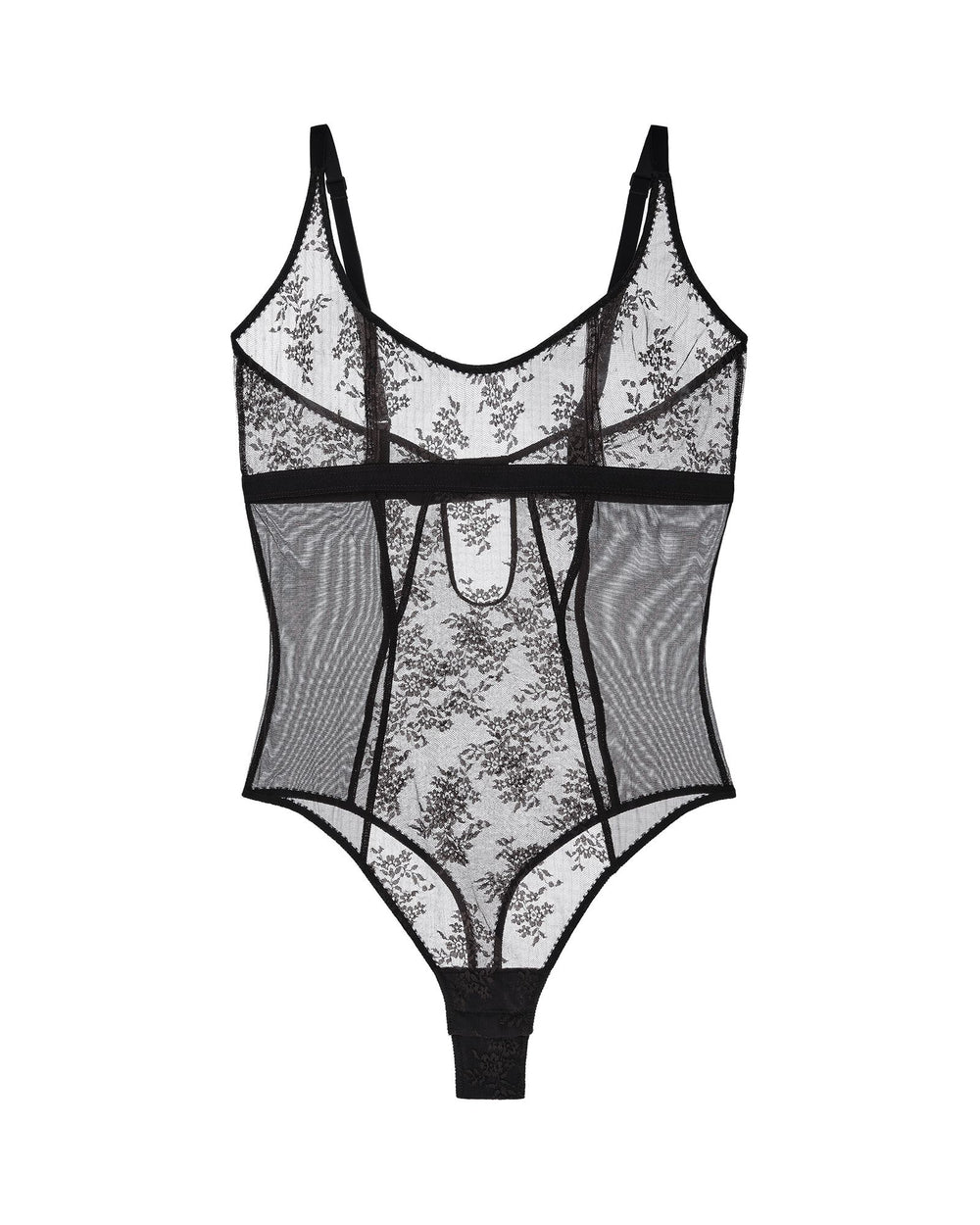
A lace bodysuit uses the same snap-crotch construction as an everyday bodysuit but is made from fine lace — typically sheer, delicate, and designed to be seen rather than hidden. Lace bodysuits sit firmly in the lingerie category: they are worn for intimate occasions, for the private pleasure of beautiful underwear, or styled deliberately as a visible layer under an open blazer or sheer outer garment.
The bodysuit silhouette works particularly well in lace because the close fit shows the fabric's detailing more fully than a looser garment would. A fine lace bodysuit with a deep neckline, a scalloped hem, or intricate embroidery becomes genuinely striking in a way that a lace top or bra alone would not.
Mesh & Sheer Bodysuits
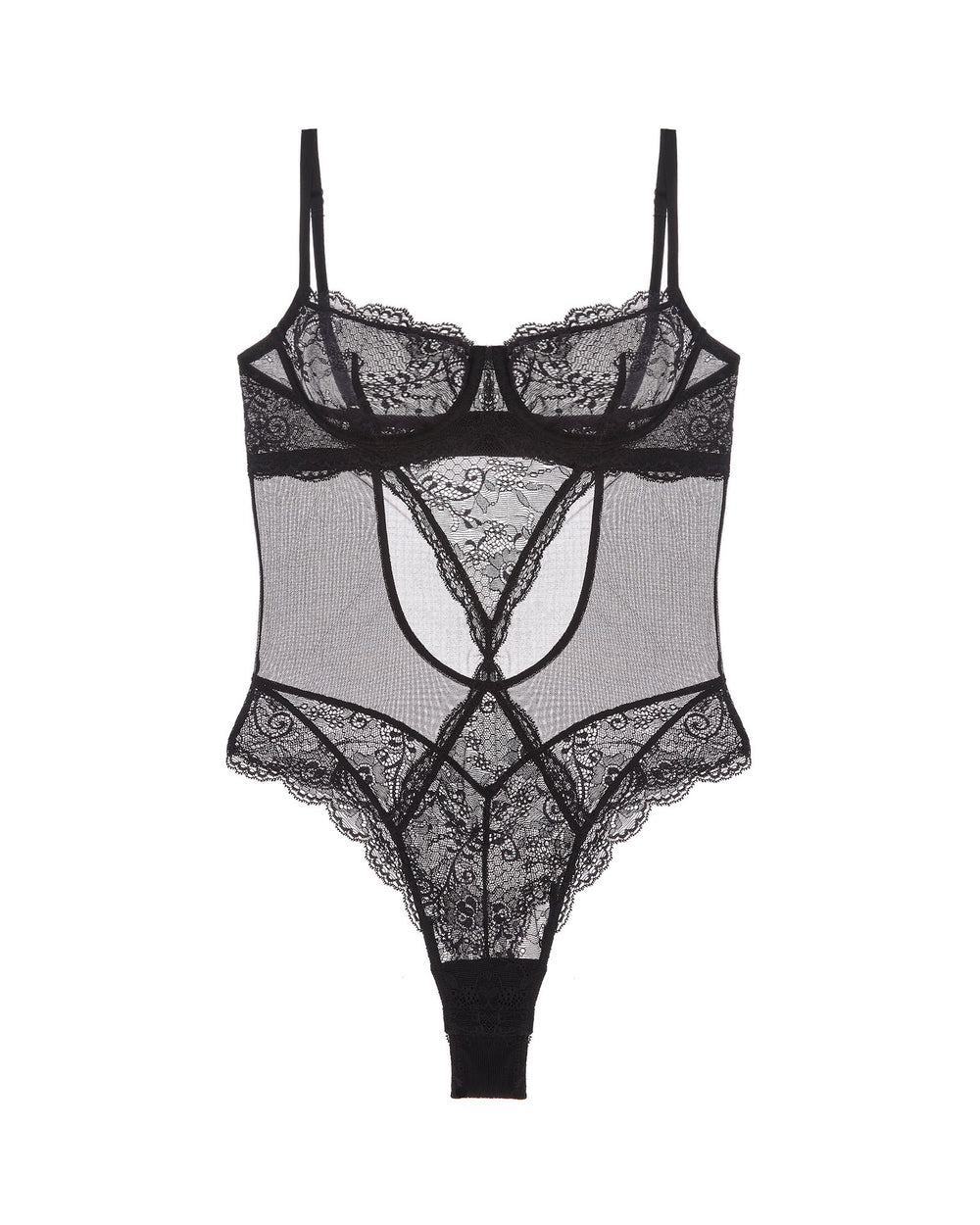
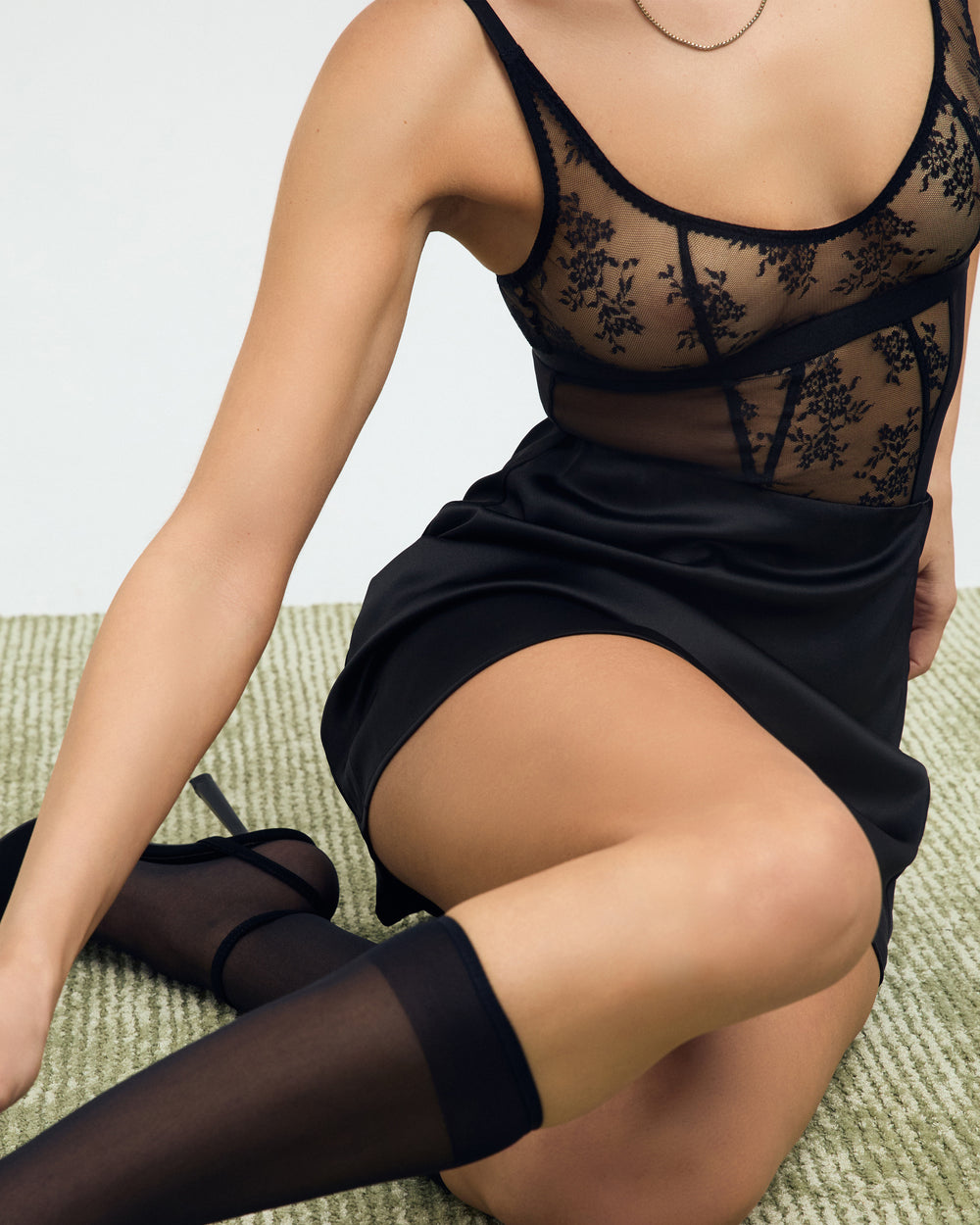
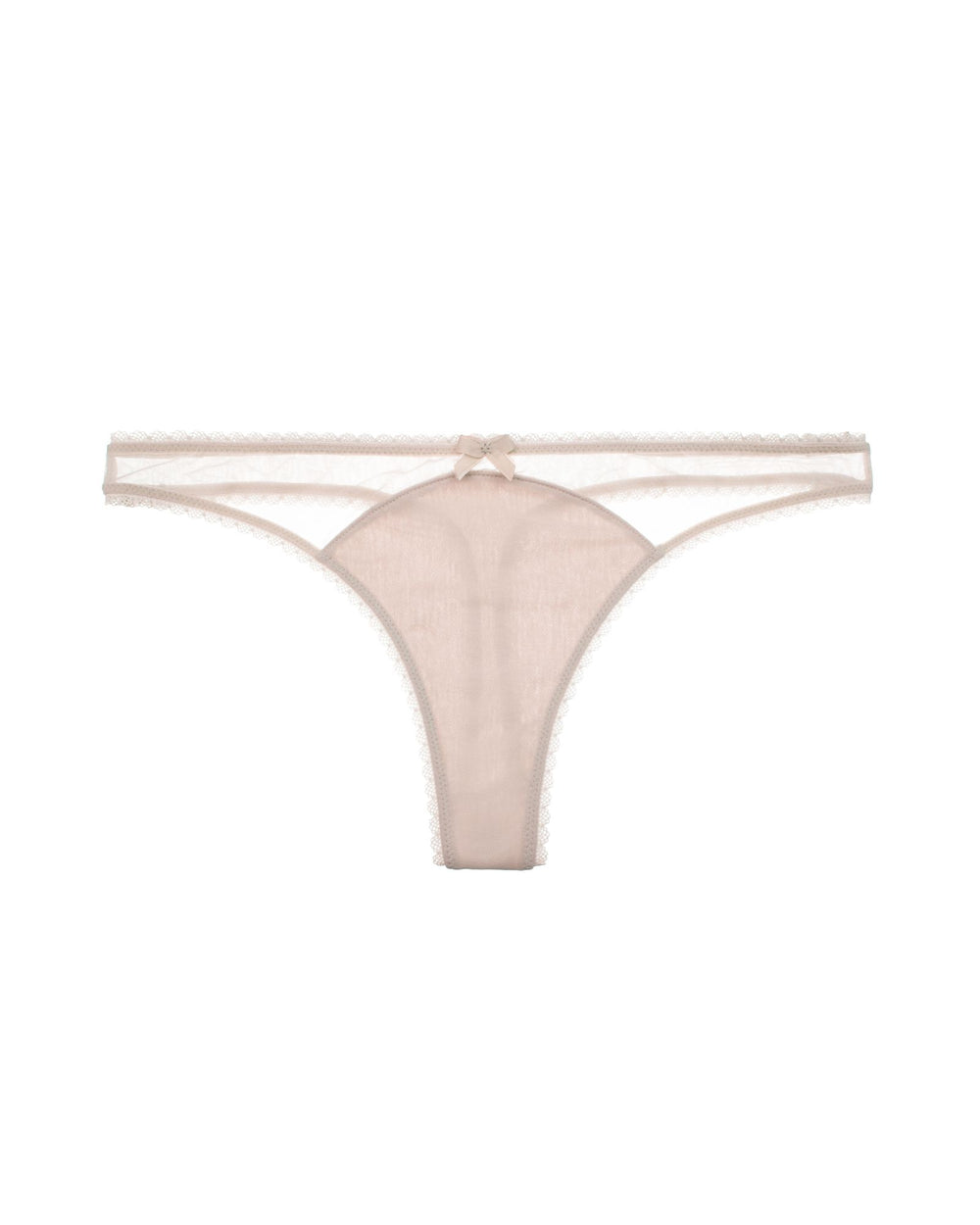
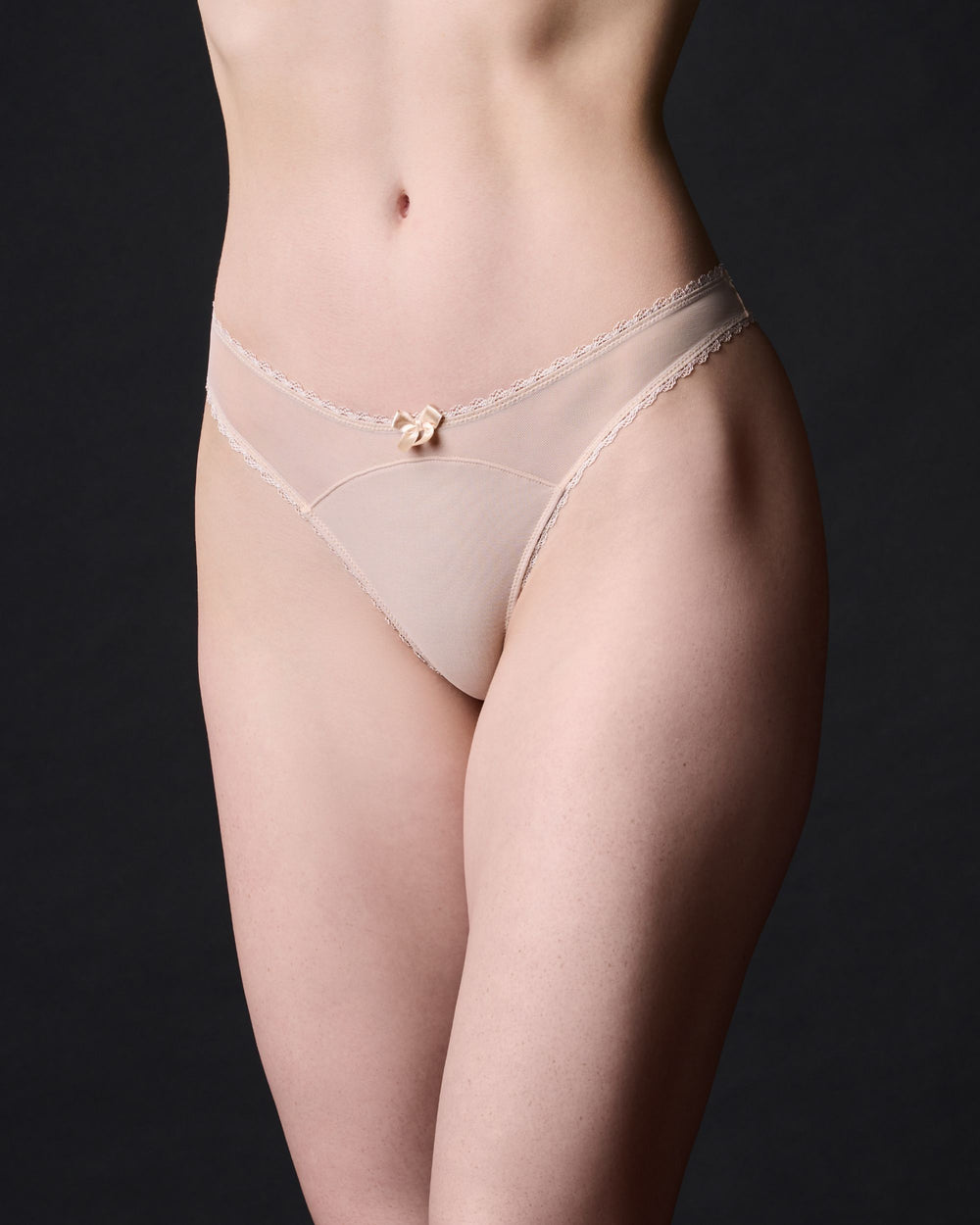
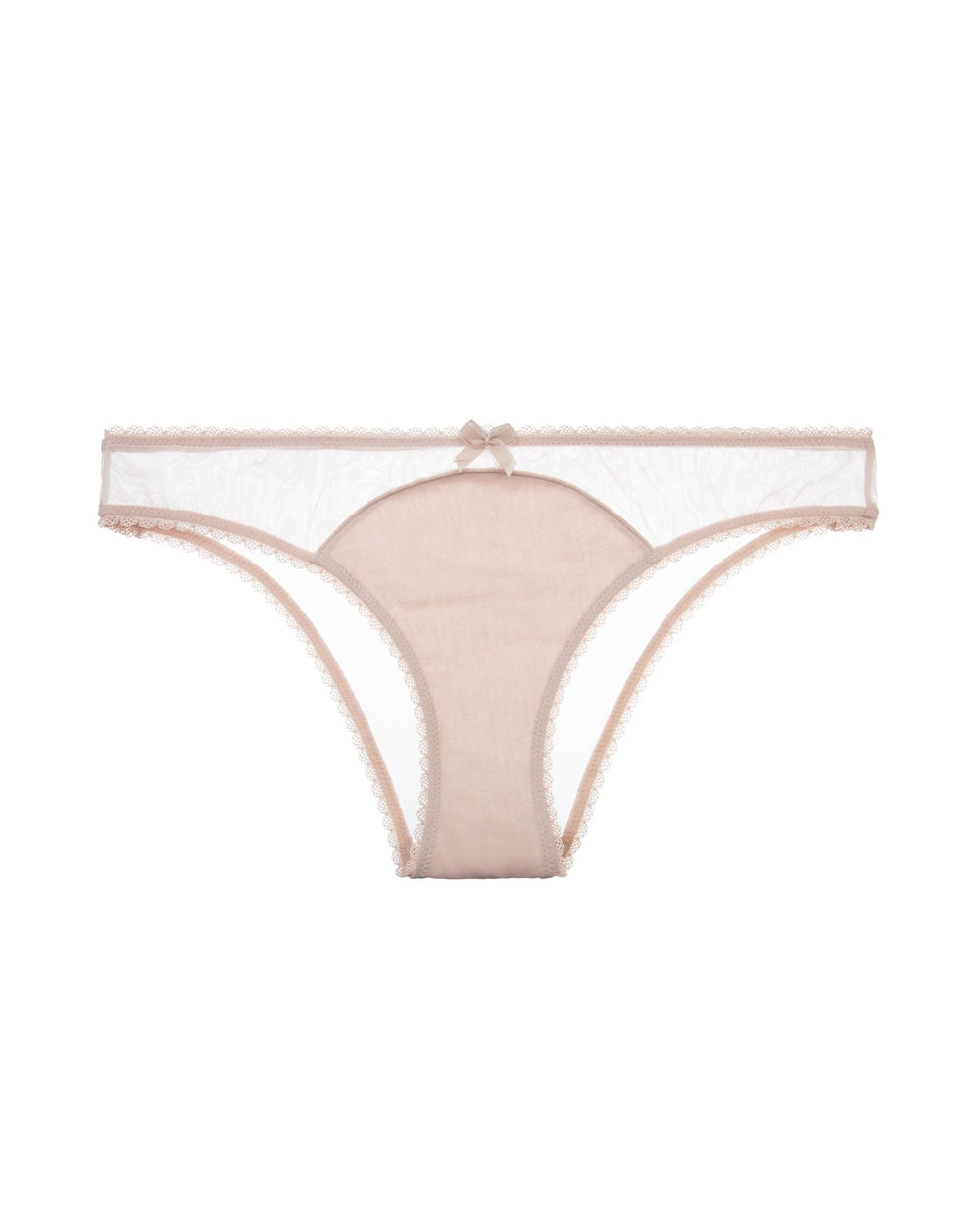
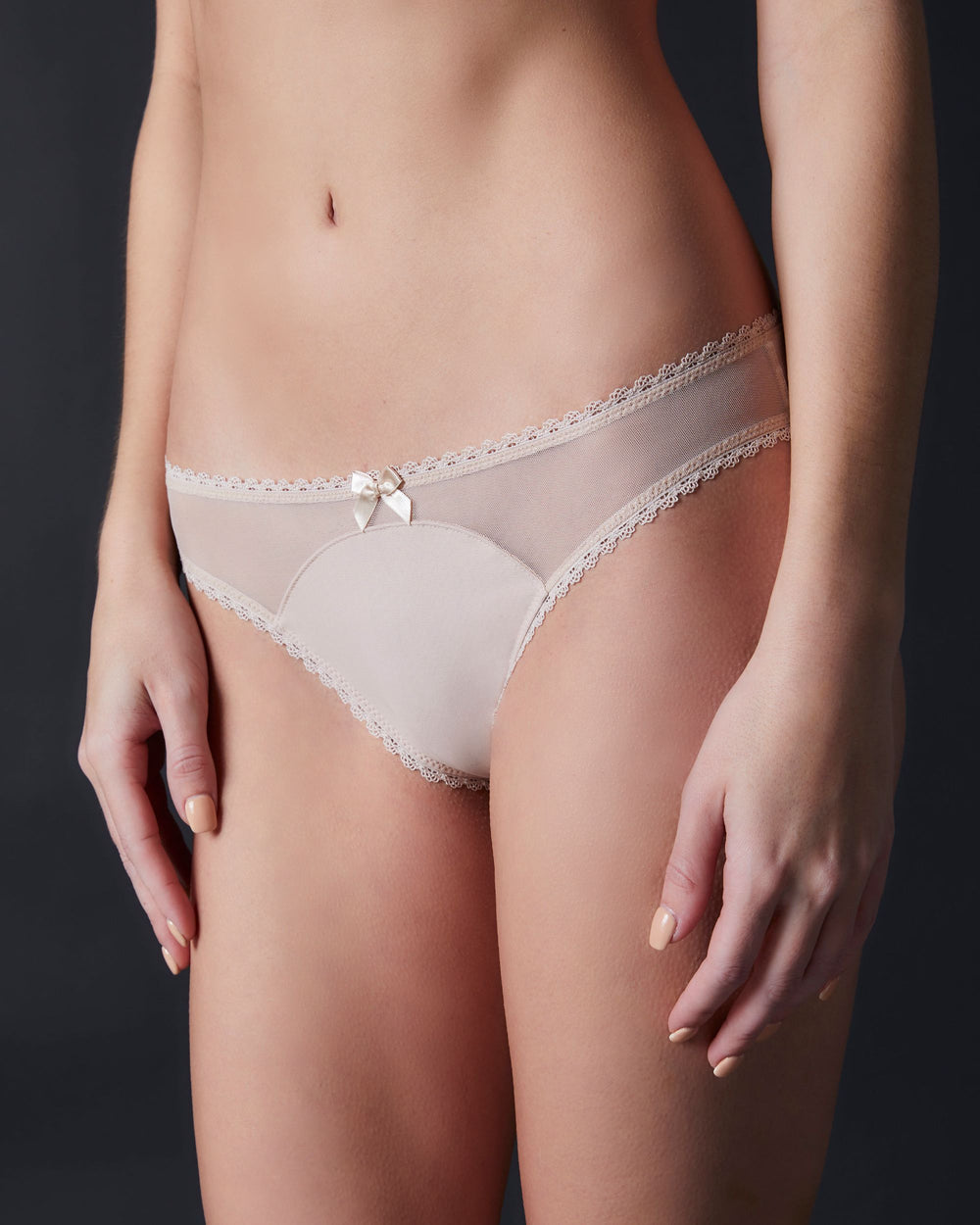
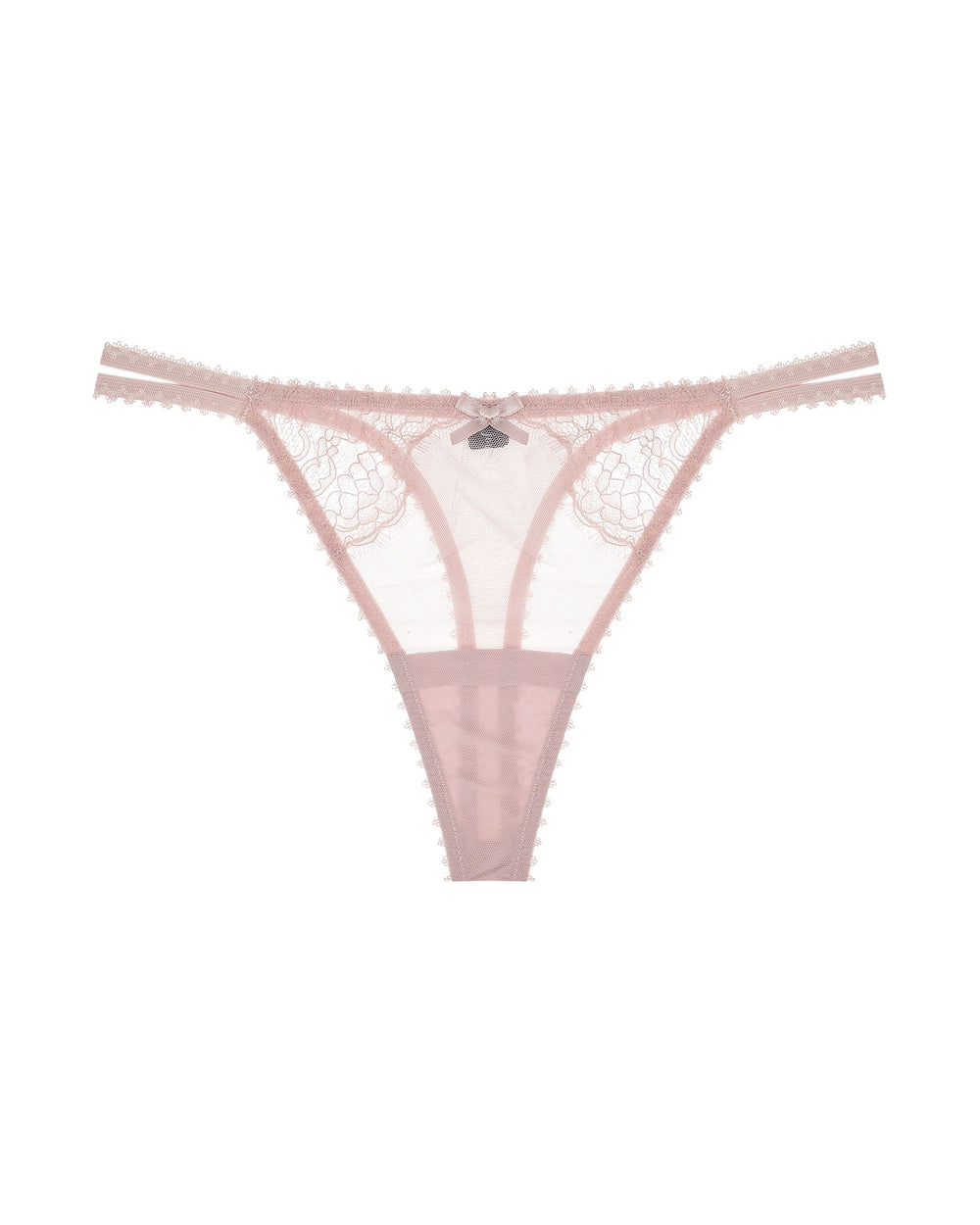
Mesh and sheer bodysuits occupy the same territory as lace bodysuits — made for intimate or deliberate visible wear rather than everyday use — but with a different visual character. Where lace has texture and pattern, mesh and sheer fabrics have transparency and a cleaner, more graphic quality. A mesh bodysuit with minimal seaming reads as modern and architectural; a fine sheer with a more classic cut reads as romantic.
Both styles are particularly effective when layered — under a structured blazer with nothing else, or over a bralette as part of a multi-piece lingerie look. Explore Journelle's mesh lingerie collection for styles that work across both categories.
Shop Mesh & Sheer Styles



Teddies & One-Piece Lingerie
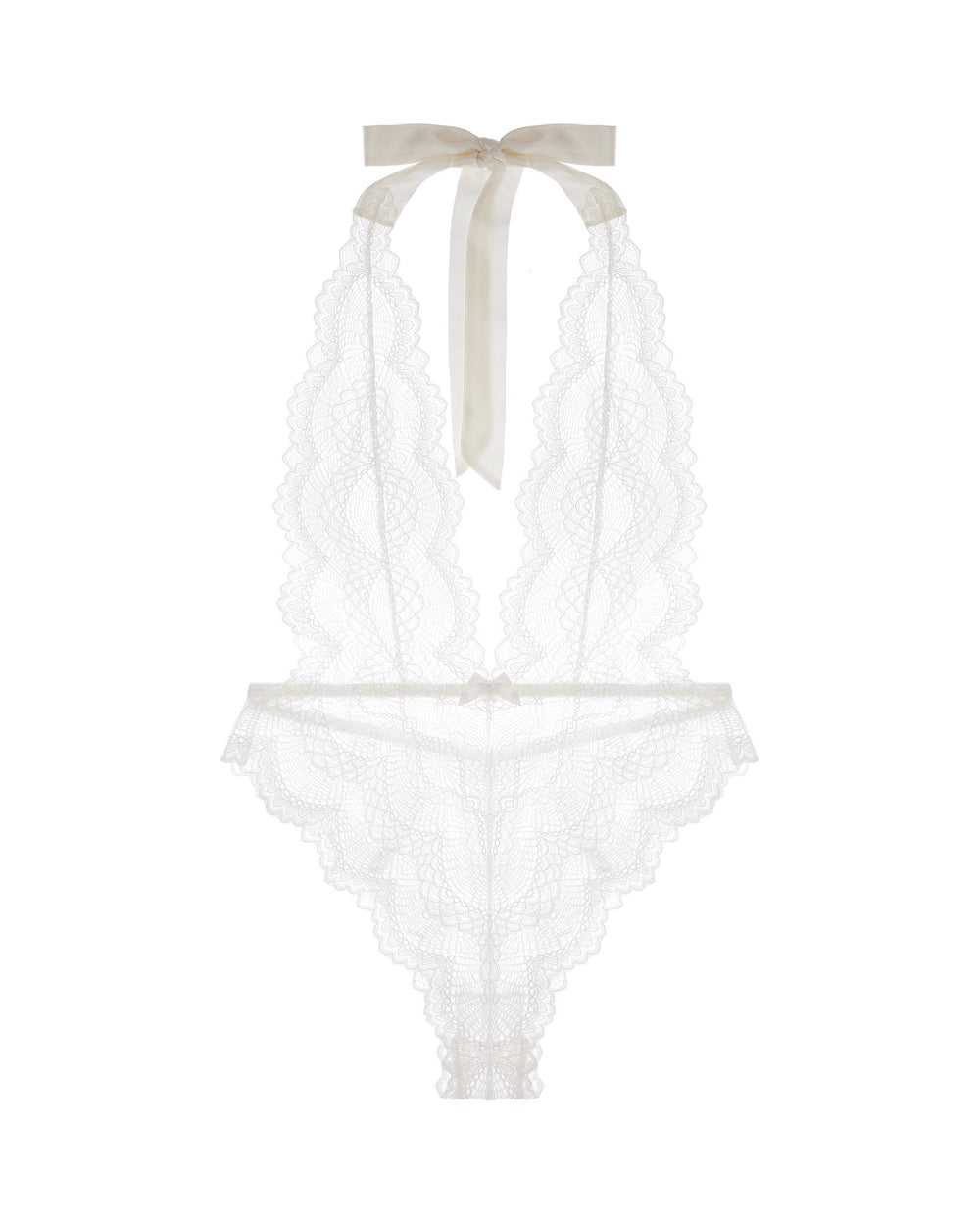
A teddy is a one-piece lingerie garment similar in shape to a bodysuit but typically cut with more ease through the body and made from softer, more fluid fabrics — satin, fine lace, or lightweight jersey. Unlike a bodysuit, which is designed to fit closely and stay tucked, a teddy is worn for its own sake: it is intimate apparel rather than a functional top.
The distinction between a teddy and a bodysuit blurs in some styles — a satin snap-crotch piece in a deep neckline, for example, exists at the intersection of both categories. As a general rule, if the garment is opaque and constructed to be worn as a top, it is a bodysuit. If it is made from a delicate or fluid fabric primarily for intimate wear, it is closer to a teddy.
Teddies work well as part of a lingerie wardrobe for occasions when you want more coverage than a bra-and-panty set but a more intimate feeling than a conventional bodysuit. The one-piece silhouette is inherently elegant — clean, streamlined, and designed to flatter.
How to Style a Bodysuit
The bodysuit's versatility is one of its most underused qualities. A few combinations worth knowing:
With Tailored Trousers
A smooth bodysuit — V-neck, square neck, or simple crew — tucked into high-waisted tailored trousers creates one of the cleanest professional silhouettes available. No blouse bulk, no waistband gap, no shirt coming untucked between meetings. A neutral color (black, white, ivory, camel) works across every trouser color; a richer shade (deep burgundy, forest green, navy) adds personality without complicating the outfit.
Under a Blazer
A bodysuit worn under an open blazer — with no other layer — is a streamlined, modern look that works for both professional and evening contexts depending on the bodysuit's neckline and fabric. An opaque bodysuit with a simple neckline reads as work-appropriate; a lace bodysuit under the same blazer reads as evening wear. The blazer does the covering; the bodysuit provides the interest at the center.
With Jeans
A bodysuit with straight or wide-leg jeans is one of the easiest, most reliable casual outfits — particularly with a square or scoop neck that sits cleanly inside the denim without bunching. The tuck-free fit of the bodysuit means the jeans always look properly broken in rather than bunched at the waist from a tucked shirt.
As Visible Lingerie
A lace or mesh bodysuit worn under a sheer blouse or as the primary layer under an open jacket is a deliberate styling choice that has become increasingly mainstream. It works because the bodysuit's close fit keeps lace or mesh flat and controlled rather than shifting as a separate lingerie piece might. For more on wearing lingerie as part of an outfit, see our journal post: How to Wear Lingerie Like a French Woman.
With a Midi Skirt
A bodysuit with a flowing midi skirt creates a natural, elegant proportion — the close-fit top balancing the volume of the skirt. This works across fabrics and occasions: a jersey bodysuit with a linen midi for daytime, a satin or lace bodysuit with a silk midi skirt for evening.
How to Choose the Right Bodysuit Style
By Occasion
Work and professional settings: An opaque bodysuit in a smooth fabric — modal, ribbed jersey, or a stable knit — in a neutral or rich solid color. Pair with tailored trousers or a midi skirt. Necklines to consider: V-neck for a polished, slightly more formal feel; crew or square neck for a cleaner, more minimal look.
Casual and weekend wear: A jersey or cotton bodysuit with jeans or wide-leg trousers. The fabric can be more relaxed; the fit can be slightly less close. Wrap-style or long-sleeve bodysuits work especially well for casual dressing in cooler weather.
Evening and going out: A deeper neckline, a more luxurious fabric (satin, velvet, or a fine rib), or a deliberately statement silhouette — cutouts, an interesting back, or a plunge front. A lace bodysuit under a blazer moves easily from casual to evening depending on the rest of the outfit.
Intimate wear: A lace, sheer, or mesh bodysuit designed for intimate occasions rather than outerwear. Fabric, cut, and construction take precedence over practicality.
By What You Are Wearing It With
The bottom determines the neckline more than most people expect. High-waisted trousers work with almost any neckline. Low-rise jeans work better with a higher neckline or a tuck-in length that sits cleanly. A mini skirt works with anything; a midi or maxi skirt with a full waistband usually calls for a more fitted or cropped bodysuit length to avoid bulk.
By Closure Type
Snap closures are the most common and the most secure — three or four snaps at the crotch that fasten quickly and stay put. Hook-and-eye closures offer a cleaner look but are slightly more fiddly. Thong-back bodysuits have no separate closure — the thong back is part of the construction — which makes them the smoothest option under fitted clothing but limits them to thong-comfort wearers.
Fit & Sizing
Bodysuits are sized like tops — typically XS through XL or by standard clothing size — rather than using bra sizing. The fit through the torso matters more than in a conventional top because a bodysuit that is too short will pull at the crotch all day; one that is too long will not lie flat and will bunch at the waist.
A few things to check before buying:
- Torso length: If you are taller than average, look for brands that mention a longer torso fit or check reviews for comments on length. A bodysuit that fits correctly in the bust but pulls at the crotch needs a longer size.
- Shoulder width: Off-the-shoulder and halter styles are the most sensitive to shoulder width. Check the shoulder measurement if available.
- Snap placement: Snaps that are too far apart will not close comfortably; snaps too close together create bulk. Reviews often flag this if it is an issue with a specific style.
- Stretch: Most everyday bodysuits have at least a small percentage of elastane for comfort and shape retention. Check the fabric composition — a bodysuit with no stretch in a close-fitting style will feel significantly less comfortable than one with even five percent elastane.
Caring for Bodysuits
Care depends almost entirely on fabric. Everyday jersey and modal bodysuits are generally machine-washable; lace, mesh, and satin styles need more care.
- Fasten snap closures before washing to prevent them snagging on other garments or the inside of the bodysuit itself.
- Wash lace and sheer styles in a mesh laundry bag on a gentle cycle, or hand-wash in cool water with a gentle detergent.
- Air-dry lace, mesh, and satin styles — never put them in the dryer. Even everyday jersey bodysuits last longer when air-dried rather than tumble-dried.
- Store flat or on a hanger — avoid folding at the snap closure, which can stress the fabric over time.
See Journelle's wear and care guide for full fabric-specific instructions.
Frequently Asked Questions About Bodysuits
What is a bodysuit?
A bodysuit is a close-fitting one-piece garment that covers the torso and fastens at the crotch — typically with snaps, hooks, or a thong back. It fits like a top but stays anchored to the body because it cannot ride up or come untucked. Bodysuits are made in fabrics ranging from opaque everyday jersey to sheer lace and mesh for intimate wear.
What is the difference between a bodysuit and a teddy?
A bodysuit is typically constructed to be worn as a top — close-fitting, in an opaque or semi-sheer fabric, with snap closures designed for all-day wear. A teddy is a one-piece lingerie garment with more ease through the body, usually made from softer and more fluid fabrics like satin or fine lace, worn primarily for intimate occasions rather than as functional outerwear.
How do you wear a bodysuit?
A bodysuit is worn like a top, with the snap or hook closure fastened at the crotch beneath whatever bottom you are wearing. It works with trousers, jeans, skirts, and shorts — anything with a waistband. The crotch closure sits beneath the bottom garment and is not visible. For tips on styling, see the How to Style a Bodysuit section above.
Can you wear a bodysuit as lingerie?
Yes — lace, mesh, and sheer bodysuits are designed to be worn as lingerie rather than outerwear. They use the same snap-crotch construction as an everyday bodysuit but are made from intimate fabrics. Some styles work in both contexts: a fine lace bodysuit under an open blazer reads as a deliberate fashion choice; worn alone, it is unmistakably lingerie.
What do you wear under a bodysuit?
Bodysuits are worn directly against the skin — they replace the top layer of underwear rather than sitting on top of it. The snap closure sits against the crotch of whatever underwear you are wearing underneath, or in the case of a thong bodysuit, the thong back serves as both the bodysuit's closure and the functional underwear layer.
Are bodysuits comfortable?
Most women who wear bodysuits regularly find them very comfortable — the stay-put fit removes the need for constant readjustment and eliminates the discomfort of a bunched or untucked top. The snap closure takes a moment of adjustment to get used to. The most important fit factor is torso length: a bodysuit that is too short will pull at the crotch through the day, which is genuinely uncomfortable. Getting the length right makes the difference between a bodysuit that feels effortless and one that feels like a compromise.
What is a thong bodysuit?
A thong bodysuit has a thong back rather than a full snap-crotch closure, which eliminates any visible lines at the seat under very fitted clothing. It functions like a seamless top that becomes part of the smooth silhouette beneath whatever is worn over it. The trade-off is that it suits only women who are comfortable wearing a thong-style back.
Shop Bodysuits at Journelle
From smooth everyday styles that anchor a tailored outfit to beautifully constructed lace and mesh pieces designed for intimate wear, Journelle's bodysuit collection covers every occasion and every intention. Use this guide to find the style that fits your wardrobe — then explore the full collection.
Shop all bodysuits at Journelle →
Explore More Lingerie
Fine lingerie styles curated by Journelle