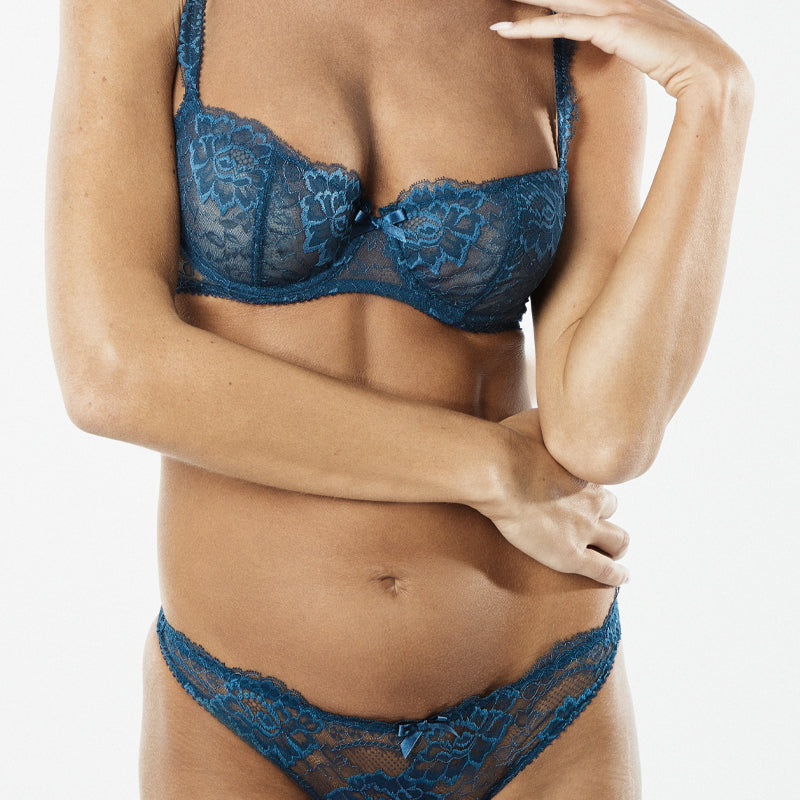
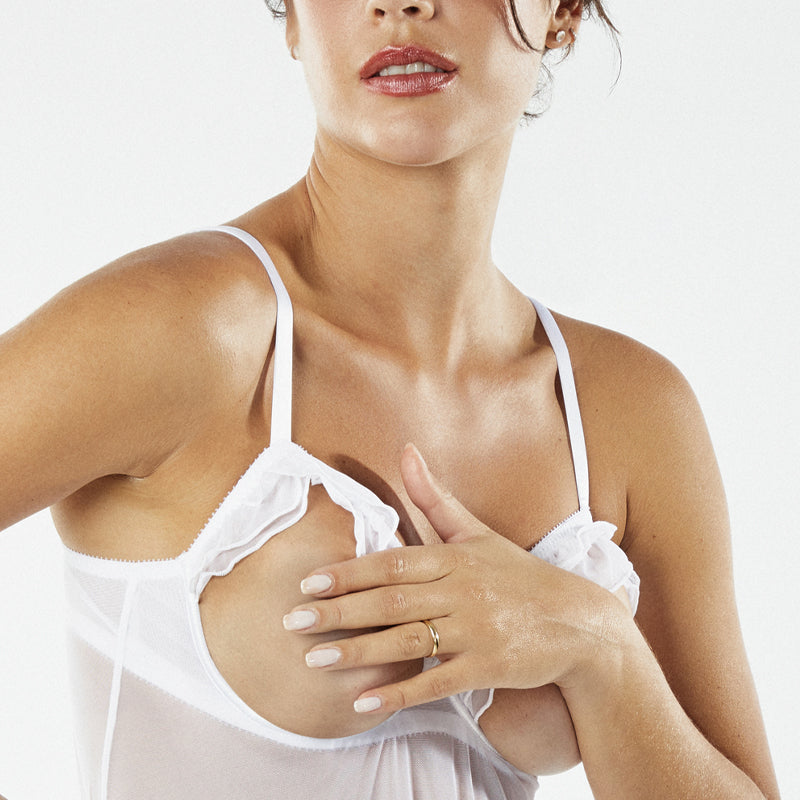
The Chemise & Slip Guide
Reviewed by Natalie, Senior Fitter at Journelle. The chemise/slip category is the area where our fitting-room questions most often start with "what's the difference between" — this guide answers that, plus how to style each.
The chemise and the slip are two of the most quietly essential pieces in a lingerie wardrobe — and two of the most misunderstood. Both are lightweight, close to the body, and often made from the same beautiful fabrics. The difference is in how they're designed to be worn and what they're meant to do. This guide covers every style, what to look for in fit and fabric, and how to wear them — as sleepwear, as layering pieces, or out in the open as the kind of dress that reads as intentional and effortless at once.
What Is a Chemise?
A chemise is a short, loose-fitting garment worn close to the body — typically falling to mid-thigh or just above. It has roots in the medieval linen shift, the washable underlayer worn beneath structured outer clothing for centuries, but the modern chemise is something quite different: lighter, more refined, and designed with as much attention to how it looks as how it feels.
Today, a chemise is most often thought of as sleepwear or intimate apparel. It's a step up from a basic nightgown in terms of cut and finish, and a step apart from a slip in that it's designed to be worn as a complete garment rather than as a layering tool. Chemises tend to have more shape than a slip — whether from delicate lace trim, a built-in shelf bra, adjustable spaghetti straps, or a cut that skims the body in a flattering way.
The defining appeal of a chemise is ease. There are no closures, no underwire, no structure to navigate. You put it on and the fabric does the rest. In silk or satin, a chemise has an effortless elegance that very few garments can match.
What Is a Slip?
A slip is a layering garment, designed to sit between your skin and your outer clothing. Its original purpose was practical: to prevent dresses and skirts from clinging, to protect delicate fabrics from direct contact with the body, to add a layer of modesty beneath sheer or lightweight pieces, and to help outer garments hang and move correctly. In the era of petticoats and structured foundations, the slip was an essential part of getting dressed.
That original function still exists. A well-cut slip under a bias-cut dress or a sheer blouse solves a problem that nothing else does quite as neatly. But the slip has also evolved into something more visible and intentional in its own right. The slip dress — which is essentially a slip made from beautiful fabrics, finished as outerwear — has been a recurring fashion presence for decades and shows no sign of going away.
Full slips cover from the chest to the hem; half slips sit at the waist and cover the lower half only. Both have their uses, and the right choice depends entirely on what you're wearing over them.
Shop All Chemises & Slips



Chemise vs. Slip: What's the Difference?
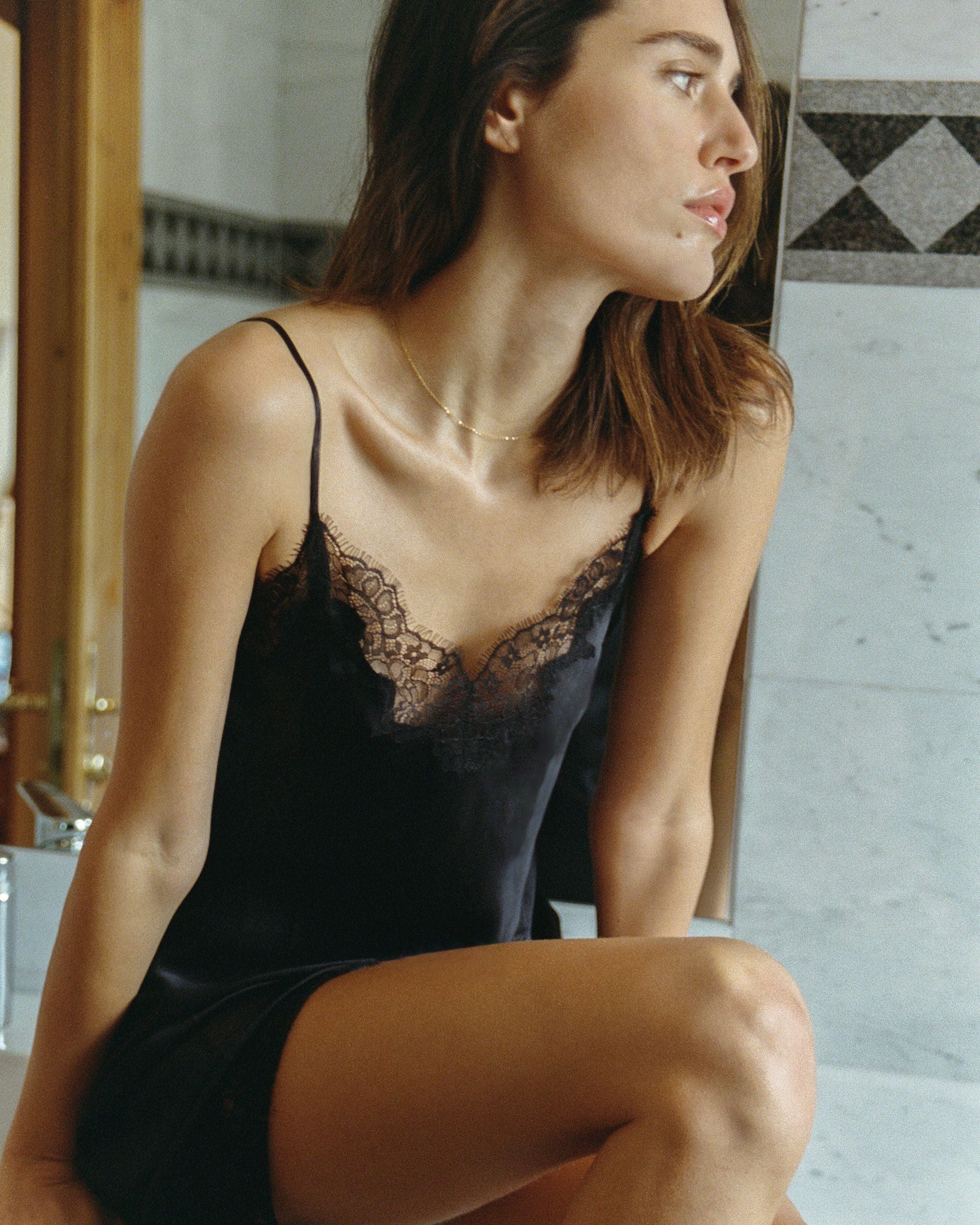
The distinction between a chemise and a slip comes down to intent. A chemise is designed to be worn on its own — as a sleep garment, as intimate apparel, or increasingly as outerwear. A slip is designed to be worn beneath something else.
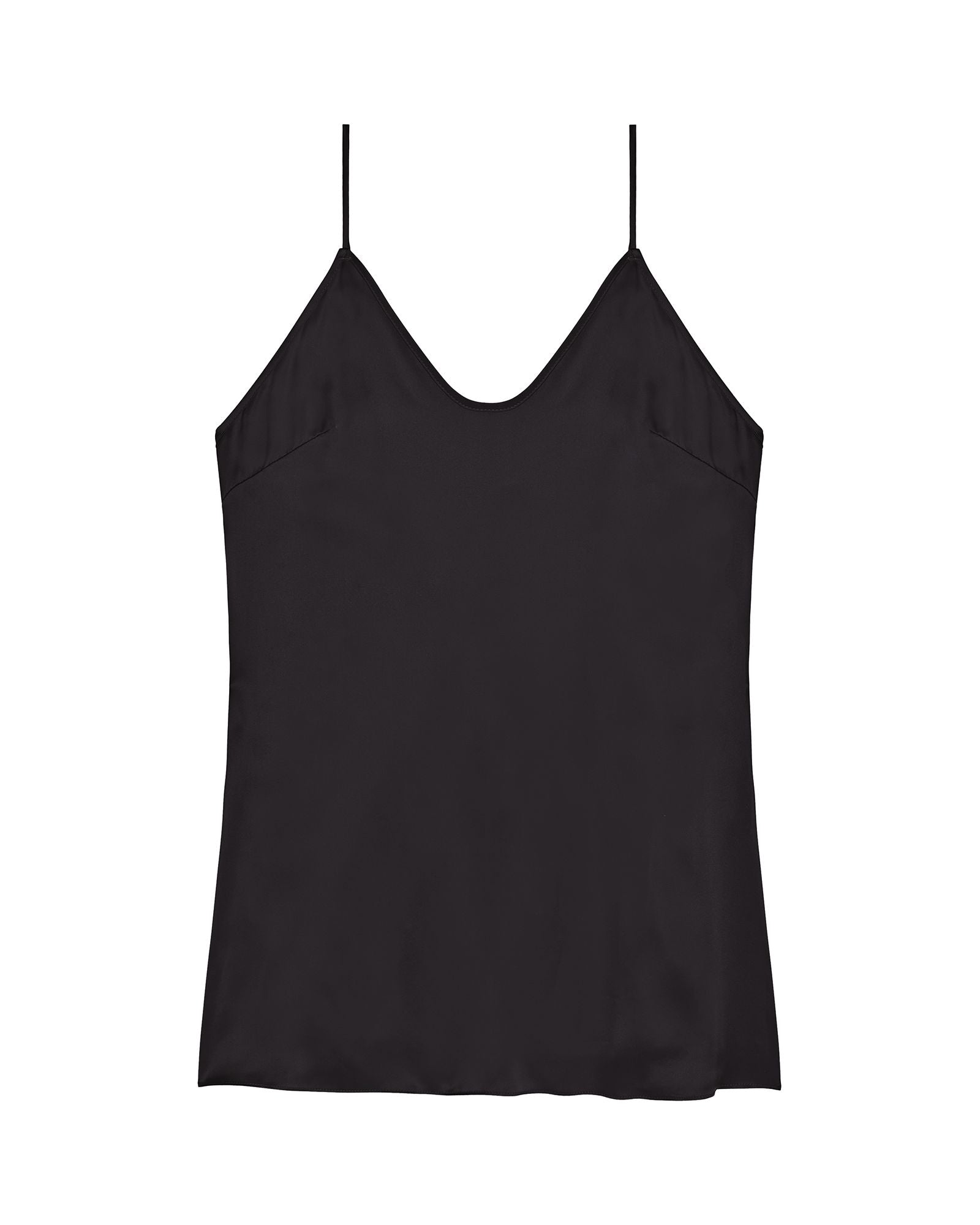
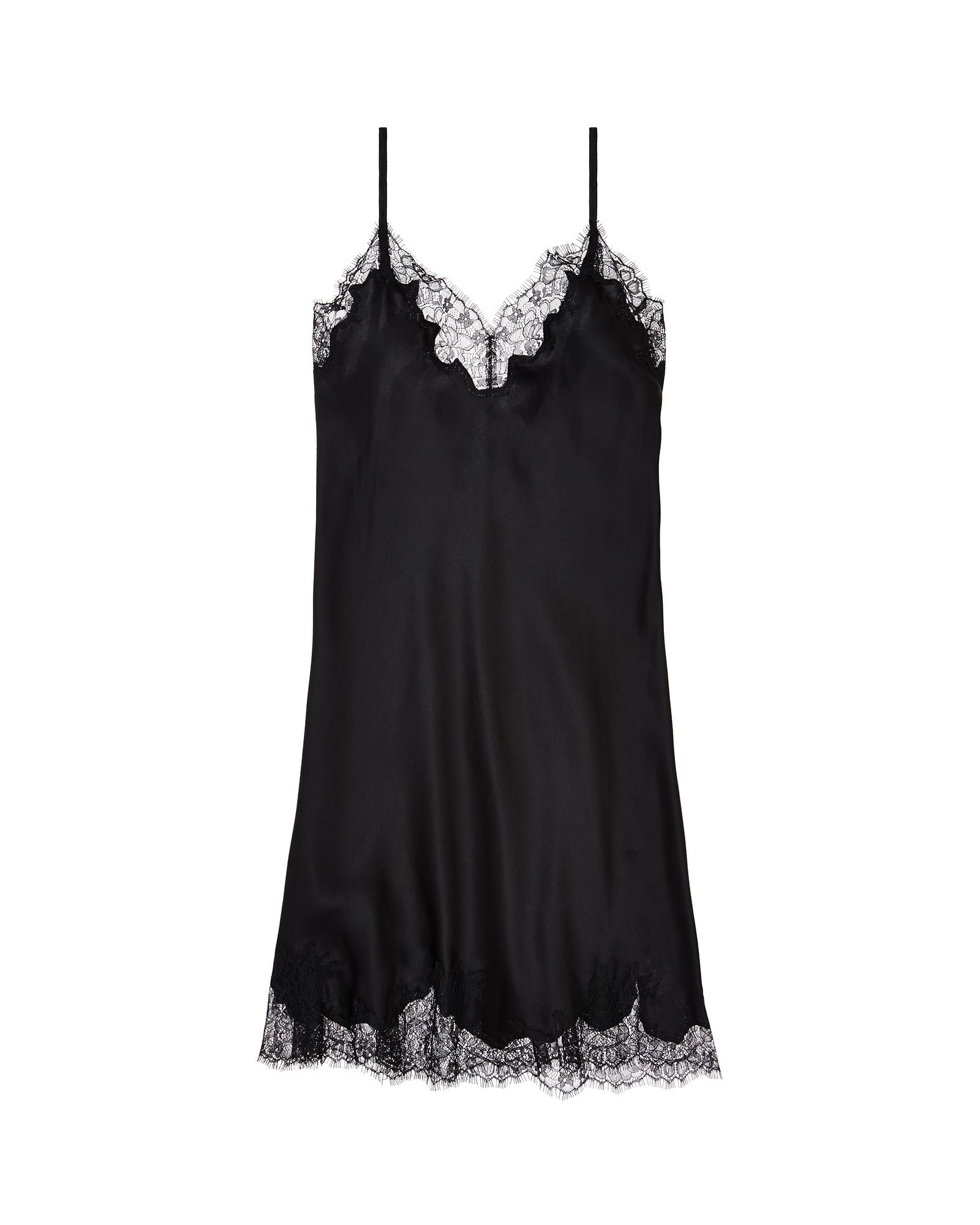
In practice, the line between them has blurred significantly. A beautiful silk chemise and a silk slip dress can look nearly identical on a hanger. What separates them is construction detail: a chemise may have more shaping at the bust, decorative lace trim, or details that make it feel finished as a standalone piece. A slip is typically cut more simply and made with smooth fabric chosen specifically for its ability to disappear beneath clothing without adding bulk or texture.
Both can be worn to sleep. Both can be worn in public, depending on how they're styled. The most useful way to think about it: if you're choosing something to wear beneath a specific dress, think slip. If you're looking for something beautiful to sleep in, or to wear as an intentional lingerie-as-outerwear piece, think chemise.
| Chemise | Slip | |
|---|---|---|
| Primary purpose | Sleepwear or standalone intimate piece | Layering beneath outer clothing |
| Construction | Often has shaping details, lace trim, shelf bra | Simple cut, smooth fabric, minimal detail |
| Typical length | Mini to mid-thigh | Mini, midi, or full-length depending on dress |
| Worn as outerwear? | Increasingly yes, with the right styling | Yes, as a slip dress — a fashion staple |
| Best fabrics | Silk, satin, lace, modal | Silk, satin, crepe-back satin, charmeuse |
Types of Chemises
Chemises come in a wider range of styles than most people expect. The variations in fabric, length, cut, and trim change the feel of the garment considerably — from the purely practical to the quietly luxurious.
Silk Chemise
A silk chemise is the most indulgent version of the style. Silk — particularly charmeuse or crepe-back satin — moves with the body in a way no synthetic can replicate. It's cool in warm weather, gently warming in cool weather, and has a natural temperature-regulating quality that makes it one of the best fabrics for sleep. A silk chemise tends to be cut simply to let the fabric speak, often finishing at mid-thigh with adjustable spaghetti straps and a bias cut that drapes cleanly rather than clinging. It is the piece that earns the most compliments and the most regular wear. See our related post on silk chemises for sleep for more.
Lace Chemise
A lace chemise leads with decoration. Whether the lace is concentrated at the neckline and hem or forms the entire body of the garment, it introduces texture, sheerness, and a romantic quality that silk alone doesn't provide. Lace chemises tend to be more formal in feeling — they're the style most closely associated with occasion lingerie. That said, modern lace chemises made from softer stretch lace or mixed constructions (lace bodice, jersey skirt) can be comfortable enough for regular sleep.
Modal or Jersey Chemise
Modal and jersey chemises are the everyday version of the style — softer and more casual than silk, easier to care for, and often more affordable. Modal in particular has a silky hand feel and excellent drape despite being a knit fabric. These chemises tend to have a more relaxed, lived-in quality and are the right choice when you want something that feels good to sleep in night after night without the care requirements of silk or the formality of lace. They wash well, hold their shape, and tend to get better with wear.
Babydoll Chemise
The babydoll is a variation on the chemise silhouette: a garment that flares out beneath the bust rather than skimming the body from shoulder to hem. The silhouette is fuller, often shorter, and typically more associated with occasion lingerie than everyday sleepwear. Babydolls frequently pair with matching bottoms — a thong or brief in the same fabric and trim — and are designed as much to be seen as worn. The length is typically very short, finishing well above mid-thigh.
Shop Silk Slips & More



Types of Slips
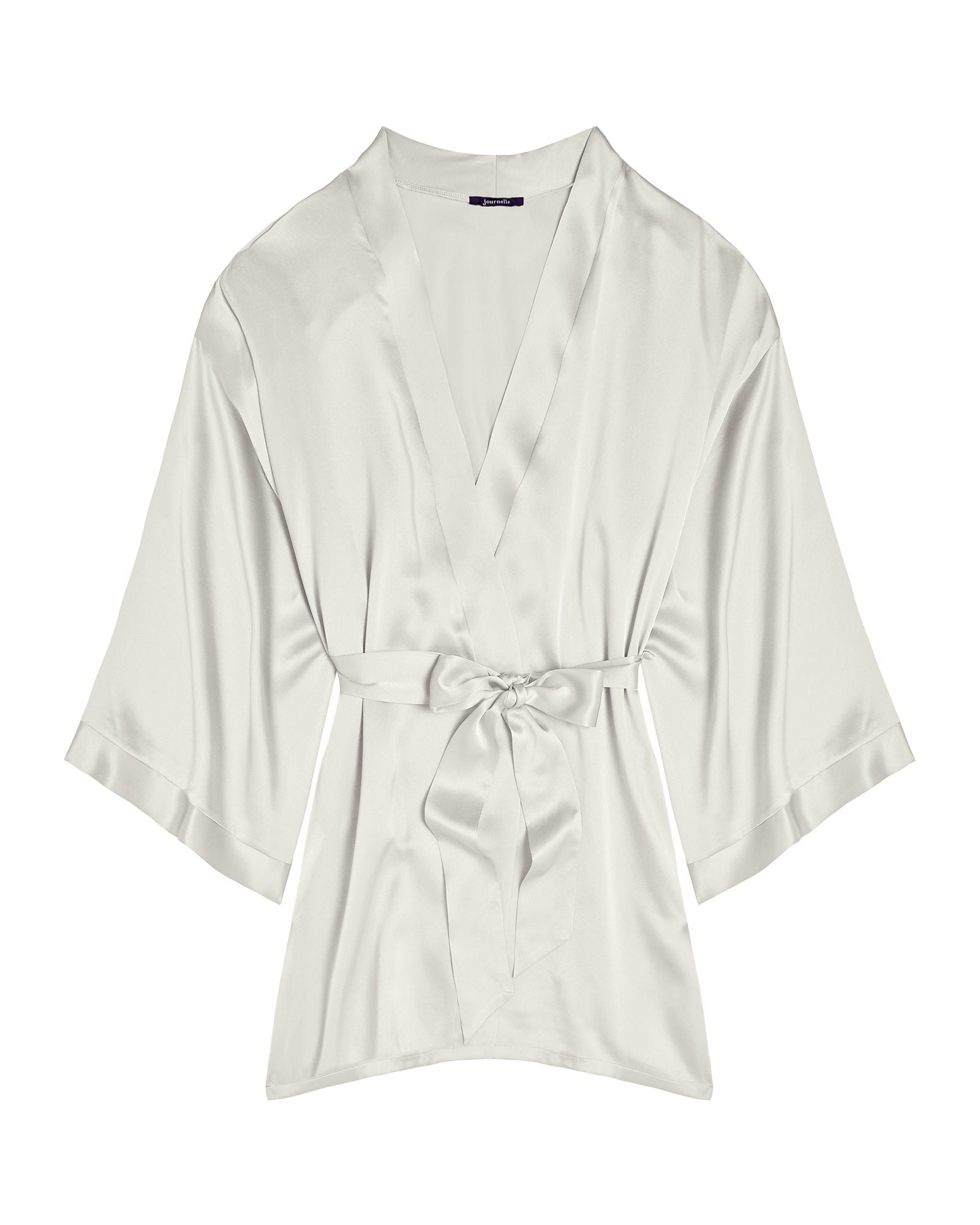
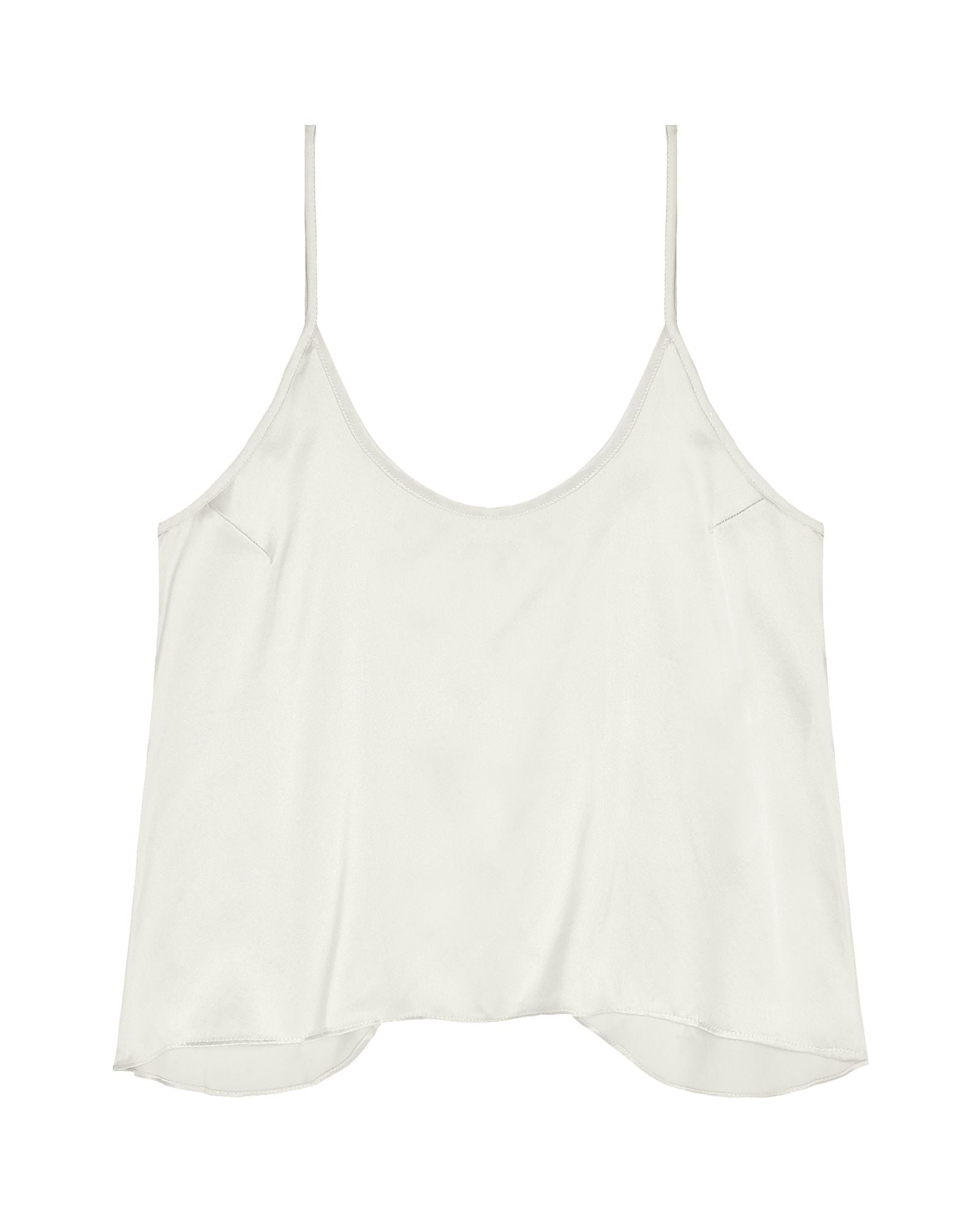
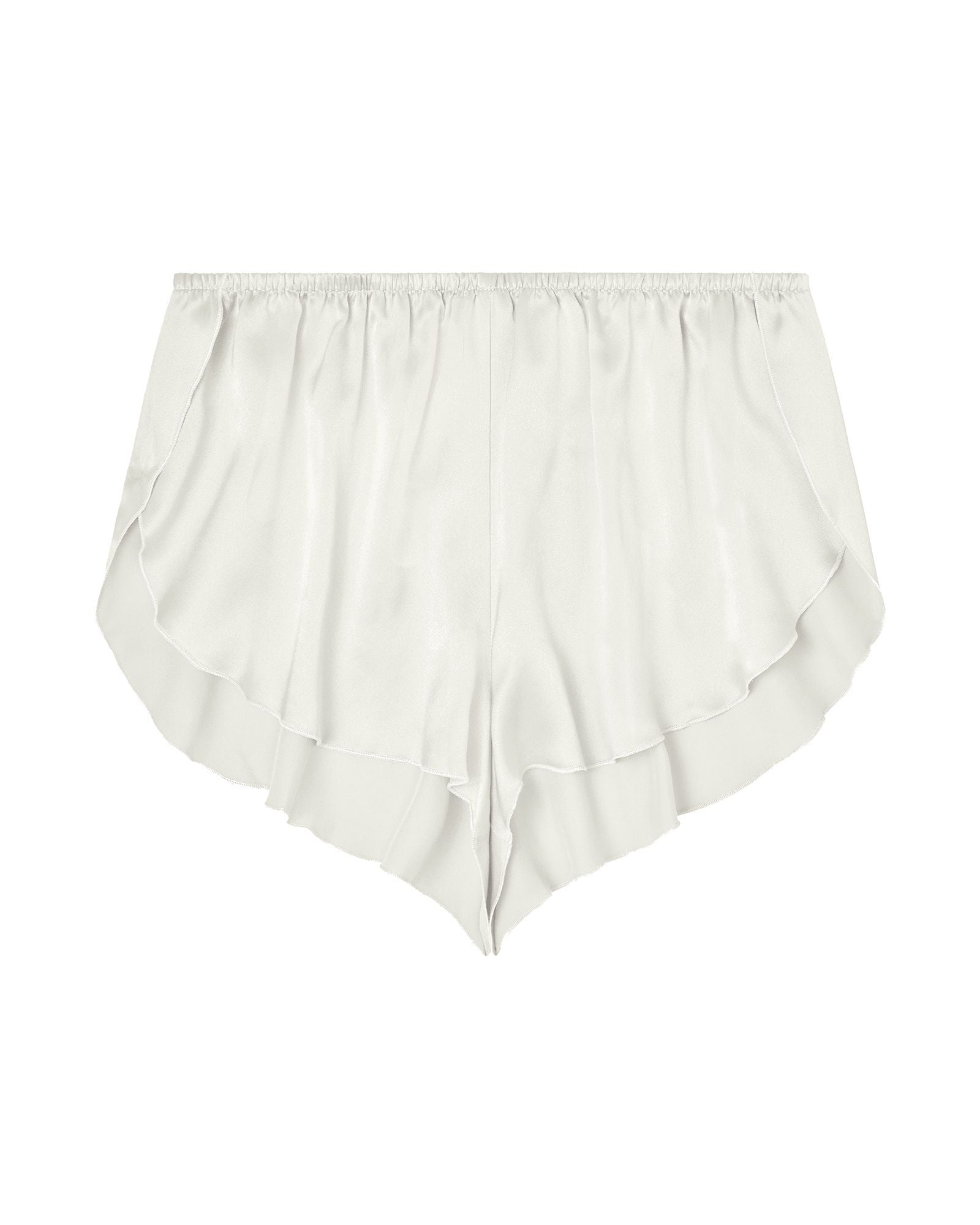
The slip family is broader than many people realize. Length, construction, and purpose vary significantly depending on what you need them to do.
Full Slip
A full slip runs from the bust to the hem — typically at or near the hem of the dress it's worn beneath. It provides a seamless layer over the entire body and is the right choice for dresses and skirts that need smoothing from chest to ankle. Full slips typically have adjustable straps and are cut to follow the body without adding bulk. In silk or charmeuse, a full slip is an almost invisible layer that dramatically improves how a dress moves and sits.
Half Slip
A half slip starts at the waist and covers the lower half of the body. It's designed for situations where only the skirt needs smoothing — beneath a separate skirt, beneath trousers that cling, or beneath a dress where the bodice is fitted and only the skirt needs help. Half slips are also frequently used to add opacity beneath sheer skirts. They're a highly practical piece that solves specific dressing problems without adding unnecessary layers.
Slip Dress
The slip dress is a slip worn as outerwear — and at this point, it deserves to be considered a category of its own. Made from beautiful fabric (silk, satin, crepe, velvet), finished with clean edges rather than utility hems, and styled with attention to length and proportion, the slip dress was one of the defining pieces of 1990s fashion and has never fully left. It can be worn alone, layered over a T-shirt or turtleneck, or worn beneath an open blazer or trench. The line between a carefully chosen slip and a slip dress has become almost entirely conceptual — it's mostly a question of context and styling.
Long Slip or Maxi Slip
A long slip or maxi slip runs to the ankle or floor and is designed for wear beneath full-length dresses and skirts. In practical terms, these are most often needed beneath formal or bridal garments. However, a long silk slip worn as a standalone piece can be an extraordinarily elegant choice — minimal, fluid, and quietly luxurious in a way that shorter styles sometimes aren't.
How to Wear a Chemise or Slip as Outerwear
Lingerie worn as clothing isn't a trend — it's a recurring approach to dressing that resurfaces every few years because it works. The slip dress and the silk chemise have been part of the visible wardrobe since at least the 1990s, and the logic behind them is straightforward: beautiful fabric, a close-to-the-body cut, and minimal structure make for a compelling garment regardless of whether it was originally intended to be seen.
The key to wearing a chemise or slip in public is context and layering. A silk chemise over a pair of wide-leg trousers with simple mules reads as fashion rather than underwear. The same piece with a long blazer, a structured bag, and flat sandals becomes an evening look. A slip dress beneath an oversized leather jacket is a wardrobe staple by now — the contrast between the fluid silk and the structure of the jacket is part of the point.
A few approaches that work well:
- The slip dress alone: Works best in a length that feels intentional — midi or just above the knee. Pair with heeled mules or simple flats and minimal jewelry. Let the fabric be the statement.
- Chemise under a blazer or suit jacket: The exposed neckline and straps of a silk chemise work beautifully beneath a tailored jacket. It reads as both polished and deliberately relaxed.
- Layered over a T-shirt: A bias-cut slip or chemise worn over a fitted white tee is one of the easiest ways to make a slip work in everyday dressing. The T-shirt covers the arms and adds a casual layer while the slip reads as a dress on top.
- With a cardigan or duster: A lightweight knit over a silk chemise creates a layered, relaxed look suited to transitional weather. This combination is particularly effective in morning or lounge contexts — not quite sleepwear, not quite dressed, but clearly intentional.
For more on wearing lingerie as outerwear, see our guide to wearing lingerie like a French woman.
Fit & Sizing
Chemises and slips are simpler to size than bras, but fit still matters more than most people expect. The most common issues are straps that don't adjust to the right length, a garment that's too short in the torso, or a bias-cut piece that was cut for a different body proportion than yours.
Straps
Adjustable straps are worth looking for, particularly in a chemise you plan to wear regularly. Fixed-length straps can't account for the variation between a long torso and a short one, and even small differences in strap length significantly affect where the bust sits and how the hem falls. Look for straps with a small adjustment slider — they add almost no bulk and make a meaningful difference in fit.
Torso Length
In a bias-cut chemise or slip, the length at the hem is determined by both the garment's cut and your torso length. If you have a long torso, a chemise that hits at mid-thigh on the model may sit higher on you than expected. For slips intended to go beneath specific dresses, measure the dress hem and choose a slip length that falls one to two inches shorter — you want it invisible, not peeking below the hem.
Bust Fit
Chemises with built-in shelf bras offer light support without underwire. These work best for smaller cup sizes — A through C — where the structure is sufficient. For larger busts, a chemise without a structured bodice may be more comfortable: a simple spaghetti-strap style in a fluid fabric allows the fabric to skim the body without creating fit tension across the bust. If you need more support than a shelf bra provides, wearing a bralette or wireless bra beneath a chemise is entirely practical and often barely visible beneath delicate fabrics.
Sizing Across Brands
Most chemises and slips are sized S/M/L or XS through XL rather than by bra size. As a general guide, use your dress size as a starting point. If you're between sizes, size up in a bias-cut piece — the extra fabric falls with the drape rather than pulling across the widest point.
Fabric Guide
The fabric of a chemise or slip determines almost everything about how it feels, how it performs, and how long it lasts. The choices at the luxury end of the market are relatively narrow — silk, satin, lace, modal — but the differences between them matter.
Silk Charmeuse
The gold standard for chemises and slips. Charmeuse is a lightweight silk weave with a satin face (smooth and lustrous) and a matte back. It drapes like almost nothing else: fluid, weightless, and responsive to the body's movement in a way that photography rarely captures. It's also temperature-regulating, making it genuinely comfortable across seasons. Silk charmeuse requires hand washing or delicate machine washing and should be kept from direct sunlight when storing. The care investment is real, but the garment it produces is worth it.
Crepe-Back Satin
Crepe-back satin is a silk or silk-blend fabric with a satin finish on one side and a textured crepe finish on the reverse. It's heavier and more structured than charmeuse, making it better suited to slips and garments where you want a little more body. Many slip dresses are made from crepe-back satin precisely because it holds its shape while still draping beautifully. It's also slightly more forgiving of imperfect care than charmeuse.
Stretch Lace
Stretch lace used in chemises is typically nylon-based with a small percentage of elastane. It provides more comfort and fit flexibility than traditional lace while retaining the decorative quality of the weave. The best stretch lace is soft at the edges without needing binding, moves with the body, and doesn't pill with repeated wear. As with all lace, hand washing and air drying extend the life of the garment significantly.
Modal
Modal is a semi-synthetic fabric made from beech tree pulp. Its hand feel is closer to silk than cotton — soft, smooth, and with a subtle sheen — and it has a natural drape that makes it well suited to chemises. Unlike silk, modal is generally machine washable, holds its color well, and is resistant to shrinkage. It's the most practical choice for regular sleepwear, particularly for those who want the feel of a nice fabric without the care requirements of silk.
Care Guide
Chemises and slips made from fine fabrics last significantly longer with proper care. The most common mistake is treating them like regular laundry — machine washing at warm temperatures and tumble drying shortens the life of silk and lace dramatically.
- Silk and satin: Hand wash in cool water with a gentle detergent or silk-specific wash. Avoid wringing — press the water out gently, roll in a clean towel, then lay flat or hang to dry away from direct sunlight. Iron on the lowest setting on the reverse side only, or use a steamer.
- Lace: Hand wash or use the delicate cycle in a mesh laundry bag. Cool water only. Lay flat to dry — hanging lace while wet can distort the weave. Avoid ironing lace directly; use a pressing cloth or steam.
- Modal and jersey: Machine wash on a gentle cycle in cool water. Lay flat to dry or tumble dry on low heat. Modal is the most forgiving fabric in this category and can typically handle regular machine washing without significant wear.
- Storage: Fold rather than hang chemises and slips for long-term storage — silk in particular can distort slightly on a hanger over time. Store away from direct light to prevent fading.
Frequently Asked Questions
What is the difference between a chemise and a slip?
A chemise is designed to be worn as a standalone garment — for sleep, as intimate apparel, or increasingly as outerwear. A slip is designed to be worn beneath outer clothing to smooth the silhouette, add opacity, or help a dress hang correctly. In practice, the two styles can look nearly identical; the distinction is in construction detail and intended use.
Can you wear a chemise as a dress?
Yes. A silk or satin chemise in a flattering length can absolutely be worn as a dress, and this approach is well established in fashion. The key is styling: a chemise worn with a blazer, loafers, or layered over a T-shirt reads as intentional rather than like sleepwear. Fit matters — choose a piece that sits correctly at the shoulder and falls at a length that feels proportional to your frame.
What length slip do I need beneath a dress?
A slip should fall one to two inches shorter than the dress hem. If your dress falls at the knee, the slip should fall just above the knee. This keeps the slip invisible while still providing coverage through the full length of the skirt. For full-length dresses, use a full-length slip cut specifically for that purpose; a short slip will be visible through the lower portion of the skirt.
Is a slip necessary under a dress?
Not always, but often. A slip makes a meaningful difference beneath sheer fabrics, bias-cut dresses that tend to cling, and fine fabrics that can show static or body warmth. If you've ever noticed a dress that seems to ride up or pull against your body as you move, a slip is the simple fix. It also protects delicate dress fabrics from direct contact with the skin, which extends their life.
What is the best fabric for a chemise to sleep in?
Silk charmeuse is the most luxurious option: it regulates temperature naturally, has an incomparable drape, and feels genuinely comfortable across seasons. For a more practical everyday choice, modal is an excellent alternative — it has a similar softness and drape at a lower price point and is machine washable. Both are significantly better for sleep than synthetic satin, which doesn't breathe and tends to move with the body rather than against it.
Can I wear a bra under a chemise?
Yes, though many chemises are designed with a built-in shelf bra that provides light support without one. For larger bust sizes or anyone who wants more support than a shelf bra provides, a soft bralette or wireless bra under a chemise is a practical and comfortable approach. In silk or very lightweight fabrics, the bra may show at the neckline — a nude or skin-toned color reads as least visible.
How do I keep a slip from riding up?
A slip that rides up is usually the result of static cling between the slip and the skirt worn over it. A light application of anti-static spray on the inside of the skirt helps significantly. Choosing a slip in a fluid fabric (silk charmeuse, crepe-back satin) rather than a textured or rough-finish fabric also reduces friction between the layers. A slip that fits well — not too tight through the hips — is also less likely to migrate upward with movement.
Shop Chemises & Slips at Journelle
<p>A great chemise or slip is one of those pieces that earns its place in the wardrobe quietly and keeps it permanently. Whether you're looking for something beautiful to sleep in, a silk layer to smooth beneath your favourite dress, or a piece that works as both, the options at Journelle are chosen with fit, fabric, and lasting quality in mind.
Explore More Lingerie
Fine lingerie styles curated by Journelle