
Article: How Period Underwear Works: Absorbency, Washing & How Many Pairs You Need
How Period Underwear Works: Absorbency, Washing & How Many Pairs You Need
Period underwear is the rare product category where the question isn't really "which one is prettiest" but "will this actually hold." If you've never worn it, the mechanics are genuinely unclear from the outside — it looks like ordinary underwear, and the claim that it replaces a pad sounds optimistic.
It isn't. Here's how it works, how to choose the right absorbency, how to wash it so it keeps working, and how many pairs you realistically need. We've just brought in Saalt, so the specifics below are theirs — but the principles apply to the category.
How does period underwear work?
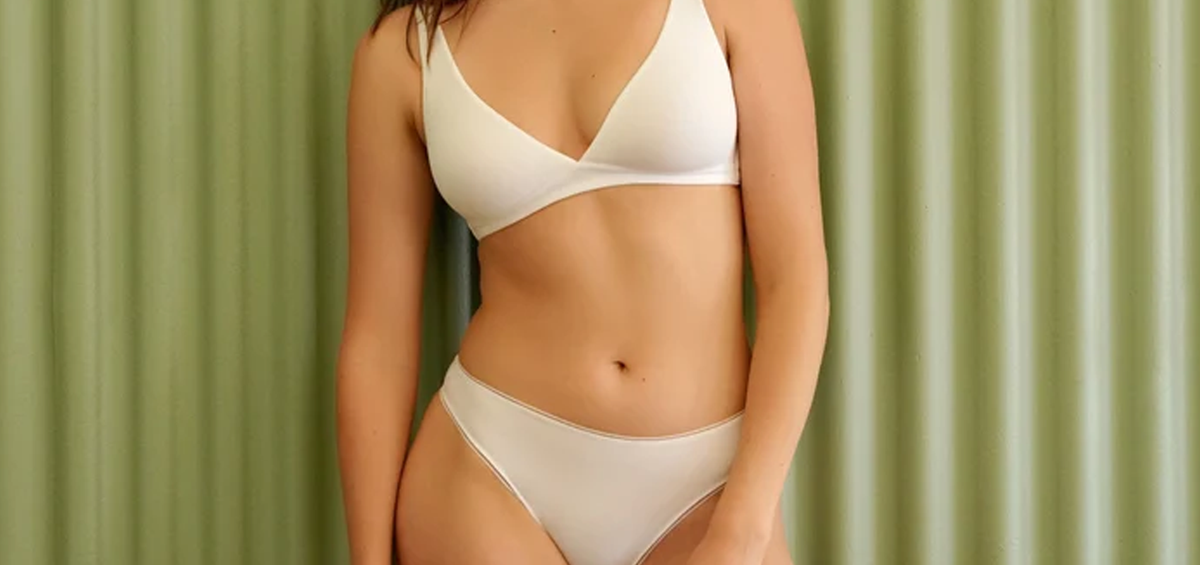
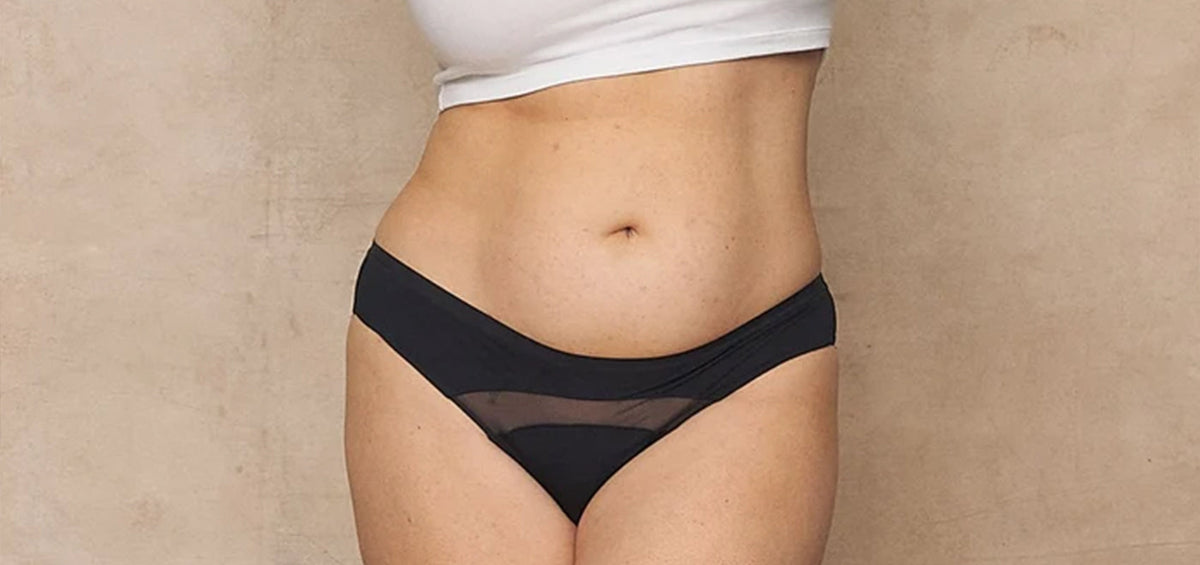
A pair of leakproof underwear is built in layers, hidden inside what looks like a normal gusset.
The layer against your skin wicks — it moves moisture away from the body quickly, which is why well-made period underwear feels dry rather than damp. Beneath that sits an absorbent core that holds the liquid and locks it in place so it doesn't move around when you do. Under that is a thin leakproof barrier that stops anything passing through to your clothes. The whole stack is bonded rather than sewn in most modern styles, which is why there's no bulk and no visible seam.
Saalt's gusset is a patent-pending construction, and the company's claim for its highest absorbency is that it holds up to the equivalent of six or more pads. That is the part people find hardest to believe and the part that is easiest to test.
Two things worth knowing about the category generally:
It is not an internal product. Toxic shock syndrome is associated with tampons and other internal devices, so period underwear sidesteps that risk category entirely. It's worn and changed like ordinary underwear.
PFAS are a real question to ask. Some period underwear has historically been treated with PFAS — "forever chemicals" — to help repel liquid, which became the subject of a widely reported class action against another brand in the category. It's a fair thing to check before you buy. Saalt states that it does not treat its period underwear with PFAS.
Which absorbency do you need?
This is where most first purchases go wrong. Absorbency is a separate choice from style, and buying one pair of the wrong level is what makes people conclude period underwear doesn't work.
Saalt sells four leakproof levels. Their stated capacities:
| Level | Holds up to | Best for |
|---|---|---|
| Super | 8+ tampons / 6+ pads | Heaviest days, overnight, postpartum, bladder leaks |
| Heavy | 4 tampons / 3 pads | Heavy days, overnight, postpartum |
| Regular | 3 tampons / 2 pads | Regular flow, backup to a cup or tampon, discharge, light bladder leaks |
| Light | 2+ light tampons / 1+ liner | Light days, spotting, pantyliner replacement, backup |
A practical way to choose: buy for your heaviest day, not your average one. Most people underestimate day two. If you currently change a super tampon every three hours on your worst day, you want Super, and you want more than one pair of it.
Note that absorbency and style are chosen together on each product, so the same silhouette often comes in more than one level.
How long can you wear a pair?
There's no single number, and any brand that gives you one is oversimplifying. It depends on your flow and the absorbency you've chosen.
If you're using period underwear on its own on a heavy day, expect to change after a few hours, the same way you would a pad. If you're wearing it as backup to a cup, disc or tampon, or on a light day, a full day is realistic. Saalt's own advice — which is sensible — is to try a new pair at home first, so you learn how it behaves on your body before you rely on it at work.
Change when it starts to feel wet rather than waiting for a fixed interval. Wicking fabric keeps the surface dry well past the point where a pad would feel unpleasant, so the sensation of dampness is a late signal, not an early one.
How to wash period underwear
Care is the whole ballgame. Period underwear fails early almost entirely because of heat and fabric softener, both of which are avoidable.
- Rinse in cold water after wearing. Cold, not warm — heat sets blood into fabric. Rinse until the water runs clear.
- Machine wash cold, ideally in a mesh delicates bag. Hand washing is fine too.
- No fabric softener. It coats the wicking layer, which is precisely the layer doing the work. This is the single most common way people ruin a pair.
- No bleach and no ironing. Both damage the leakproof barrier.
- Hang dry. Skip the dryer — sustained high heat degrades the elastics and the bonded layers over time. This is the difference between two years of life and five.
On staining: a rinse in cold water straight after wearing prevents most of it. Dark colours are the pragmatic choice for heavy days, which is why most brands' Super styles come in black.
How many pairs do you need?
Work backwards from your cycle rather than buying one pair to test.
If you want to use period underwear as your only protection, you need enough to get through your heaviest two days with changes, plus your lighter days, allowing for laundry time. For most people that's five to seven pairs: two or three in Super or Heavy, two or three in Regular, and one or two Light.
If you're using it as backup to a cup, disc or tampon, three pairs in Regular or Light will cover a cycle comfortably.
If you're buying for overnight only, two pairs in Super is enough — one on, one in the wash.
The cost logic is worth doing once. A pair costs roughly what two or three months of disposables cost, and lasts years with correct care.
The Saalt range at Journelle
Sizing runs XXS through 4XL across most styles, which is a wider range than the category norm.
For heavy days and overnight
Leakproof Comfort Brief ($27, Heavy or Super) in TENCEL™ Modal. Leakproof Comfort CloudShort ($26, Heavy or Super), a boyshort cut with more coverage at the back — the one to choose if you leak sideways at night. Leakproof Cotton Sleep Short ($36, Super) for sleeping specifically. Leakproof Lace Hipster ($36, Heavy) if you'd rather not spend your heavy days in something utilitarian.
For regular flow
Leakproof Cotton Brief ($22, Regular, Heavy or Super) in OEKO-TEX® STANDARD 100 certified cotton. Leakproof Cotton Bikini ($18, three levels). Leakproof Mesh Hipster ($19, three levels). Leakproof Comfort Bikini ($18, Regular or Super).
For invisibility under clothes
Leakproof Seamless High Waist ($22, Regular) in bonded-seam four-way stretch, in twelve colours. Leakproof French Cut High Waist ($42, Regular or Heavy) for a higher leg line. Leakproof Lace High Waist ($42, Regular or Heavy).
Thongs, for light days and spotting
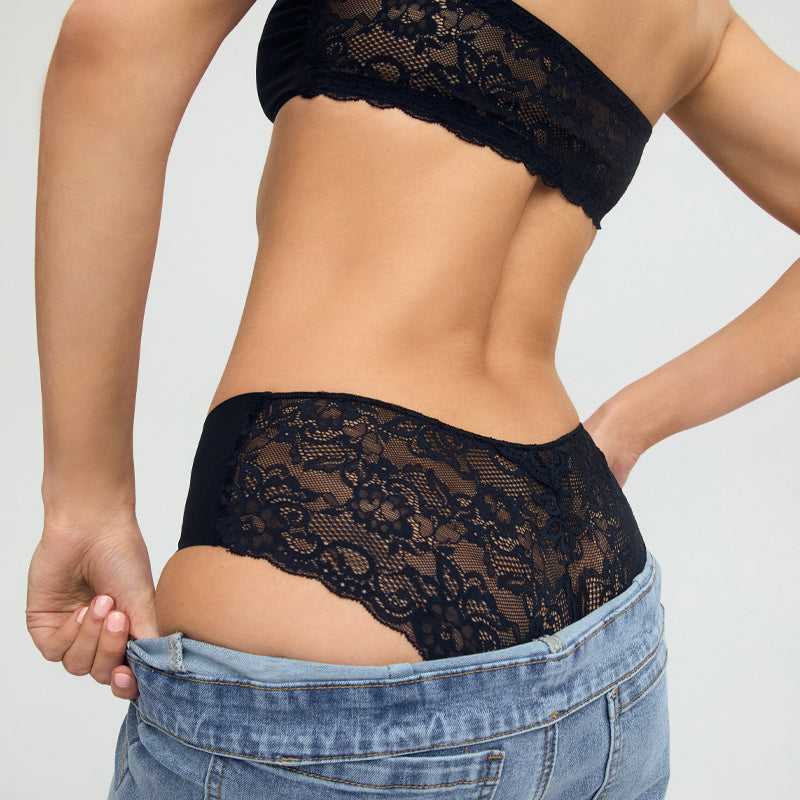
Leakproof Mesh Thong ($12, Light), Leakproof Comfort Thong ($18, Light), and Leakproof Lace Thong ($30, Light). A leakproof thong is the piece that surprises people most — it exists, and it works for spotting and as backup.
About Saalt
Saalt launched in February 2018, founded by CEO Cherie Hoeger after she learned that her aunt in Venezuela had been unable to buy pads or tampons for years. It's a certified B Corp, commits 1% of revenue to donating period care in regions with the greatest need, and says it has donated more than 150,000 products across 56 countries since launch. The company is also certified Plastic Negative, and offers a 90-day guarantee on its products.
The fabric stories differ by line: the Cotton collection uses biodegradable cotton certified to OEKO-TEX® STANDARD 100, the Comfort line uses TENCEL™ Modal made from beech wood, and each pair in the Lace & Mesh line is made with an average of three post-consumer recycled water bottles.
Frequently asked questions
How does period underwear work?
It uses layers built into the gusset: a wicking layer that pulls moisture away from the skin, an absorbent core that holds and locks in the liquid, and a thin leakproof barrier that stops it reaching your clothes. In modern styles these layers are bonded rather than sewn, so there's no bulk and no visible seam.
How do you wash period underwear?
Rinse in cold water after wearing, then machine wash cold in a mesh bag and hang dry. Avoid fabric softener, bleach, ironing and the tumble dryer — softener clogs the wicking layer and heat degrades the elastics and bonded layers.
How long can you wear period underwear?
It depends on your flow and the absorbency level. On a heavy day using it as your only protection, expect a few hours before changing. As backup to a cup, disc or tampon, or on a light day, a full day is realistic. Change when it begins to feel wet.
How many pairs of period underwear do I need?
Five to seven if it's your only protection, mixing absorbency levels across your heavy and light days and allowing for laundry. Three if you're using it as backup to a cup or tampon. Two if you only want it for overnight.
Do you wear a pad with period underwear?
No — leakproof underwear replaces a pad or liner rather than holding one. Some people use it as backup alongside an internal product like a cup, disc or tampon, which is a different thing from doubling up with a pad.
Is period underwear safe?
It's worn externally, so it doesn't carry the toxic shock syndrome risk associated with tampons and other internal devices. The question worth asking of any brand is whether the fabric has been treated with PFAS; Saalt states that it does not treat its period underwear with PFAS, and its cotton is certified to OEKO-TEX® STANDARD 100. If you have a specific gynaecological or skin condition, ask your clinician.
How long does period underwear last?
Several years with correct care. Hang drying rather than tumble drying, and avoiding fabric softener, are what determine whether you get two years or five.
Can you swim in period underwear?
Not in ordinary period underwear — the absorbent core fills with water. Dedicated period swimwear is built differently. For swimming, an internal product is the usual choice.