Open-Cup & Ouvert Bras: A Buyer's Guide
There's a moment in almost every bra fitting where a client asks — usually a little sheepishly — whether an open-cup bra is actually a real bra. The short answer is yes. The longer answer is that open-cup, ouvert, shelf and half-cup styles are some of the most structurally interesting lingerie we stock, and the best ones are engineered with as much attention as a wired T-shirt bra. They're just built to reveal rather than cover.
If you've been curious about this category but weren't sure where to start, this guide covers the terminology, the silhouettes, how to get the fit right, and how our fitters help clients pick one for the first time. When you're ready to shop, our full open-cup and ouvert edit lives here.
What counts as an open-cup bra?
"Open-cup" is an umbrella term for any bra where part of the breast is intentionally uncovered. Within that umbrella sit a few distinct silhouettes that our buyers treat as separate categories:
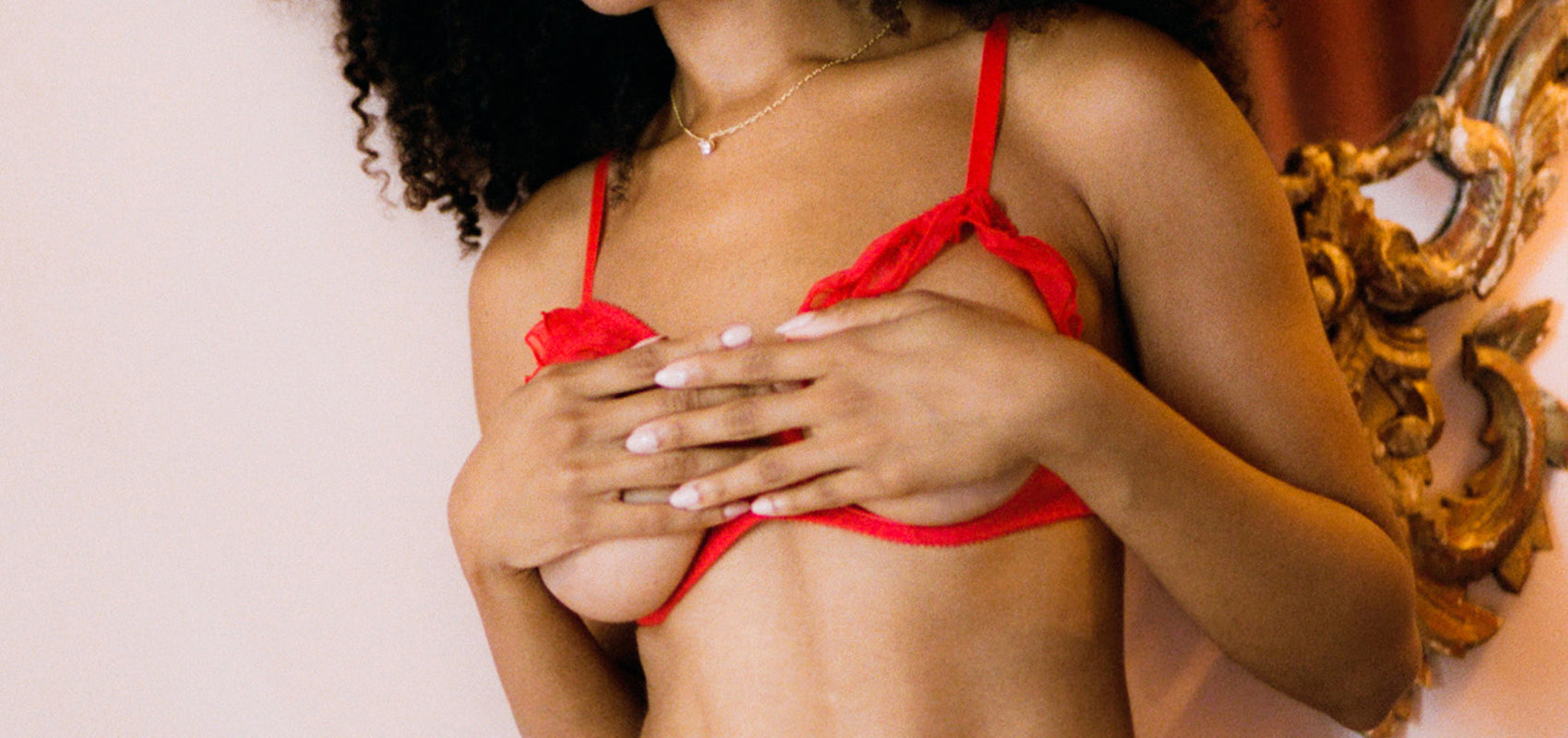
- Ouvert bra — from the French ouvrir (to open). Typically the most architectural of the group: a wired or boned frame that lifts and separates with little or no cup fabric. Often the centre gore and wings are intact; the cups themselves are absent.
- Shelf bra — a supportive band sits under the bust and "shelves" the breast upward, leaving the top entirely exposed. The most structured of the open-cup family and the one most likely to have meaningful underwire support.
- Half-cup / demi open-cup — covers the lower portion of the bust and opens at the top. The easiest entry point if you're new to the category because it still gives you a familiar cup-and-wire foundation.
- Cupless / cage bra — mostly strapwork. Less about lift, more about framing. These wear more like sculptural jewellery than lingerie.
Open-cup vs. a traditional bra, at a glance
Open-cup bras aren't a replacement for your daily T-shirt bra — they sit alongside it in the drawer, for different reasons.
| Feature | Open-cup / ouvert | Traditional bra |
|---|---|---|
| Coverage | Partial — bust intentionally exposed | Full — cup covers the bust |
| Primary job | Shape, frame, sensual appeal | Daily support and silhouette under clothing |
| Support comes from | Band, underwire, side wings | Cups, padding, underwire |
| When you'd reach for it | Boudoir, anniversaries, layering under sheer | Work, gym, everyday |
How our fitters approach open-cup fit
Because there's no cup fabric doing the shaping, the band does almost all of the work. That shifts what we look for in a fitting.
- Start with the band, not the cup size. An open-cup should sit parallel to the floor and feel firm against the ribcage. If the band rides up at the back, the bust has nothing to lift from.
- Go a size firmer than you think. Most clients who arrive in the store already wearing a bra size that's a bit loose feel the difference immediately — a shelf or ouvert needs that tension to hold its shape.
- Check the gore. The centre panel between the cups should lie flat against the sternum. A tipping gore usually means the wire is too narrow.
- Straps are for balance, not lift. They should be snug but never bearing weight. If they're carrying the bust, the band size is wrong.
If you're not sure of your current size, our bra fit guide walks through measuring at home, and our stylists book virtual and in-store fittings for anyone wanting a second set of eyes.
Fuller busts and open-cup styles
One of the myths we spend the most time correcting on the sales floor is that open-cup bras aren't for fuller busts. They absolutely are — they just require more deliberate construction. For DD+ clients, we point toward shelf and ouvert silhouettes with wider side wings, three-row hooks, and power mesh side panels. These are the structural features doing the work a full cup would normally do.
If you wear a DD+ size, you'll find our fitter-approved selection across bras and ouverts in the full Journelle bra edit. Filter by size and look for styles described as "firm band" or "architectural" — those are the ones that translate well into this category.
How to style an open-cup bra
Most of our clients buy open-cup and ouvert pieces for private wear, but they've also migrated out of the bedroom. A few ways they turn up in fittings:
- Under a sheer blouse or mesh top. A lace open-cup reads as intentional styling rather than accidental exposure — it reframes the whole outfit.
- As a set with a matching high-waist brief or garter belt. The most common special-occasion pairing and still the one that looks most considered in photos.
- With a structured blazer. An open-cup or cage bra peeking above the lapel is a signature boudoir-meets-tailoring look that several of our stylists quietly love.
- For boudoir photography. Open-cup silhouettes photograph beautifully because the frame catches light along the underband and the body's natural shape does the rest.
Caring for open-cup and ouvert bras
Open-cup styles tend to use the most delicate fabrics in the drawer — fine lace, silk, embroidered tulle, stretch mesh — so they deserve a gentler cycle than an everyday T-shirt bra. Hand-wash in cool water with a lingerie-safe detergent, avoid wringing, and reshape on a flat towel to dry. Never tumble dry: the heat breaks down the elastane in the band, which is the component doing most of the structural work.
If you want more detail on extending the life of every piece in your drawer, we wrote a longer piece on caring for lingerie.
Frequently asked questions
Can you wear an open-cup bra every day?
You can — many of our clients rotate a half-cup open-cup into weekly wear — but the silhouette is usually better suited to special occasions or layering than to a long work day. If you want all-day comfort, look at a demi-cup open-cup rather than a full shelf style.
Will it show under clothing?
Usually, yes — intentionally. Open-cup bras are designed to be visible either directly (under sheer) or in their shape (under knit). If you need true invisibility, a T-shirt bra is the better pick.
Are open-cup bras available in plus sizes?
Yes. Journelle stocks open-cup and ouvert styles through our extended size range. Our fitters recommend filtering for wider bands, multi-hook closures, and underwire for anyone DD and above.
What's the difference between an ouvert and a shelf bra?
An ouvert typically has an architectural frame — sometimes with strapwork across the bust — and may include a centre gore with no cups. A shelf bra is simpler: a structured band directly under the bust that lifts the breast upward. Both leave the bust exposed; the ouvert tends to frame, the shelf tends to lift.
Questions we didn't cover? Our stylists answer bra-fit questions by email at hello@journelle.com or in person at any of our stores. You'll find the full open-cup and ouvert edit here.