
What Is a Balconette Bra? Style, Fit, and Who It Suits
A balconette bra is one of the most misunderstood styles in the drawer. Many women assume it's only for occasion dressing — something you reach for with a particular neckline, then put away. In practice, the balconette is one of the most versatile and flattering silhouettes a bra can take. Understanding what it does differently from a demi or plunge bra tells you when it belongs in your rotation and when something else is the better choice.
What Is a Balconette Bra?
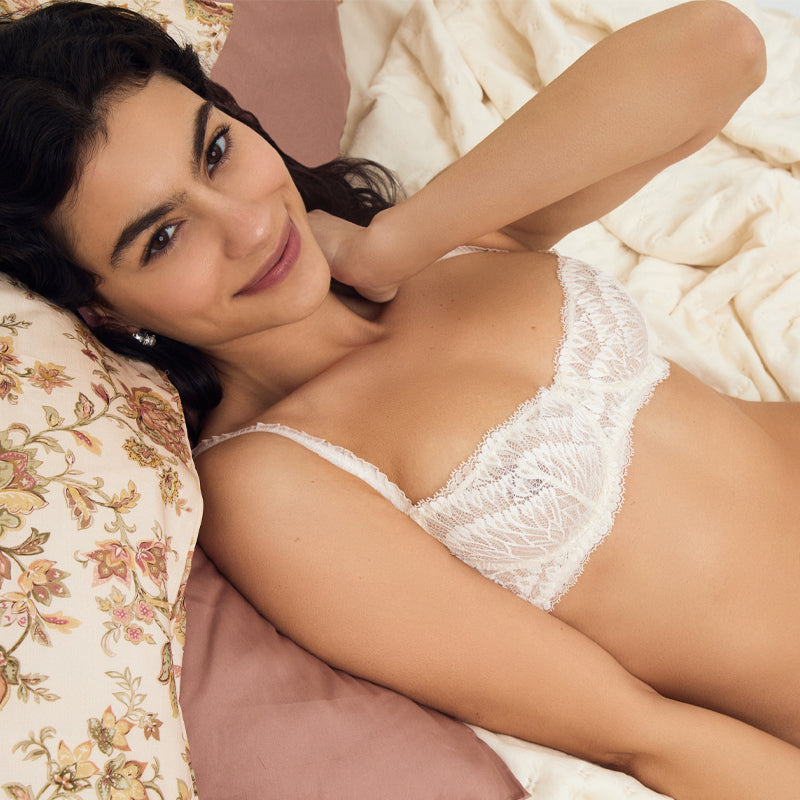
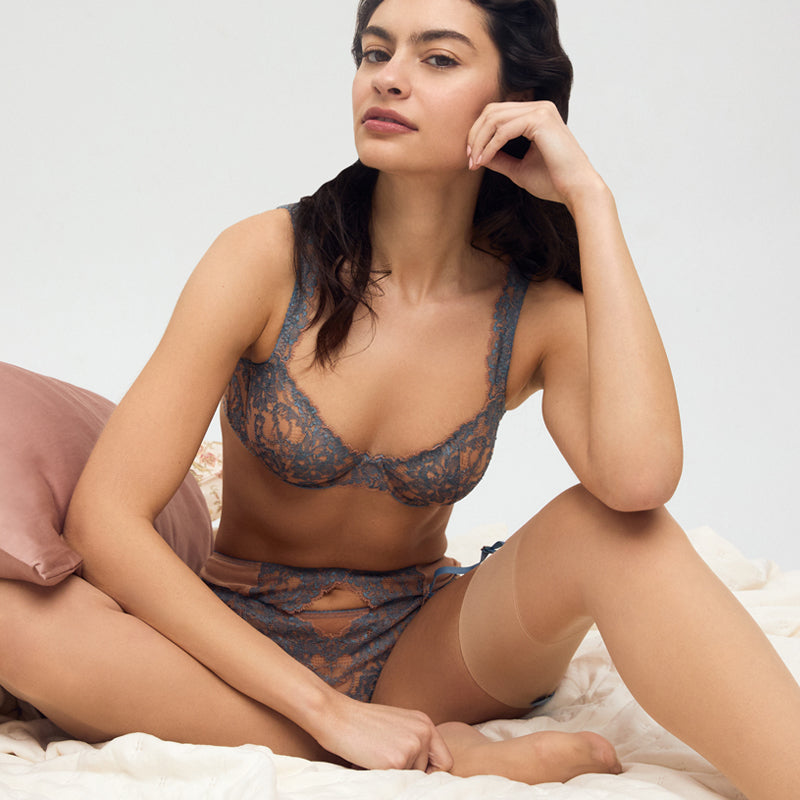
A balconette bra — sometimes called a balcony bra — is defined by its cup cut. The cups sit horizontally across the breast, lower than a full-coverage bra but with a distinct shape: the fabric cuts straight across the top, creating a wide, almost shelf-like presentation of the bust. The name comes from that silhouette. Look at the bra from the front and the cups resemble a small balcony — hence the word from the French.
The practical effect is a specific kind of lift. Because the cup supports from below and the sides rather than from the center and top, a balconette pushes the breast tissue upward and outward simultaneously. The result is a rounder, fuller shape at the top of the bust — projected outward rather than pressed inward. This is different from the cleavage created by a plunge bra, which brings the breasts together toward the center.
Straps on a balconette are set further apart than on most other bras — often close to the outer edge of the cup. This is what allows the style to work with wide-cut necklines: square necks, portrait collars, boat necks, and off-the-shoulder cuts. The straps stay hidden while the neckline stays completely open.
Balconette vs. Demi Bra: What's the Difference?
These two styles are often confused, and they do share the characteristic of being lower-cut than a full-coverage bra. But they achieve different things.
A demi bra covers roughly half the breast — the name means "half" in French. The cups are cut low on both the top and the sides, giving the bra a soft, rounded appearance. The lift is gentle and natural. A demi is fundamentally a finishing bra: it completes your look without substantially changing your shape. It sits well under almost everything.
A balconette bra cuts more dramatically across the top of the cup in a straight horizontal line. The lift is more active — the cup architecture is doing more work, projecting breast tissue upward and outward. A balconette creates more visible definition under clothing, particularly at the décolletage, because the breast tissue is positioned differently than it would be in a demi or T-shirt bra.
For full-bust sizes, the balconette often outperforms the demi. The wider cup base and the way the underwire is positioned distribute weight more evenly across a larger cup. Many women with a D cup and above find that balconette bras give them the lift and shape they want without compression.
Balconette vs. Plunge Bra
A plunge bra has a low, deep center gore — the piece of fabric between the cups. The cups angle inward, pressing the breasts toward the center to create cleavage. It's the right bra for a low V-neckline, a deep wrap dress, or anything where the center of the chest is exposed and you need the bra to stay hidden.
A balconette does the opposite. The gore sits higher, and the cups direct the breast tissue outward and upward rather than inward. You get shape and lift without deep center cleavage. This makes a balconette the better choice for necklines that are wide rather than deep — and for women who want definition and fullness without wanting breasts pressed together.
Neither is better universally. A well-stocked drawer has both.
Who a Balconette Bra Is Best For
Wide or square necklines. The wide-set straps are specifically designed for this. A balconette under a square-neck dress or top keeps everything in place without any strap showing. Most bras with narrower strap placement can't say the same.
Fuller busts. The cup structure and underwire placement make balconettes well-suited for larger cup sizes. The horizontal cut across the top of the cup — rather than curving inward — supports more breast tissue comfortably without compressing it. Balconette bras at Journelle are available across a wide range of sizes, including extended band and cup sizes in select styles.
Women who want defined shape under clothing. Because the balconette lifts breast tissue outward and upward, it creates a visible silhouette under fitted tops and dresses. If a T-shirt bra disappears completely and a plunge pushes everything together, a balconette occupies a deliberate middle position — not invisible, not dramatic, but shaped.
Occasion dressing and lingerie as fashion. The balconette's cut works naturally with evening wear. Many balconette bras are made in lace or embroidered fabrics precisely because the exposed top of the cup is meant to be seen. It's the style most associated with the classic lingerie aesthetic — the bra as an intentional piece, not just a foundation.
What to Look for When Buying a Balconette Bra
Cup fit at the top. In a balconette, the top of the cup should sit flat against the breast with no gap. If the fabric pulls away or the cup gapes, the bra is too big in the cup or the cut doesn't suit your shape. Gaping at the top is more common in balconettes than in other styles and is worth checking carefully before buying.
Strap placement. The wide-set straps can slip off narrower shoulders if they're positioned too far out. Try moving in the fitting room — reach forward, raise your arms — and check that the straps stay in place across a range of motion.
Underwire length. The underwire on a balconette typically extends further around the side of the body than on other bras. Check that the wire lies flat against your ribcage without digging into breast tissue at the sides. This matters most in larger cup sizes.
A proper fitting. The fastest route to knowing whether a balconette will work for you — and which specific style within the category — is to try a few in person. At Journelle, fittings are complimentary in every store and take around fifteen minutes. Most women leave in a different size than they arrived in, and in a style that makes considerably more sense for their shape.
Balconette Bras at Journelle
Journelle carries balconette bras from Simone Pérèle, Chantelle, Lise Charmel, Aubade, and the Journelle Collection — in sizes that extend well into the fuller cup range. The demi and balconette collection brings both silhouettes together so you can compare cut and coverage side by side. Browse by brand, size, or fabric — or come in for a fitting and let the team identify the right style for your shape.
Frequently Asked Questions About Balconette Bras
Is a balconette bra good for everyday wear?
Yes, particularly for women who find demi bras too low-profile or T-shirt bras too seamless. A balconette in a smooth or lightly padded cup works well as an everyday bra — it provides more lift than a demi without the drama of a push-up. Lace balconettes tend to be occasion pieces; smooth or lined versions are the everyday workhorses of the style.
Can a balconette bra work with a V-neck?
A shallow V-neck, yes. A deep V, probably not — a plunge bra is the better choice there. The balconette's cups are cut horizontally across the top, which means they become visible in a deep neckline. For anything lower than the mid-chest, switch to a plunge.
Do balconette bras work for large busts?
They can be excellent for large busts, specifically because the horizontal cup cut and wider underwire provide substantial support and create shape without compressing. Not every balconette extends to DD+ in every band size, but the style as a category is one of the more supportive options for fuller cups. Look for styles with engineered or seamed cups rather than soft cups for the best result.
What's the difference between a balconette and a push-up bra?
A balconette lifts breast tissue upward and outward through cup structure alone — there's no added padding at the base of the cup. A push-up bra has padding (sometimes removable) positioned at the bottom of the cup to push the breasts upward and inward toward the center. The silhouettes look similar on the body but are achieved differently. A balconette creates a natural-looking fullness; a push-up creates a more dramatic, center-forward effect.
Are balconette bras the same as demi bras?
No — though they're often grouped together because both sit lower than a full-coverage cup. A demi bra cuts low on all sides for a soft, natural shape. A balconette cuts straight across the top in a horizontal line, creating a more pronounced upward lift. They look similar on a hanger but feel and function differently on the body.