

Lace Lingerie: What Our Fitters Know That the Label Doesn't Say
Lace is the category that reveals a lot quickly. Hold a cheap lace bra next to a good one and you can feel the difference before you put either on — the weight of the fabric, how it lies flat, whether it has any give without losing its structure. In a fitting room, the difference shows up even faster. Lace from a fast-fashion retailer scratches within a week. Fine Calais lace from a proper French lingerie house softens slightly with each wash and holds its shape for years.
Our fitters work with both kinds every day. Here's what they'd tell you about buying lace lingerie well.
Why lace quality varies so much
Most of the lace in high-volume lingerie — the kind sold in department stores and fast-fashion sites — is Raschel lace: a warp-knitted nylon or polyester fabric that produces the look of lace at low cost. It's scratchy against skin, pills with washing, and tends to distort at the edges within a few months. It's also the lace in most of the bras most people have worn their whole lives, which is part of why so many people think they don't like lace.
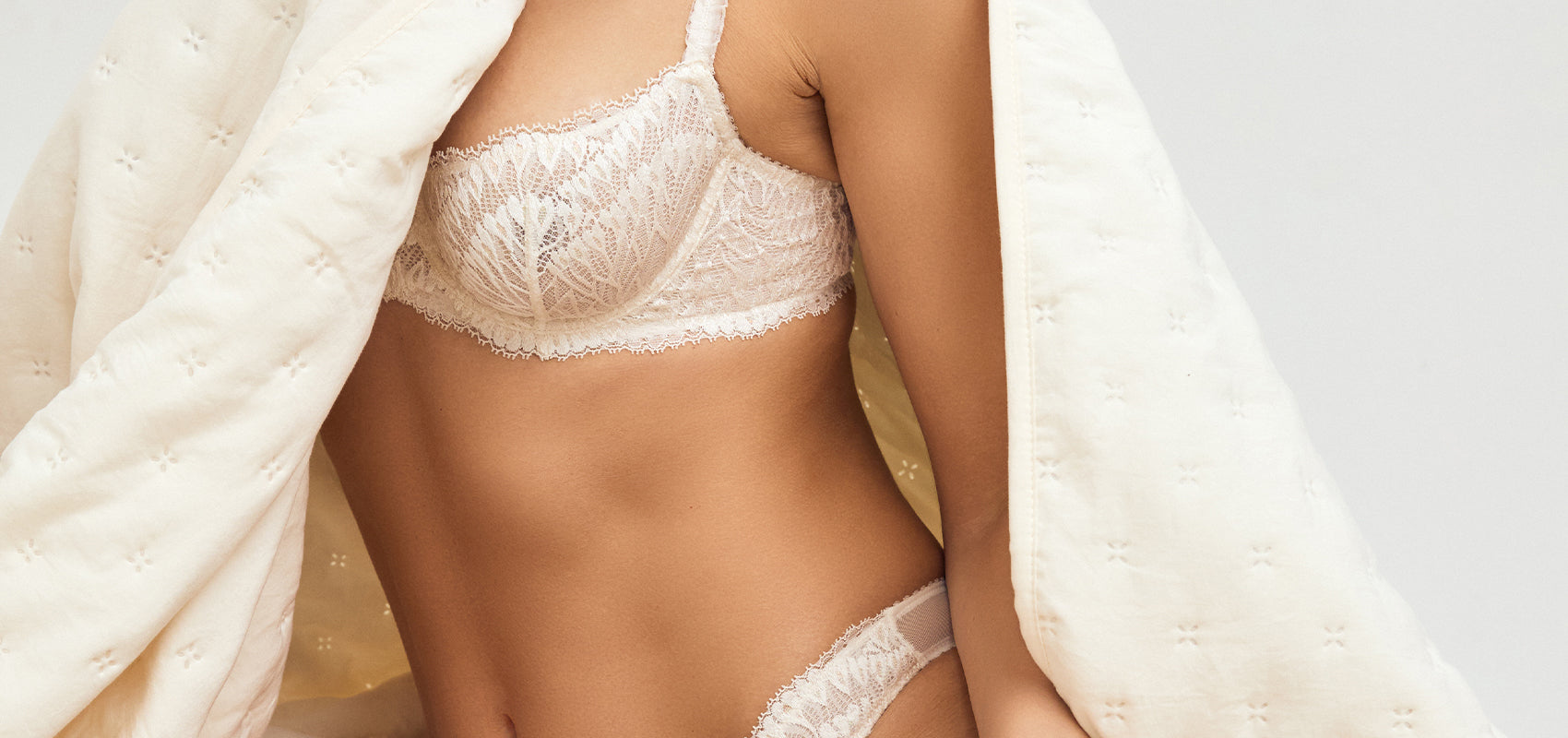
The lace used by the European houses we carry — Chantelle, Simone Pérèle, Aubade, Lise Charmel, Fleur of England, Bluebella — comes from different looms and a different tradition. Calais and Caudry, in northern France, have produced fine woven lace since the nineteenth century on Leavers looms, many of which are over a hundred years old. The resulting fabric is finer, softer, and structurally more stable than knitted alternatives. It doesn't scratch. It drapes against the body rather than standing away from it. And with proper care, it lasts.
The price difference between a Raschel lace bra and a Calais lace bra is real and so is the longevity gap. A well-cared-for Chantelle lace bra will outlast three or four cheaper replacements. The math runs differently than the sticker prices suggest.
The main lace styles — and what each one is actually for
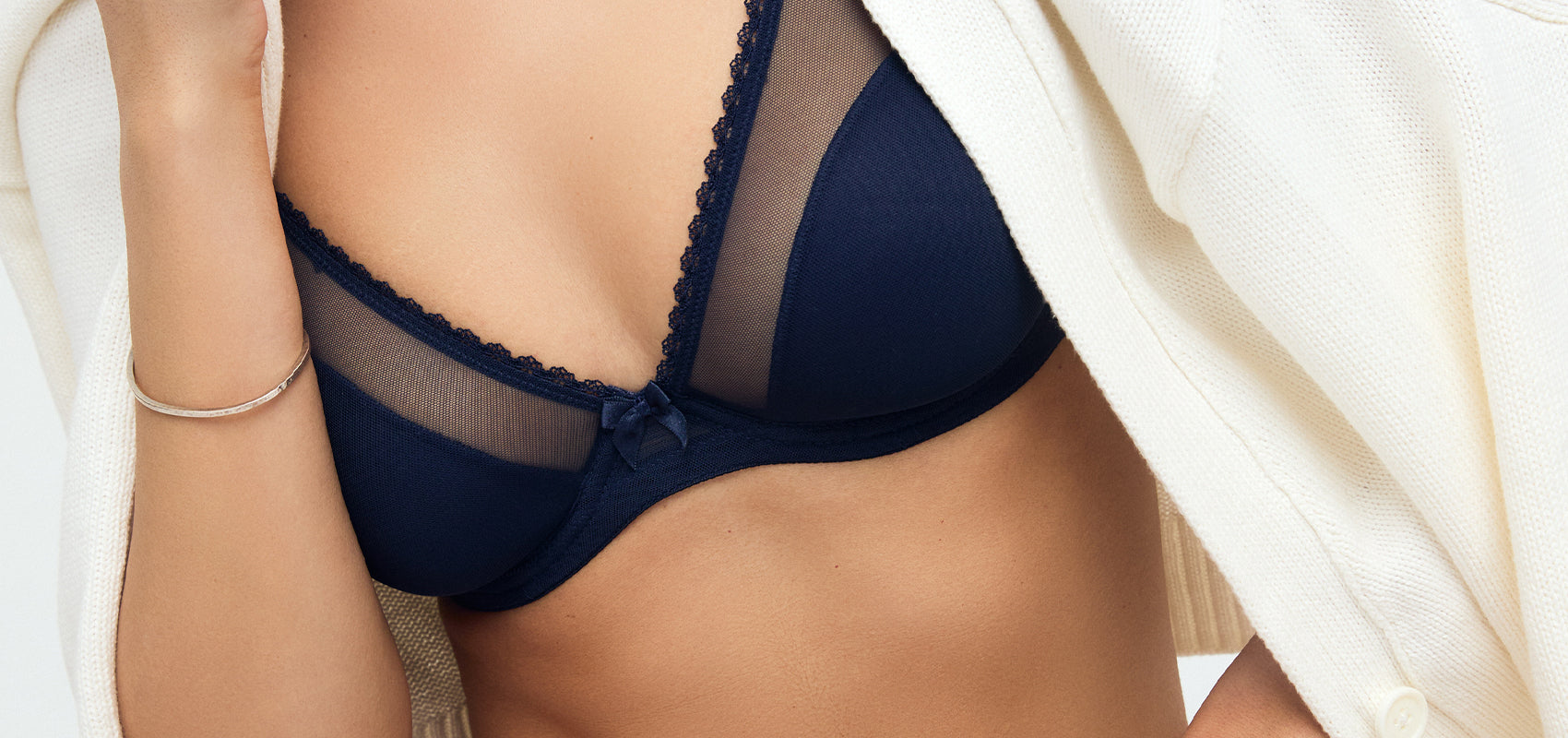
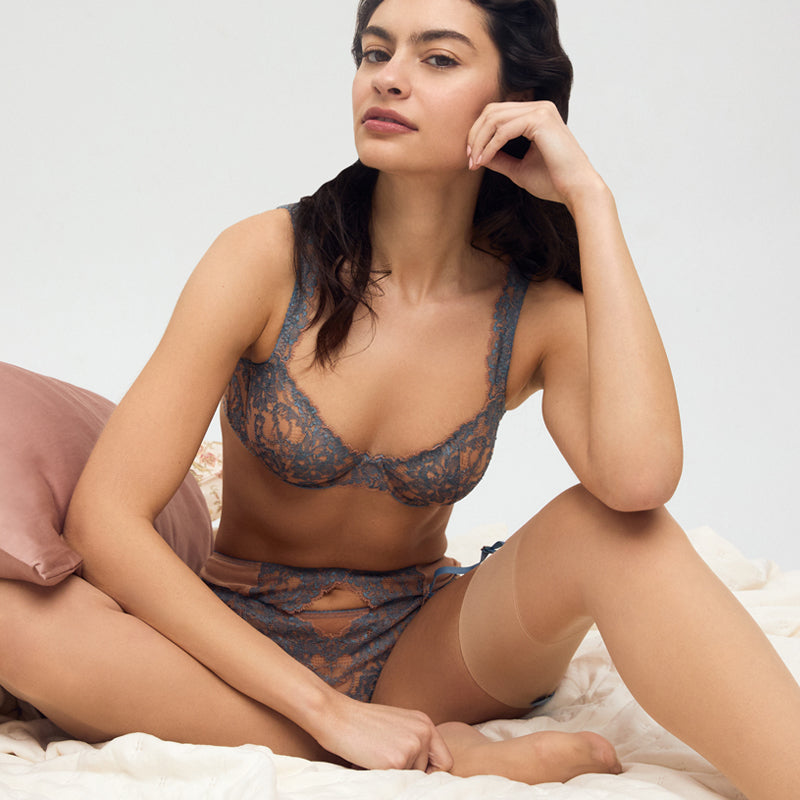
Lace bras. The most versatile piece in the category. A classic underwire lace bra — balconette, demi, or plunge — works as foundation under a sheer top, as a deliberate layer visible above a low neckline, and as part of a matching set. The Aubade Rosessence, the Chantelle Day to Night, and the Simone Pérèle Caresse are among the pieces our fitters recommend most consistently. They come in extended sizes, the lace holds its structure wash after wash, and they're available in colorways that go well beyond black and red.
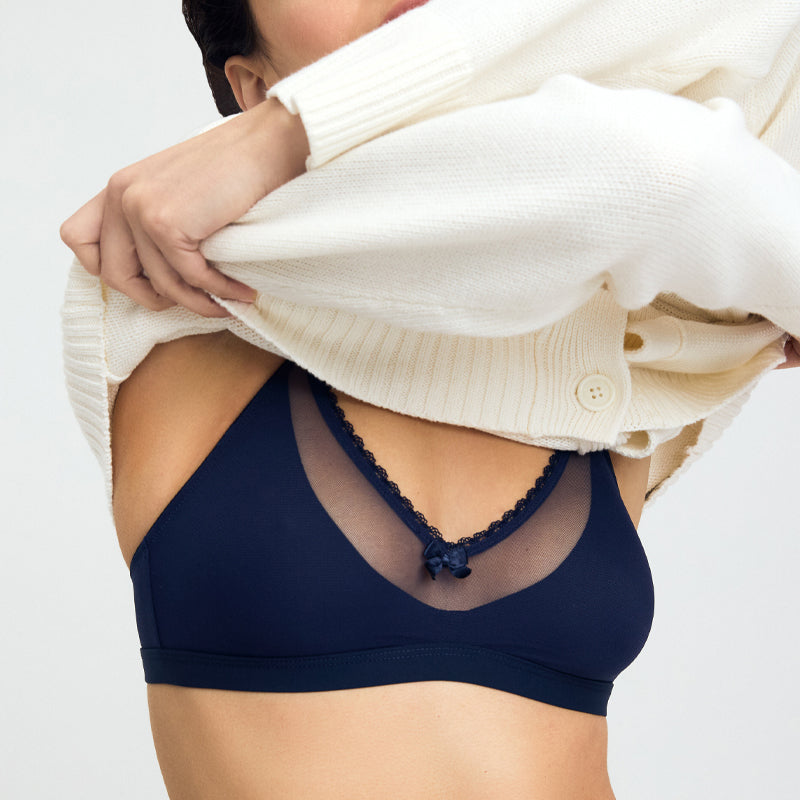
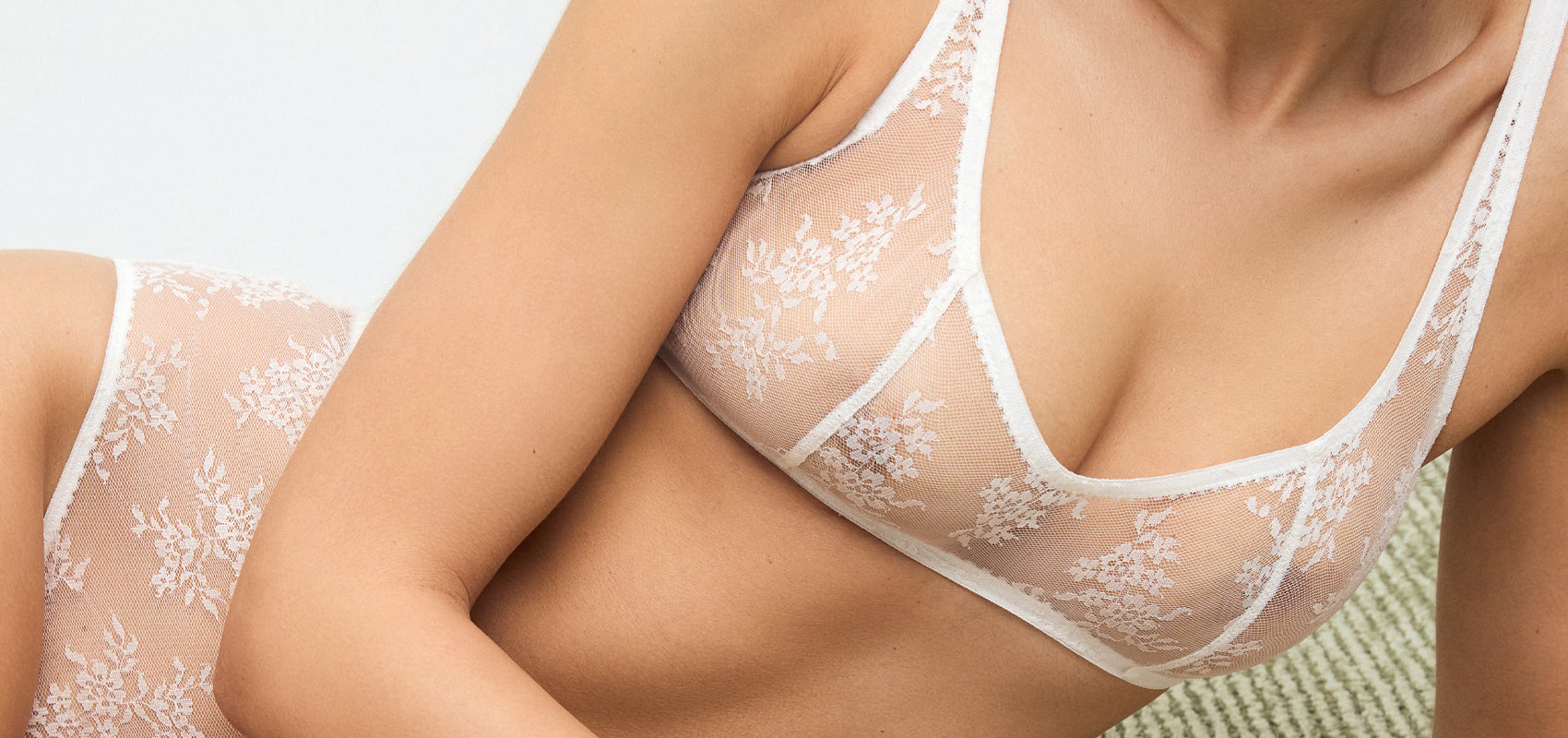
Lace bralettes. Softer and less structured — a bralette replaces the underwire with a band and relies on stretch lace for shape rather than rigid framing. For A through C cups, a well-made lace bralette provides enough support for most situations. For larger cup sizes, it's more of a layering piece or sleepwear item. The difference between a good lace bralette and a forgettable one is mostly in the lace — Journelle Collection bralettes and those from Cosabella use quality stretch lace that doesn't pill or lose its pattern.
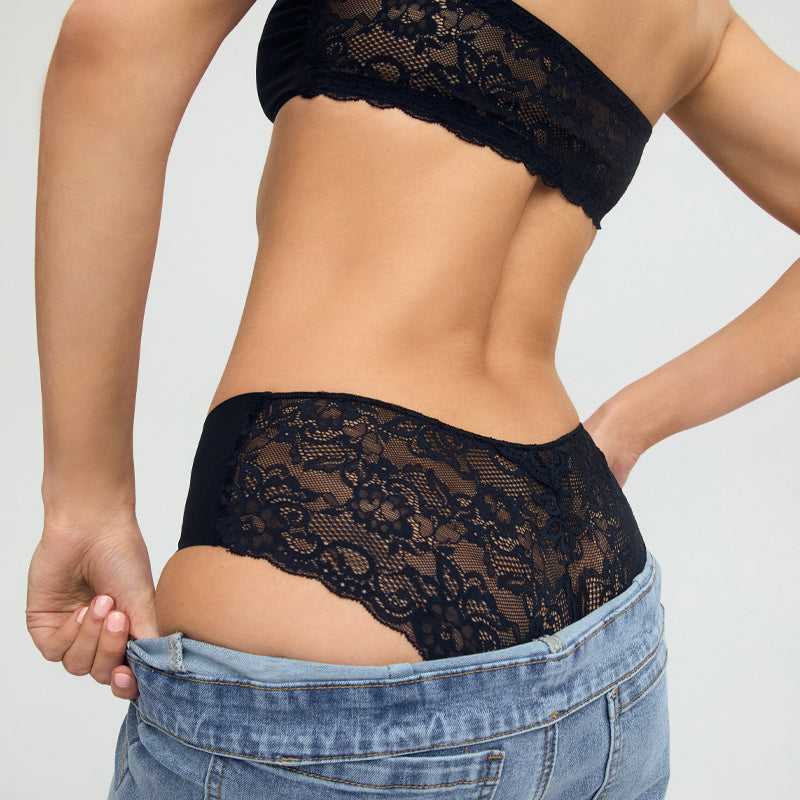
Lace panties. Two different constructions exist and they wear very differently. A bikini or brief with a lace waistband or lace panel on top is fine cotton or microfibre with lace as trim — comfortable and practical. A panty cut entirely from fine lace — the kind from Aubade or Lise Charmel — is a different experience: lighter, softer against skin, and cut to show the lace as the feature rather than an accent. If you've never tried the second kind, the fitting room is the right place to find out whether it's for you.
Lace sets. If you're going to invest once, invest in a set. The bra and brief from the same line share the same Calais lace, the same dye lot, and the same elastic construction — the set holds together in a way that mismatched pieces never quite do, even when the colors are close. Most of the houses we carry produce their bras and briefs in coordinating collections. Buying into one at the start is easier than trying to match backwards.
How to make lace last
Fine lace is more resilient than most people treat it, but it does have specific needs. Hand washing is ideal — a few minutes in cool water with a small amount of delicate wash (we carry Soak Wash, which is rinse-free and effective for lace) is all most pieces need. A mesh laundry bag and a cold delicate cycle is an acceptable alternative for days when hand washing isn't happening. What isn't acceptable is the dryer. Heat breaks down the elastic in the band and distorts the structure of the lace — the dryer is where good bras go to die faster than they need to.
Lay flat or hang to dry. With that one change, the lifespan of a quality lace bra goes from months to years.
A fitter's note on sizing in lace
Lace stretches differently than microfibre or smooth satin, and fine lace in particular has less elastic recovery than heavier fabrics. If you're between sizes in the band, size down rather than up — the band should feel firm on the loosest hook when new, because it will ease slightly over the first few wears. A band that feels right on the middle hook from day one is a band that's already too loose.
If you're unsure, come in. We fit women in lace every day and the difference between the right size and the wrong one is immediately obvious once you're wearing both.