
How to Avoid Visible Panty Lines: The Underwear Guide from Our Fitters
Visible panty lines are rarely a style problem. They are almost always a fit-and-fabric problem — the wrong underwear under the wrong outfit. Once you understand what causes them, they are easy to eliminate without giving up comfort or switching to shapewear.
Our lingerie fitters see this constantly in fittings: a client loves a pair of underwear until she puts on tailored trousers, a silk dress, or a pair of leggings. The fix is almost always simple. Here is what actually works.
Why Visible Panty Lines Happen
VPL comes down to two things: fabric edges and fabric bulk. Any seam or band edge that presses against tight or lightweight fabric will show through. Thicker fabric and wider waistbands are more likely to create a line than thin, seamless styles. The cut matters too — a full brief has four edges (waistband, two leg openings, and the back panel), each of which can register through fitted clothing.
The outfit fabric makes a significant difference. Jersey, satin, silk, and any closely fitted knit will pick up underwear edges. Structured wovens — denim, tweed, thick canvas — are far more forgiving. Most visible panty line problems happen with the former.
The Underwear Styles That Eliminate VPL
The most reliable solution is a thong. With no back panel, there is simply nothing to show through fitted clothing. The waistband is the only potential line, and a low-rise thong sits below most waistbands anyway. Thongs work under virtually everything — jersey dresses, fitted trousers, leggings — and in the right size, they are far more comfortable than their reputation suggests.
For even less coverage, a g-string replaces the thong's narrow back panel with a single thin string. The result is the closest thing to wearing nothing at all. G-strings are particularly useful under silk, satin, or any fabric so lightweight that even a thong waistband might register.
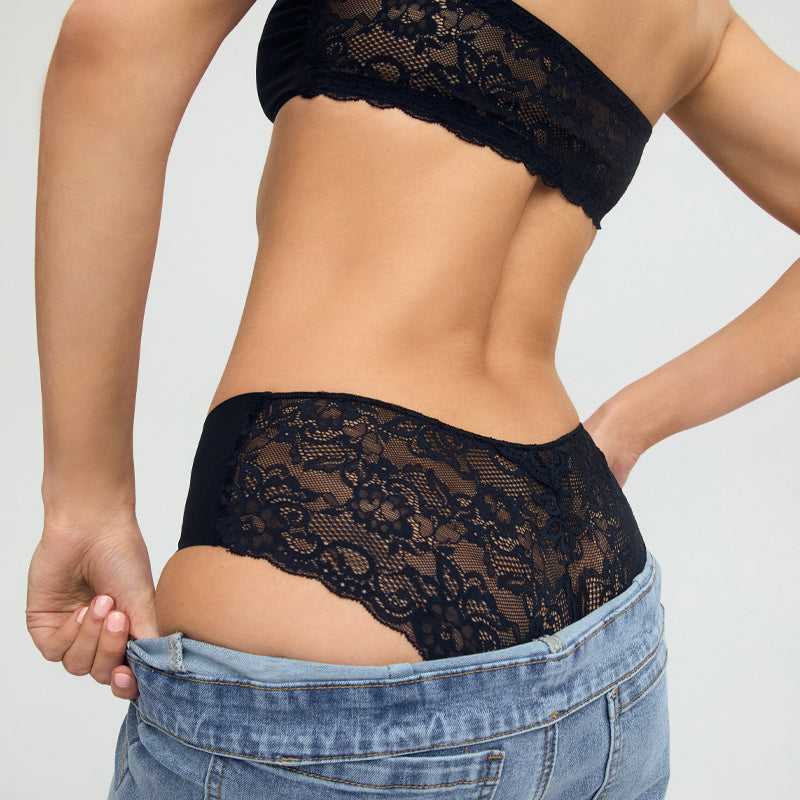
If a thong is not your preference, seamless underwear is the next best option. Rather than eliminating back coverage, seamless styles eliminate the seams and edges that cause lines. Look for laser-cut edges and microfibre fabrication — both create an invisible finish under fitted clothing. A seamless brief or hipster in the right size can be virtually undetectable.
Fabric Makes as Much Difference as Style
The construction of the underwear matters as much as the cut. Microfibre — a fine, smooth synthetic — lies flat against the skin without bulk or texture. It is the most reliable fabric for invisibility under clothing and the standard choice for everyday wear under anything fitted.
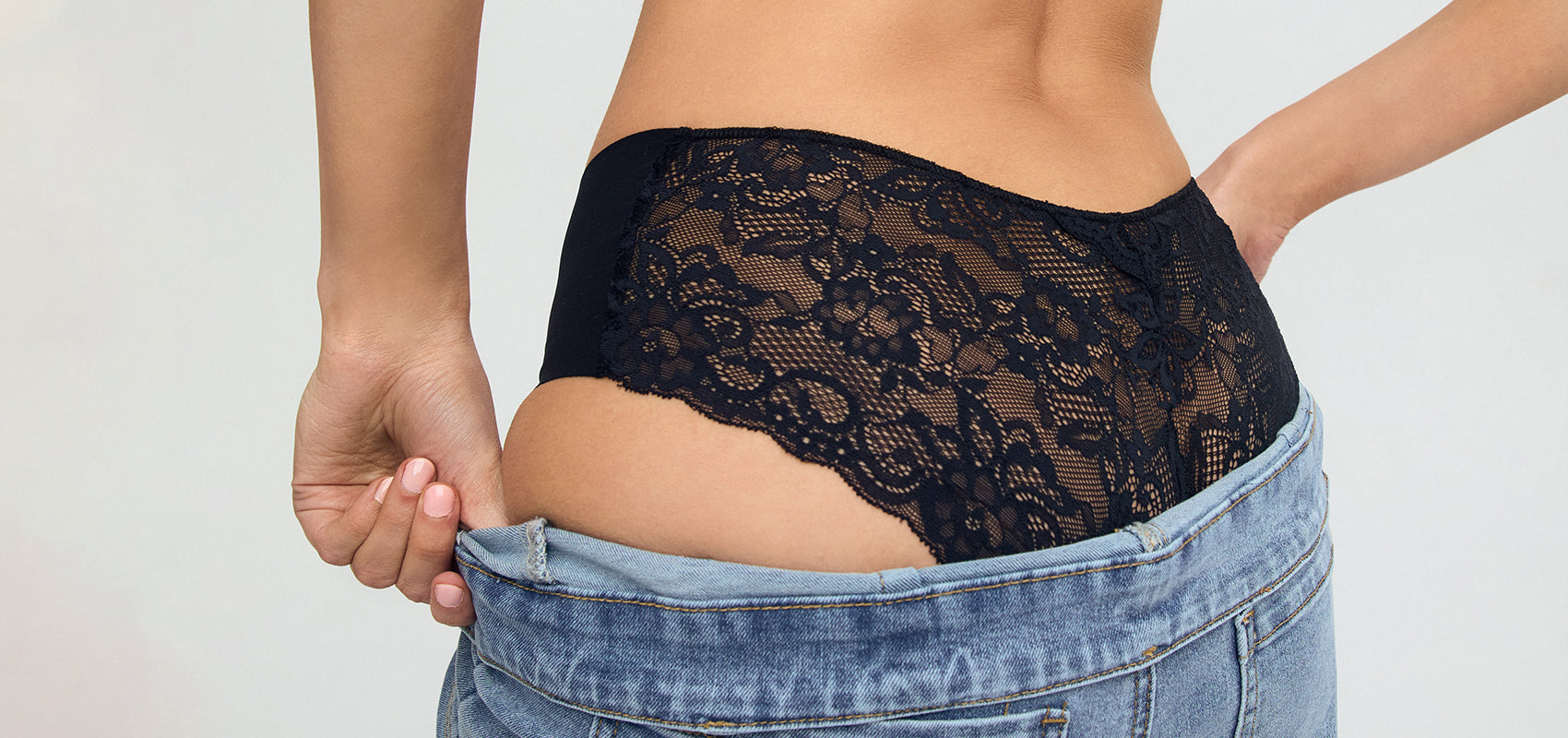
Lace can work under some fabrics but not others. Floral or embroidered lace has texture that can show through very fine fabrics. A smooth stretch lace with a tight knit and minimal texture is less likely to create a problem, but it is worth checking in natural light before you commit. Cotton and modal tend to have more body than microfibre and are better suited to looser fits.
Does Color Matter?
Yes — though not always in the way people expect. The goal is to match the undertone of your skin rather than the color of your outfit. A nude that matches your skin tone disappears under light fabrics; white often does not, because it reflects light differently. Under black clothing, any color of underwear can show if the fabric is thin enough — the key is seamlessness and minimal fabric bulk, not the shade.
Keep a skin-tone seamless thong or g-string in your rotation for light fabrics and a black seamless style for dark. Between those two, most situations are covered.
VPL by Outfit
Leggings and yoga pants: The most unforgiving category. A seamless thong or g-string in microfibre is the standard solution. Avoid lace, cotton, or any underwear with a thick waistband that sits higher than the legging waistband.
Fitted dresses and skirts: A thong works in almost every case. For silk or satin, move to a g-string or seamless microfibre style. Check the back in a mirror under natural light before going out.
Tailored trousers: Depends on fabric weight. Light wool or ponte will show edges; heavier tweed or denim will not. A seamless thong or seamless hipster works well under most tailored styles.
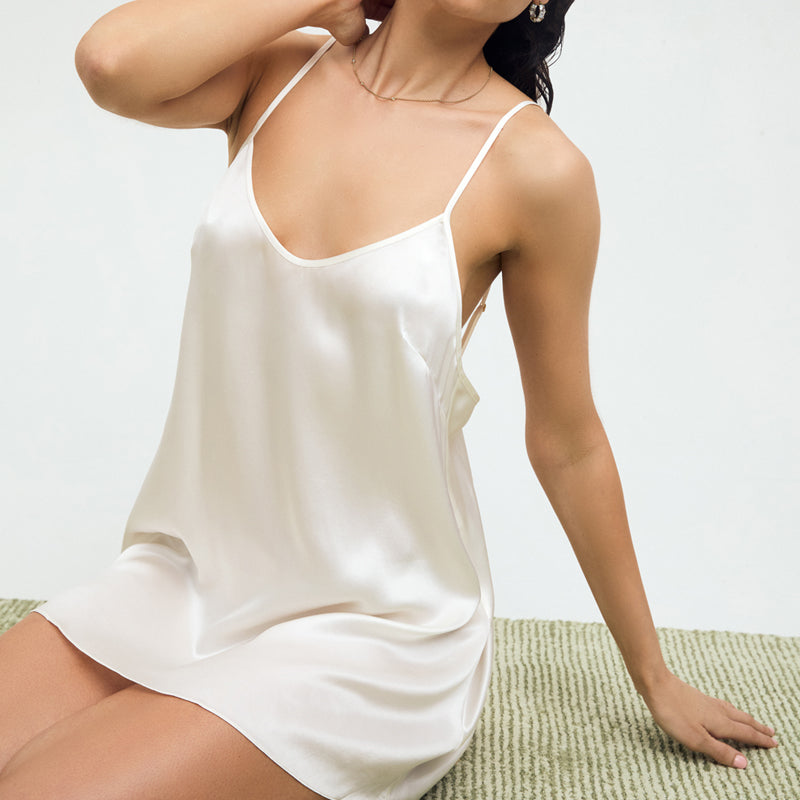
Sheer or lightweight fabrics: A g-string or skin-tone seamless thong is the safest choice. With very sheer fabrics, consider the full picture — lining, a slip underneath, or choosing a style intentionally rather than trying to hide it.
Fit Matters More Than You Think
The wrong size underwear creates more VPL, not less. Underwear that is too small bites into the skin, creating a ridge that shows through clothing. Underwear that is too large bunches or shifts. A thong in the right size should sit flat at the waist with no digging; the back should lie naturally without riding up or shifting through the day.
If you have never been fitted for underwear, it is worth doing alongside a bra fitting. The two are connected — understanding your true size changes how everything fits. Book a free fitting at any of our boutiques in New York or Chicago, and our fitters can advise on both.
Browse the full edit of women's underwear at Journelle — seamless, thong, g-string and high-waist styles, filtered by fabric and silhouette so you can find what works for your wardrobe quickly.