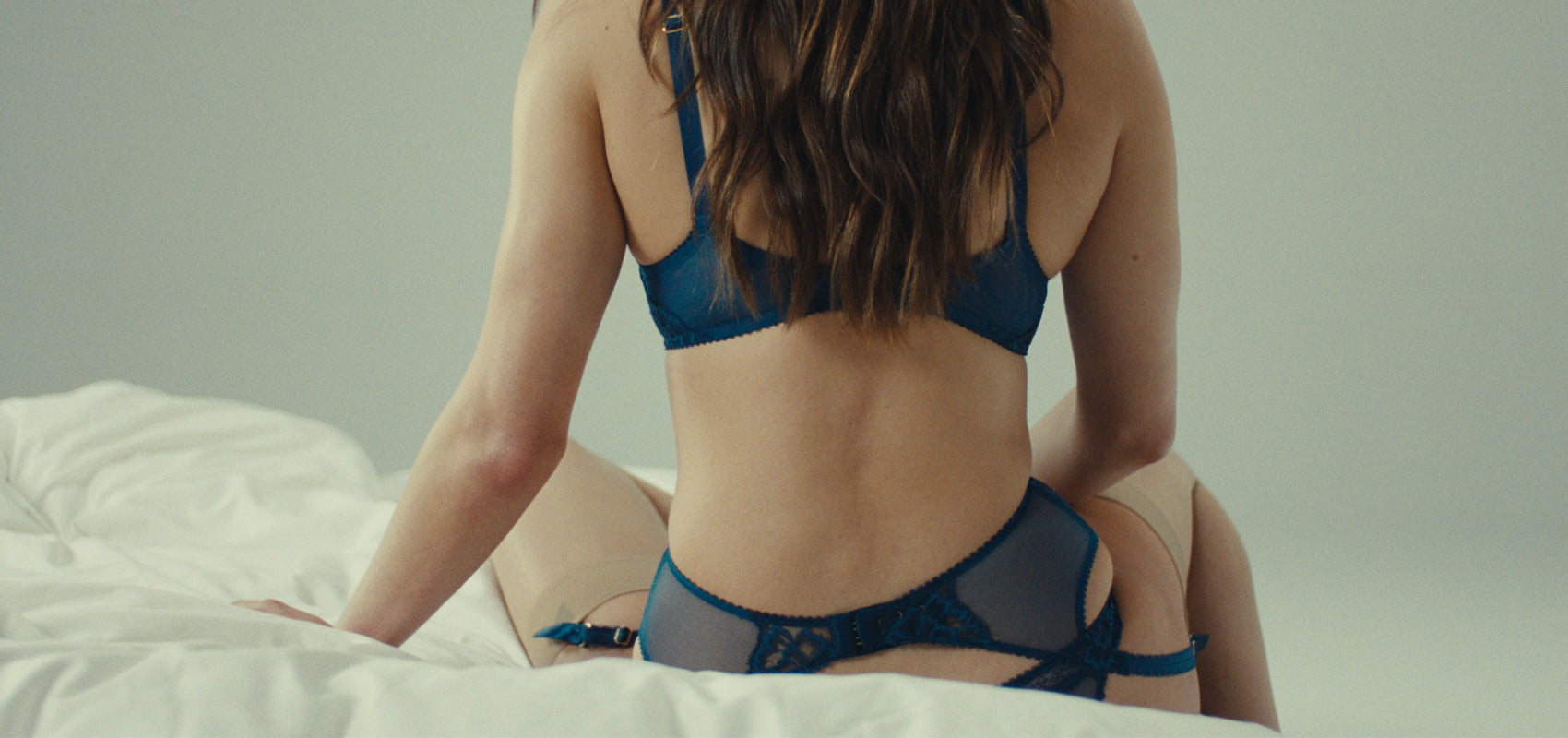
Lingerie 101: A Beginner's Guide to Styles, Fit, and Fabrics
Lingerie has its own vocabulary, and for anyone buying a first real set — or rebuilding a drawer that's drifted — the terminology is usually where things get confusing. Demi versus balconette. Bralette versus bra. Chemise versus slip. What actually counts as a bodysuit. This guide walks through the main categories our fitters talk through at the counter, with notes on who each silhouette tends to work best for, how to pick and wear each one, and where to find the edit at Journelle.
If you'd rather skip the definitions and browse, the full lingerie edit lives here.
How to pick lingerie, in order
Most first-time buyers start with what looks good on the model or the hanger. Our fitters start in the opposite direction: fit first, fabric second, occasion third, aesthetic last. Getting that order right is the whole difference between a drawer you wear and one full of beautiful pieces you never reach for.
- Fit first. Every other decision unravels if the size is wrong. Before buying anything, run through our bra fit guide or book a free fitting. Most people are wearing a band that's too loose and a cup that's too small.
- Fabric second. A piece you love the look of in stiff scratchy lace becomes a piece you never wear. Pay attention to the fabric description: genuine silk, fine stretch lace, soft-handle satin, bonded mesh. The touch matters.
- Occasion third. Be honest about what you'll actually wear the piece for. A daily T-shirt bra, a strapless for specific outfits, a set for evenings — these are different jobs.
- Aesthetic last. Colour, detailing, branding. Pick from the pieces that have already passed fit, fabric and occasion.
Bras: the foundation category
More than any other category, bras reward time spent on fit. The cup shape, wire width, and band tension change dramatically between silhouettes, which is why our fitters always start here — in a well-fitting bra, everything else in the drawer works harder.
The core bra silhouettes
- T-shirt bras — smooth, seamless cups designed to disappear under knits and fine-gauge tops. The baseline everyday bra.
- Demi and balconette bras — lower-cut cups that create a more horizontal neckline. Balconettes lift and square the bust; demis sit slightly lower and read softer.
- Plunge bras — a deep V centre gore designed to sit invisibly under low necklines. Essential if your wardrobe has any wrap dresses or open-neck blouses.
- Bralettes — wire-free, pull-on silhouettes, usually lace or soft mesh. Loved for comfort; best in smaller cup sizes or layered as styling rather than heavy support.
- Underwire bras — the catch-all for any bra with a wired cup. Gives the most reliable lift and shape, especially for fuller busts.
- Strapless bras — off-shoulder, halter and one-shoulder outfits live or die by these. A well-made strapless with silicone gripper inside the band is worth the investment.
- Convertible bras — one bra, multiple strap configurations. Travel-friendly.
- Adhesive bras — backless, strapless, for dresses where nothing else works. Built for specific outfits rather than regular rotation.
- Open-cup and ouvert bras — intentionally revealing silhouettes including shelf and half-cup styles. Structural lingerie for occasion wear.
If you're not sure which cup shape suits you, our bra fit guide walks through measuring at home, and our stylists book in-store and virtual fittings with our team.
A note on fuller busts
Nearly every bra category above is available through a proper DD+ fit, but construction matters more at larger cup sizes. Look for wider side wings, three-row hook-and-eye closures, and power mesh panels. The Journelle DD+ edit filters the full range to styles that actually deliver at these sizes — it's the shortcut we use on the sales floor when we have 15 minutes and need to narrow the options.
Panties and underwear
The underwear drawer rewards having more than one silhouette on rotation. Seamless for gym clothes and tailoring, something prettier for everything else, and one or two pieces that match a favourite bra. The common styles:
- Bikinis — mid-rise, moderate coverage. The most-worn cut in most drawers.
- High-waist briefs — sit at or above the natural waist. A favourite with tailoring and slim trousers for a smooth line.
- Boyshorts — fuller coverage with a shorter leg. Comfort-first and surprisingly flattering under loose dresses.
- Thongs and g-strings — minimal rear coverage. Thongs have a modest back panel; g-strings taper to a narrow strip. Both eliminate visible panty lines under fitted clothing.
- Seamless underwear — laser-cut or bonded edges that disappear under anything clingy.
For more detail on cuts and coverage, the panties guide is a more thorough breakdown than we can fit in here.
Sets and matching pieces
A matching set is the quickest way to make getting dressed feel considered, even under clothes no one else will see. The bra-and-panty sets edit pairs bras with their coordinating bottoms at the point of purchase, from everyday cotton-and-lace through to designer pieces built for occasion wear. If you buy nothing else from this guide, buy one set.
Bodysuits, corsets and shapewear
This is the category that's moved most in the last few years, as pieces once considered strictly lingerie have migrated into outerwear rotations. Three categories worth knowing:
- Bodysuits — a one-piece top-and-underwear combination. Fastens at the crotch, reads as a top, creates a clean line under trousers or skirts. The most versatile piece in this section.
- Corsets and bustiers — structured pieces that shape the waist and support the bust. A bustier is a softer, less-rigid cousin of the corset.
- Shapewear — smoothing layers worn under clothing, from slip dresses to bodysuits engineered for a specific silhouette.
Chemises, slips and sleepwear
The at-home category, built around fabric rather than structure. Done well, these are some of the most luxurious pieces in the drawer and the ones clients tell us they reach for most often at home.
- Chemises and slips — short-to-mid-length dresses, usually silk or satin, cut on the bias. Can double as going-out dresses under a blazer.
- Robes — silk, satin or plush cotton layers. An investment piece that transforms a morning routine.
- Pajama sets — two-piece long sleepwear; most popular in silk and soft cotton.
- Sleepwear and loungewear — the full category, including short sets and nightgowns.
For the full silk edit specifically, the luxury silk lingerie and loungewear collection pulls everything that uses real silk into one place.
Accessories: garters, hosiery and more
Smaller category, worth knowing because the pieces here layer with nearly everything above.
- Garters — the detachable straps that attach stockings to a belt.
- Suspender belts — the belt itself, worn at the waist or hip, holding the garters.
- Hosiery, pantyhose and stockings — the legwear itself. Stockings are worn with a garter; pantyhose are self-supporting.
Specialty categories worth knowing
A few collections we steer clients toward when the standard category doesn't fit the situation:
- Maternity bras — cut with room for changing cup sizes and designed to accommodate nursing access.
- Post-surgical and mastectomy bras — engineered for the recovery period and for prosthesis wear.
- Sheer mesh edit — everything across categories that uses sheer mesh, pulled into one view for transparency lovers.
How to wear lingerie, day and night
Lingerie used to mean the thing you wear under the thing — and for a lot of your drawer, that's still the job. But the categories that have moved into visible styling (bralettes, bodysuits, silk camis, lace layers) change how clients ask us to style them. A few framings that help:
- Under clothing, invisibly. This is what your T-shirt bras, seamless underwear, and smooth bodysuits are for. The test is whether you forget you're wearing them by hour three.
- Under clothing, intentionally visible. A lace bralette peeking above a shirt collar, a silk cami under an open cardigan, the edge of a lace bodysuit showing above a waistband. The trick is to let one lingerie detail be the point and keep the rest of the outfit clean.
- As the outfit's focal piece. A bodysuit with tailored trousers, a corset with a long skirt — worn out, reading as a top rather than underwear. Best in fabrics with real weight; cheap-feeling mesh doesn't work here.
- At home. The slip and robe category. Often the most worn — and most luxurious — pieces in the drawer.
- For occasions that matter. A proper set. The pieces you reach for when you want to feel put together for yourself first.
Building a lingerie drawer: where to start
When clients come in for a first fitting with no specific piece in mind, we usually steer the conversation toward five categories first. In roughly this order:
- One well-fitting nude or skin-tone T-shirt bra for daily wear.
- One black version of the same silhouette for evening and dark tops.
- A set of everyday underwear across two or three cuts — most people land on bikinis plus thongs or seamless.
- One matching set. Something you'd reach for on a good day, not just for occasions.
- One at-home piece — usually a silk slip or a proper robe — for the rest of the drawer to work around.
If any step of that feels unclear, our find-your-fit tools and in-store and virtual fittings are free and a good use of 20 minutes.
Frequently asked questions
What are the main parts of lingerie?
At the broadest level, a lingerie drawer breaks into six categories: bras (structured bust support, from T-shirt bras to open-cup styles), panties (underwear across multiple cuts), sets (matching bra and panty combinations), bodysuits and corsetry (one-piece or waist-shaping silhouettes), sleepwear and at-home (chemises, slips, robes, pajamas), and accessories (garters, suspender belts, hosiery). Most day-to-day pieces live in the first three categories.
What's the difference between a bra and a bralette?
A bra typically has structured cups, underwire, and engineered support. A bralette is softer: pull-on or lightly hooked, usually without wire, relying on fabric tension and straps rather than cup construction. Bralettes work beautifully in smaller cup sizes or as styling pieces; most DD+ clients still want a wired bra for daily wear.
What's the difference between a chemise and a slip?
In practice, the terms are used interchangeably. Historically, a slip was worn as a layer under a dress to add opacity and smooth the silhouette; a chemise was a shorter, standalone at-home piece. Today you'll see both describe short-to-mid-length silky garments worn at home or under tailoring.
How many bras should I own?
A minimum working set is three to five bras in rotation: one or two T-shirt bras, a strapless, a plunge, and one for occasion wear. Rotating bras extends their lifespan considerably — the elastane in the band needs a day to recover between wears.
How do I pick the right lingerie for my body?
Start with bra fit, because it's the foundation. Most first-time clients come in wearing a band size that's too loose and a cup size that's too small; both correct when we fit properly. Beyond that, it's less about body type and more about lifestyle — what you actually wear, and what you want to feel like. Our fitters are happy to have that conversation without any purchase expectation.
What counts as occasion lingerie versus everyday?
Everyday is anything that disappears under clothes and stays comfortable past hour three — usually T-shirt bras, seamless underwear, bralettes. Occasion lingerie is more intentional: sets, sheer mesh, bodysuits, open-cup silhouettes, silk slips. The useful frame is that you want both in the drawer — the everyday pieces make the occasion pieces feel special.
Questions we didn't cover? Our stylists answer fit and styling questions by email at hello@journelle.com, at our New York and Chicago stores, or over a booked virtual fitting.